THE BEST N°1 Zaatar Naan with Whipped Feta & Olives – Easy Mediterranean Flatbread Recipe
If you are looking for a recipe that feels indulgent but comes together in under 30 minutes, this zaatar naan with whipped feta and olives is exactly what your Mediterranean meal prep rotation needs. It combines the earthy, herby punch of zaatar spice blend with the creamy tang of whipped feta and the briny pop of olives – all layered on top of warm, pillowy naan bread.
This is not your average flatbread recipe. It is built on the flavors of the Levant and Eastern Mediterranean, where zaatar has been a pantry staple for centuries. Every bite delivers bold flavor, satisfying texture, and a genuinely nourishing combination of wholesome ingredients.
In this post, you will find everything you need to make this recipe perfectly – from the full ingredient list and step-by-step instructions to health benefits, make-ahead tips, storage guidance, and common mistakes to avoid. Whether you are meal prepping for the week or putting together a quick weeknight snack, this recipe has you covered.
Table of Contents
Personal Note
The first time I made this zaatar naan with whipped feta and olives, it was one of those happy accidents born out of a nearly empty fridge and a strong craving for something warm and satisfying. I had a block of feta, a jar of olives, leftover naan from the night before, and a tin of zaatar that I had been meaning to use for weeks. What came out of that kitchen session became one of the most-requested recipes in my household.
Mediterranean food has always felt like a love language to me. It is generous, colorful, and rooted in the simple idea that good-quality ingredients, prepared with care, do not need much else. This recipe captures that spirit completely.
I want this recipe to feel as effortless for you as it does for me now. Whether you are new to Mediterranean cooking or you grew up eating zaatar on everything, I think this flatbread is going to become a regular in your rotation.
Origins of the Dish
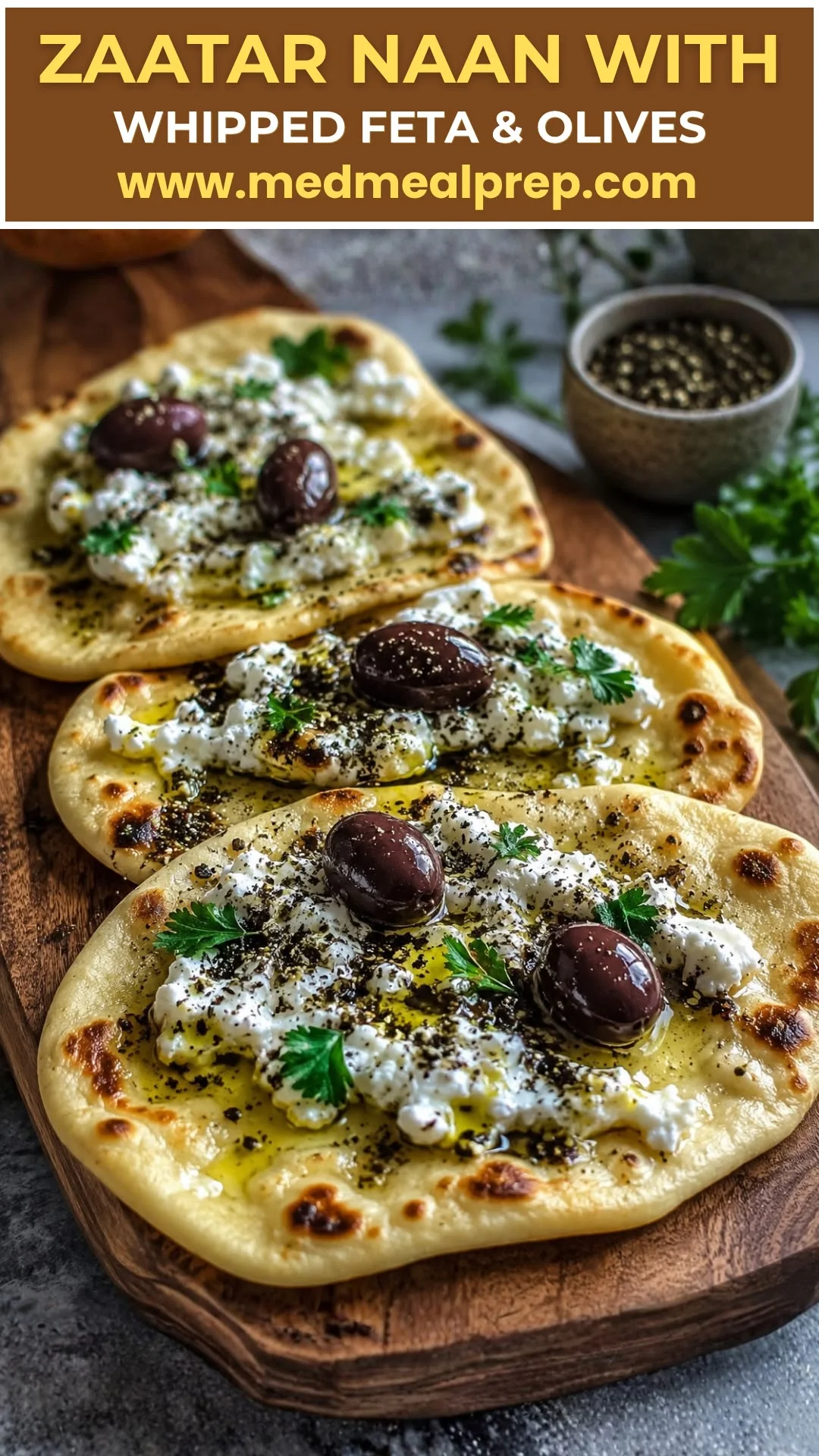
Zaatar is one of the oldest and most beloved spice blends in the world. Its origins trace back thousands of years across the Levant region, which includes modern-day Lebanon, Syria, Palestine, Jordan, and Israel. The word “zaatar” actually refers to both a specific wild herb – similar to thyme or oregano – and the blend made from it, which typically includes sumac, sesame seeds, and salt. Ancient texts and culinary records from the region reference zaatar as a prized food that was believed to strengthen the mind and body.
Throughout the Eastern Mediterranean, zaatar bread has been a staple for generations. In Lebanon and Palestine, it is common to find street vendors selling ka’ak bread rings dunked in olive oil and rolled in zaatar. In Syria, families often start their mornings with a simple flatbread slathered in olive oil and dusted generously with zaatar. The ritual of eating zaatar in the morning is deeply embedded in the culture – many families believe it sharpens focus and energizes the body for the day ahead.
Feta cheese has its own long and storied history in the Mediterranean, originating in Greece and dating back over 8,000 years. It is one of the oldest cheeses in the world and holds a Protected Designation of Origin status in the European Union, meaning true feta can only be made in specific regions of Greece. Traditionally crafted from sheep’s milk or a blend of sheep’s and goat’s milk, feta is aged in brine, giving it that distinctive salty, tangy flavor. The pairing of feta with herbs and flatbread is common across Greek, Turkish, and broader Eastern Mediterranean cooking traditions.
Naan itself is a leavened flatbread with deep roots in South and Central Asia, but it has become widely adopted across the Middle East and Mediterranean as a convenient, versatile bread. Using naan as the base for zaatar toppings is a modern, accessible interpretation that honors the spirit of Mediterranean flatbread traditions while making the recipe incredibly easy to prepare at home. This recipe brings these historically rich ingredients together into something that feels both ancient and refreshingly modern.
Why You’ll Love This Recipe
This zaatar naan with whipped feta and olives is the kind of recipe that earns a permanent spot in your weekly rotation the moment you try it. Here is why it stands out from every other flatbread recipe you have come across.
- Ready in under 30 minutes – From start to finish, this recipe comes together incredibly fast, making it perfect for busy weeknights and last-minute entertaining.
- No yeast, no dough, no stress – You are using store-bought naan as the base, which cuts out the most labor-intensive part of flatbread baking entirely.
- Big Mediterranean flavor with minimal effort – The combination of zaatar, olive oil, feta, and olives delivers a deeply satisfying flavor profile that tastes like it took hours to develop.
- Nutritious and wholesome – Every ingredient in this recipe offers genuine nutritional value rooted in the Mediterranean diet, one of the most studied and celebrated eating patterns in the world.
- Meal prep friendly – The whipped feta can be made ahead in bulk, and the naan can be toasted in batches, making this a great option for prepping meals for the week.
- Completely customizable – You can swap toppings, adjust the spice level, make it vegan, or add extra protein depending on your dietary needs and preferences.
- Works as a snack, starter, or light meal – This flatbread is flexible enough to serve as an appetizer at a dinner party, a midday snack, or a light lunch paired with a side salad.
- Crowd-pleaser at any gathering – Whether you are hosting a casual get-together or a more formal dinner, this recipe impresses every single time without requiring much effort from you.
- Kid-friendly and adult-approved – The creamy feta and mild naan base make this appealing even to picky eaters, while the zaatar and olives keep things interesting for adventurous palates.
- Pantry and fridge staple ingredients – Most of these ingredients are things you can keep on hand regularly, making this a go-to recipe even when you have not planned ahead.
Health Benefits and Ingredient Highlights
The Mediterranean diet is consistently ranked among the healthiest eating patterns in the world, and this recipe reflects exactly why. Each ingredient brings its own nutritional strengths to the table. Here is a closer look at what makes this dish genuinely good for you.
Zaatar Spice Blend
Zaatar is far more than a flavor enhancer – it is a nutritional powerhouse packed with antioxidants, polyphenols, and antimicrobial compounds. The thyme, oregano, and wild herbs in zaatar have been linked to anti-inflammatory effects, improved digestion, and respiratory support in traditional Mediterranean herbal medicine.
Sumac, one of the key components of most zaatar blends, is particularly rich in tannins and flavonoids that help protect cells from oxidative stress. Research has also suggested that sumac may support healthy blood sugar levels, making it a smart addition to a balanced Mediterranean diet.
The sesame seeds in zaatar add a meaningful dose of calcium, magnesium, and healthy fats. These minerals are essential for bone health, muscle function, and overall metabolic balance.
Extra Virgin Olive Oil
Extra virgin olive oil is the cornerstone of the Mediterranean diet and one of the most researched foods in nutritional science. It is loaded with oleocanthal, a natural anti-inflammatory compound that works similarly to ibuprofen in the body, along with heart-healthy monounsaturated fats that support healthy cholesterol levels.
Studies have consistently shown that regular consumption of extra virgin olive oil is associated with reduced risk of cardiovascular disease, improved cognitive function, and better blood sugar control. It is also rich in fat-soluble vitamins E and K, both of which play important roles in immune function and bone health.
When you drizzle high-quality olive oil over your zaatar naan, you are not just adding flavor – you are adding one of the most bioavailable and beneficial fats available in any food. Always choose cold-pressed, extra virgin olive oil for maximum nutritional benefit.
Feta Cheese
Feta is one of the lowest-calorie cheeses available while still delivering a significant amount of protein and calcium per serving. A typical serving of feta provides around 4 grams of protein and 14 percent of your daily calcium needs, making it a smart choice for those looking to support muscle and bone health without consuming large amounts of calories.
Feta made from sheep’s milk contains conjugated linoleic acid (CLA), a type of fatty acid that has been associated with reduced body fat, improved immune function, and anti-cancer properties in several studies. It also contains probiotic-like cultures that may support gut health, particularly when consumed in its less-processed, traditionally brined form.
Whipping the feta with a small amount of cream cheese or Greek yogurt creates an incredibly creamy, spreadable texture without adding excessive calories. This technique also mellows out the saltiness of the feta slightly, creating a more balanced flavor that works beautifully with the bold zaatar spice blend.
Olives
Olives are a central feature of the Mediterranean diet and one of the most nutrient-dense foods you can add to a recipe. They are rich in oleic acid, the same heart-healthy monounsaturated fat found in olive oil, as well as polyphenols and vitamin E that protect cells from damage and inflammation.
Regular olive consumption has been linked to reduced LDL cholesterol, improved arterial flexibility, and lower rates of chronic disease in populations that follow Mediterranean dietary patterns. They also contain iron, copper, and calcium, three minerals that support everything from oxygen transport to nerve function.
Kalamata olives, which are particularly well-suited to this recipe, have a deep, rich flavor and a meaty texture that pairs beautifully with creamy whipped feta. They are also naturally fermented, which means they carry beneficial compounds that support a healthy gut microbiome.
Naan Bread
Whole wheat or whole grain naan provides a source of complex carbohydrates and dietary fiber that helps sustain energy levels throughout the day. Unlike refined white bread, whole wheat naan digests more slowly, supporting steadier blood sugar levels and longer-lasting satiety.
Naan also contains small amounts of B vitamins, iron, and magnesium depending on the variety you choose. When topped with nutrient-dense ingredients like zaatar, olive oil, feta, and olives, it forms a well-rounded base that contributes to a satisfying and nutritionally balanced meal.
Fresh Herbs (Mint, Parsley, or Dill)
Fresh herbs are a finishing touch in this recipe, but they bring real nutritional value along with their vibrant flavor. Parsley is particularly high in vitamin K, which plays a critical role in blood clotting and bone metabolism. Mint contains rosmarinic acid, a potent antioxidant with anti-inflammatory and anti-allergic properties.
In the Mediterranean tradition, fresh herbs are used liberally – not just as garnish but as a genuine food group in their own right. Adding a generous handful of fresh herbs to this flatbread before serving elevates both the flavor and the nutritional profile significantly.
Ingredients
These quantities serve 4 people as a light meal or 6-8 people as a starter or snack. All ingredients are easy to find at most grocery stores or Mediterranean specialty shops.
- 4 naan breads (store-bought; use whole wheat naan for added fiber, or gluten-free naan as needed)
- 3 tablespoons extra virgin olive oil (plus more for drizzling at the end; use a high-quality cold-pressed variety)
- 3 tablespoons zaatar spice blend (store-bought or homemade; adjust to taste)
- 200g (7 oz) feta cheese, crumbled (use full-fat block feta for the best whipped texture; avoid pre-crumbled feta)
- 3 tablespoons cream cheese (substitute with 3 tablespoons plain full-fat Greek yogurt for a lighter version)
- 1 tablespoon fresh lemon juice (freshly squeezed; bottled lemon juice works in a pinch)
- 1 garlic clove, minced (optional; omit if you prefer a milder flavor)
- 1/2 cup pitted Kalamata olives, halved or roughly chopped (substitute with green olives, Castelvetrano olives, or a mix)
- 1/4 cup cherry tomatoes, halved (optional but adds freshness and color)
- 1/4 red onion, very thinly sliced (soak in cold water for 5 minutes to mellow the sharpness if preferred)
- Small handful of fresh mint or flat-leaf parsley (for garnish; use both if you like)
- Pinch of red pepper flakes (optional, for a gentle heat)
- Flaky sea salt (for finishing; use sparingly as feta is already salty)
Step-by-Step Instructions
Follow these steps carefully for the best results. This recipe is beginner-friendly, but a few key techniques will make a real difference in the final outcome.
- Preheat your oven or grill pan. Set your oven to 200°C (400°F) or heat a grill pan or cast iron skillet over medium-high heat. You want a hot surface to give the naan that toasted, slightly crispy base while keeping the center soft and chewy.
- Mix the zaatar oil. In a small bowl, combine 3 tablespoons of extra virgin olive oil with 3 tablespoons of zaatar spice blend. Stir well until fully combined. This mixture should look like a thick, fragrant paste – that is exactly what you want.
- Brush the naan with zaatar oil. Lay your naan breads flat on a baking sheet or your preheated grill pan. Brush the zaatar oil mixture generously and evenly over the top surface of each naan, making sure to cover all the way to the edges for maximum flavor in every bite.
- Toast the naan. If using an oven, place the naan directly on the oven rack or on a preheated baking sheet and bake for 8-10 minutes until the edges are golden and slightly crisp. If using a grill pan, cook each naan for 2-3 minutes per side until toasted and fragrant. Watch carefully – naan can go from golden to burnt quickly.
- Make the whipped feta. While the naan is toasting, add the crumbled feta, cream cheese (or Greek yogurt), and fresh lemon juice to a food processor or blender. If using garlic, add the minced clove now. Blend on high for 60-90 seconds until smooth, creamy, and fluffy. Stop and scrape down the sides as needed to ensure an even consistency.
- Taste and adjust the whipped feta. Give the whipped feta a taste and adjust as needed. If it is too salty, add a little more cream cheese or yogurt. If you want more brightness, add another squeeze of lemon juice. If the texture is too thick, add 1-2 teaspoons of water and blend again briefly.
- Remove the naan and let it cool slightly. Take the toasted naan out of the oven or off the grill pan and allow it to rest for 2-3 minutes. This brief resting time helps the crust firm up slightly and makes it much easier to spread the whipped feta without the bread becoming soggy.
- Spread the whipped feta generously. Use a spoon or offset spatula to spread a thick, generous layer of whipped feta across the surface of each zaatar naan. Go all the way to the edges – you want every bite to include that creamy, tangy base.
- Add the olives, tomatoes, and red onion. Scatter the halved Kalamata olives, cherry tomatoes, and thinly sliced red onion evenly across the top of each flatbread. Distribute them in an even, generous layer so that each slice gets a good mix of all three toppings.
- Finish and garnish. Drizzle a little extra virgin olive oil over the top of each flatbread. Add a pinch of red pepper flakes if desired, and scatter fresh mint or parsley leaves generously across the surface. Finish with a very light pinch of flaky sea salt if needed.
- Slice and serve immediately. Cut each naan into thirds or quarters using a sharp knife or pizza cutter. Serve right away while the naan is still warm and the toppings are fresh and vibrant. This dish is best enjoyed immediately, though it can be assembled up to 30 minutes ahead and served at room temperature.
Make It Ahead and Batch Prep Guide
One of the best things about this zaatar naan with whipped feta and olives is how naturally it fits into a Mediterranean meal prep routine. With a little planning, you can have components ready in advance so that putting this dish together on a busy day takes less than 10 minutes.
The whipped feta is the MVP of your make-ahead strategy. It stores beautifully in the refrigerator for up to 5 days in an airtight container. Make a double or even triple batch on the weekend, and you will have a creamy, versatile spread ready to go on flatbreads, crackers, roasted vegetables, grain bowls, and more throughout the week. The flavor actually deepens and improves slightly after 24 hours in the fridge as the garlic and lemon meld into the feta.
The zaatar oil mixture can also be made in advance and stored in a small jar at room temperature for up to 2 weeks. Simply mix your zaatar and olive oil together, seal tightly, and keep it on your counter or in a cool cupboard. Having this ready means you can brush and toast naan in minutes any time the craving strikes. You can also batch-toast multiple naans at once and store them at room temperature, wrapped in foil, for up to 2 days. Reheat in the oven or on a hot pan for 2-3 minutes before topping.
For a full meal prep session, consider pairing this flatbread with other Mediterranean components you have prepped ahead. Mediterranean grain bowl with chickpeas and roasted vegetables works beautifully alongside this flatbread as a complete, balanced meal. You can also prep your olive and tomato topping up to a day ahead by combining them in a small container and refrigerating until ready to use. Just bring them to room temperature before serving so the flavors are at their best.
Common Mistakes to Avoid
Even a simple recipe like this one has a few common pitfalls. Avoid these mistakes and your zaatar naan will come out perfectly every time.
- Using pre-crumbled feta for the whipped feta. Pre-crumbled feta contains anti-caking agents that prevent it from blending into a smooth, creamy texture. Always buy a block of feta and crumble it yourself for the best whipped consistency.
- Not preheating your oven or pan properly. Adding naan to a cold or lukewarm surface results in a soft, pale flatbread that lacks that appealing toasty texture. Always get your cooking surface fully hot before the naan goes on.
- Spreading whipped feta on naan that is too hot. If you add the feta spread immediately after toasting, the heat will melt and thin it out, making it slide off and lose its creamy texture. Let the naan rest for 2-3 minutes first.
- Skimping on the zaatar oil. Zaatar oil should be applied generously. If you brush on too little, the flavor will be underwhelming and the naan will taste dry. Be liberal – you want every bite to taste of that herby, earthy blend.
- Over-salting the finished flatbread. Feta and olives both contain significant amounts of sodium. Taste your whipped feta and toppings before adding any additional salt. A light finishing pinch of flaky sea salt is usually enough, if needed at all.
- Using low-quality olive oil. Olive oil is a primary flavor in this dish, not just a cooking fat. Using a cheap, refined olive oil will result in a noticeably flat, greasy taste. Invest in a good-quality extra virgin olive oil and it will make an enormous difference to the final flavor of your zaatar naan.
Notes, Tips and Variations
Substitutions
If you cannot find zaatar spice blend at your local store, you can make a quick homemade version by combining 2 tablespoons of dried thyme (or a mix of thyme and oregano), 1 tablespoon of sesame seeds, 1 teaspoon of sumac, and 1/4 teaspoon of salt. It will not be identical to a traditional Lebanese zaatar blend, but it captures the essential character of the flavor profile very well.
For the cream cheese in the whipped feta, full-fat Greek yogurt is an excellent substitute that adds a slight tanginess and reduces the overall calorie count without sacrificing the creamy texture. Labneh, a traditional strained yogurt cheese common throughout the Eastern Mediterranean, also works beautifully and adds an authentic regional touch to the recipe.
If naan is unavailable, pita bread, lavash, or any thin flatbread makes a good substitute. You can also use sourdough rounds or ciabatta slices for a different but equally delicious result. Homemade Mediterranean pita bread recipe is a great option if you prefer to bake your own base from scratch.
Dietary Variations
To make this recipe fully vegan, substitute the feta with a high-quality vegan feta alternative and use plain coconut yogurt or cashew cream cheese in place of the cream cheese. The zaatar, olive oil, and olive toppings are already plant-based, so only the dairy components need adjusting. Several brands now make vegan feta that blends surprisingly well into a creamy spread.
For a gluten-free version, simply use certified gluten-free naan bread, which is widely available in health food stores and many mainstream supermarkets. All other ingredients in this recipe are naturally gluten-free, so no other substitutions are needed.
If you are following a lower-sodium Mediterranean eating plan, rinse your olives before using them to reduce their salt content, and choose a lower-sodium feta variety if available. You can also increase the proportion of cream cheese or Greek yogurt in the whipped feta to dilute the overall saltiness while maintaining the creamy texture.
Cooking Tips
For an extra layer of flavor, try toasting your naan directly over a gas flame for 30-60 seconds per side before brushing with zaatar oil. This gives the bread a beautiful charred flavor that is reminiscent of traditional wood-fired flatbread from Levantine bakeries.
When making your whipped feta, let the block feta sit at room temperature for 10-15 minutes before blending. Slightly warmer feta blends much more smoothly and produces a fluffier, more aerated texture with less effort from your food processor.
If you want a slightly different flavor dimension in your zaatar oil, try adding a tiny pinch of ground cumin or a few drops of pomegranate molasses to the mixture before brushing it onto the naan. Both of these additions are rooted in Eastern Mediterranean flavor traditions and add a subtle depth that elevates the entire dish.
Topping Ideas and Flavor Boosters
Once you have your zaatar naan base and whipped feta ready, the topping combinations are virtually endless. Here are over 10 ideas to keep things exciting and help you put a fresh spin on this recipe every time you make it.
- Roasted red peppers – Adds sweetness and a smoky depth that pairs beautifully with the salty feta and herby zaatar.
- Sun-dried tomatoes in olive oil – Intensely flavored and chewy, they add a concentrated sweetness and umami that lifts the whole flatbread.
- Pomegranate seeds – A burst of tart sweetness and a stunning pop of color. This is a classic Levantine garnish that works especially well during autumn and winter months.
- Toasted pine nuts – Adds a rich, buttery crunch and is a traditional Mediterranean topping that pairs particularly well with feta and herbs.
- Honey drizzle – A light drizzle of raw honey over the top creates a wonderful sweet-salty-savory contrast that is surprisingly addictive and deeply satisfying.
- Za’atar-spiced chickpeas – Pan-fry canned chickpeas in a little olive oil and zaatar until crispy for a protein-packed, crunchy topping that turns this into a more substantial meal.
- Sliced cucumber – Adds a cool, refreshing crunch that balances the richness of the whipped feta perfectly on warm days.
- Marinated artichoke hearts – A beautiful, briny topping that adds a distinctly Mediterranean character and a tender, slightly earthy flavor.
- Sumac-dusted red onions – Toss thinly sliced red onion with a generous pinch of sumac and a little lemon juice for a vibrant, tangy topping that ties the whole zaatar flavor theme together.
- Smoked salmon or grilled shrimp – Adds lean protein and a more luxurious, restaurant-quality feel to the flatbread, ideal for special occasions or weekend brunches.
- Arugula tossed in lemon and olive oil – A small pile of lightly dressed arugula on top of the finished flatbread adds a peppery bite and turns this into something that feels genuinely restaurant-worthy.
- Harissa paste swirl – Drizzle or swirl a small amount of harissa over the whipped feta before adding toppings for a smoky, spicy North African-Mediterranean flavor kick.
Who This Recipe Is For
This zaatar naan with whipped feta and olives was designed to work for a wide range of people and lifestyles. Here is who will love it most.
- Mediterranean diet followers who want easy, flavorful recipes that align with their eating philosophy without spending hours in the kitchen.
- Busy home cooks who need a fast, reliable recipe that looks and tastes far more impressive than the effort it requires.
- Meal preppers looking for make-ahead components that can be used across multiple meals throughout the week.
- Vegetarians who want a satisfying, protein-rich option that does not rely on meat but still delivers big, bold flavor.
- Entertaining hosts who need an appetizer or sharing board addition that is easy to scale up for a crowd and always gets rave reviews.
- People new to Mediterranean cooking who want an accessible entry point into the flavors of the region without needing specialist equipment or obscure ingredients.
- Health-conscious eaters looking for a snack or light meal that feels indulgent but is made entirely from nutrient-rich, minimally processed ingredients.
- Students and young adults who want something quick, affordable, and genuinely delicious that does not require advanced cooking skills or an extensive pantry.
- Families with mixed tastes where some members love bold flavors and others prefer something simpler – this recipe can be customized for each person easily.
Storage and Meal Prep Tips
Refrigerator
Store the whipped feta separately from the toasted naan in an airtight container in the refrigerator for up to 5 days. The naan, once toasted, can be wrapped in foil or stored in an airtight bag at room temperature for up to 2 days – do not refrigerate the naan as it will become stale and tough.
If you have assembled flatbreads with toppings that you want to save for later, wrap them loosely in plastic wrap and refrigerate for up to 24 hours. They will not be quite as crisp as freshly made, but the flavor will still be excellent. Allow them to come to room temperature before eating, or reheat briefly.
Freezer
The whipped feta does not freeze particularly well as the dairy components can separate and become grainy upon thawing. However, you can freeze untoasted naan breads very successfully. Stack them with parchment paper between each piece and freeze in a sealed bag for up to 3 months. Toast them from frozen, adding 2-3 extra minutes to your cooking time.
The zaatar oil mixture can also be frozen in an ice cube tray and stored in a freezer bag for up to 3 months. This is a great way to always have pre-portioned zaatar oil ready to use without any prep time. Simply let a cube thaw at room temperature for 10-15 minutes before use.
Reheating
To reheat plain toasted naan, place it directly on a hot grill pan, in a toaster oven, or under the broiler for 2-3 minutes until warmed through and slightly crispy again. Avoid using a microwave to reheat naan as it will make the bread soft, chewy, and slightly rubbery rather than restoring that toasty texture.
If reheating assembled flatbreads, remove any fresh herb garnishes and fresh tomatoes first, then reheat the naan base briefly. Add a fresh spread of whipped feta and cold toppings back on after reheating for the best texture and flavor contrast. The whipped feta should always be applied cold or at room temperature – never heated directly.
Nutrition Facts
The following nutrition information is an estimate per serving based on 4 servings from this recipe. Values will vary depending on the specific brands of naan and feta you use, as well as any substitutions or additions you make.
| Nutrient | Per Serving |
|---|---|
| Calories | 380 kcal |
| Protein | 13g |
| Total Carbohydrates | 34g |
| Dietary Fiber | 3g |
| Total Fat | 22g |
| Saturated Fat | 8g |
| Sugar | 3g |
| Sodium | 720mg |
This recipe is a good source of protein, healthy fats, and essential minerals. To reduce sodium, rinse olives before using and choose a lower-sodium feta. To increase protein, add crispy chickpeas, smoked salmon, or a soft-boiled egg on top.
FAQs
Can I make the whipped feta without a food processor?
Yes, you can. Use a hand mixer or a powerful blender instead of a food processor and you will get a very similar result. If you do not have any of those tools, you can mash the feta and cream cheese together vigorously with a fork until relatively smooth, though the texture will be slightly less airy and uniform than the blended version. For the smoothest possible result, a food processor or high-speed blender is the best option.
Where can I buy zaatar spice blend?
Zaatar is now widely available in most well-stocked supermarkets, in the international foods aisle or the spice section. You can also find it at Middle Eastern grocery stores, specialty food shops, and online retailers. Look for blends that list wild thyme or oregano, sesame seeds, and sumac as primary ingredients. Lebanese and Palestinian brands tend to produce the most authentic and flavorful blends available commercially.
Can I use a different type of flatbread instead of naan?
Absolutely. Pita bread, lavash, tortillas, ciabatta, sourdough rounds, and even bagels all work well as a base for this recipe. The key is that the bread should be sturdy enough to hold the toppings without becoming floppy or soggy. Thicker breads like naan or pita hold up best. Thinner flatbreads like lavash will cook faster, so reduce your toasting time accordingly and watch them closely.
Is this recipe suitable for a Mediterranean diet?
Yes, this recipe aligns beautifully with the principles of the Mediterranean diet. It features extra virgin olive oil as the primary fat, incorporates plant-based ingredients like zaatar herbs, olives, tomatoes, and fresh herbs, and uses feta cheese in moderate portions as is traditional in Mediterranean eating. The base is a grain component, and the overall balance of healthy fats, plant foods, and moderate dairy is exactly in line with what the Mediterranean dietary pattern recommends. Beginner’s guide to Mediterranean meal prep has more information on how to build a balanced Mediterranean week of eating.
How do I prevent the naan from getting soggy under the toppings?
The most important steps are toasting the naan properly until golden and slightly crisp, letting it cool for 2-3 minutes before adding the whipped feta, and using toppings that are well-drained and not excessively wet. Pat your olives dry with a paper towel if they have been stored in brine, and make sure your cherry tomatoes are halved rather than left whole so they do not release excess liquid onto the flatbread. Assembling and serving promptly also helps maintain the best texture.
Conclusion
This zaatar naan with whipped feta and olives is everything a great Mediterranean recipe should be – fast, flavorful, nourishing, and deeply satisfying. It brings together centuries of culinary tradition from the Eastern Mediterranean in a format that anyone can make at home, regardless of cooking experience or available time. The combination of earthy zaatar, creamy whipped feta, and briny olives on a perfectly toasted naan base is genuinely hard to beat.
Whether you make it as a quick weeknight snack, a weekend appetizer, or a meal prep component you return to throughout the week, this recipe delivers every single time. It is the kind of dish that reminds you that eating well does not have to be complicated or time-consuming – it just requires good ingredients and a little intention.
Give this recipe a try and let me know how it goes. Leave a comment below with your favorite topping combinations, or share how you have adapted it to suit your household. And if you are building out your Mediterranean meal prep repertoire, this flatbread is the perfect place to start.