THE BEST N°1 Morton’s Steakhouse Chicken Christopher Recipe – Juicy, Buttery & Restaurant-Quality at Home
If you’ve ever sat down at Morton’s Steakhouse and ordered the Chicken Christopher, you already know it’s one of those dishes that stays with you. That golden, crispy crust soaked in a rich, garlicky butter sauce is the kind of meal that makes you close your eyes after the first bite. Now imagine making that same restaurant-quality experience in your own kitchen, with fresh, wholesome ingredients that fit beautifully into a Mediterranean lifestyle.
This Morton’s Steakhouse Chicken Christopher recipe delivers everything you love about the original, with a few ingredient upgrades that make it even better for everyday cooking. You’ll get a detailed breakdown of the dish’s history, the best technique for that perfect crust, and smart Mediterranean meal prep strategies to help you enjoy it all week long.
Whether you’re cooking for a special dinner or batch prepping for the week, this guide covers everything from ingredients to storage, substitutions, FAQs, and a full nutrition breakdown. Let’s make steakhouse magic happen at home.
Table of Contents
Personal Note
The first time I tried Chicken Christopher at Morton’s, I immediately thought about how well those core flavors lined up with Mediterranean cooking. Garlic, olive oil, fresh herbs, lemon, and quality chicken – these are ingredients that have been celebrated across Greek, Italian, and Lebanese kitchens for centuries. There was nothing about that dish that felt foreign to me.
What I wanted to do was bring that steakhouse elegance home and give it a Mediterranean backbone. That means using extra virgin olive oil alongside butter, adding a squeeze of fresh lemon for brightness, and relying on herbs like oregano and parsley that grow abundantly across the Mediterranean coast. The result is something that feels both indulgent and genuinely nourishing.
This recipe has become one of my most requested meal prep dishes. It’s rich enough to feel like a treat, clean enough to eat regularly, and versatile enough to pair with everything from roasted vegetables to whole grain couscous. I hope it becomes a staple in your kitchen too.
Origins of the Dish
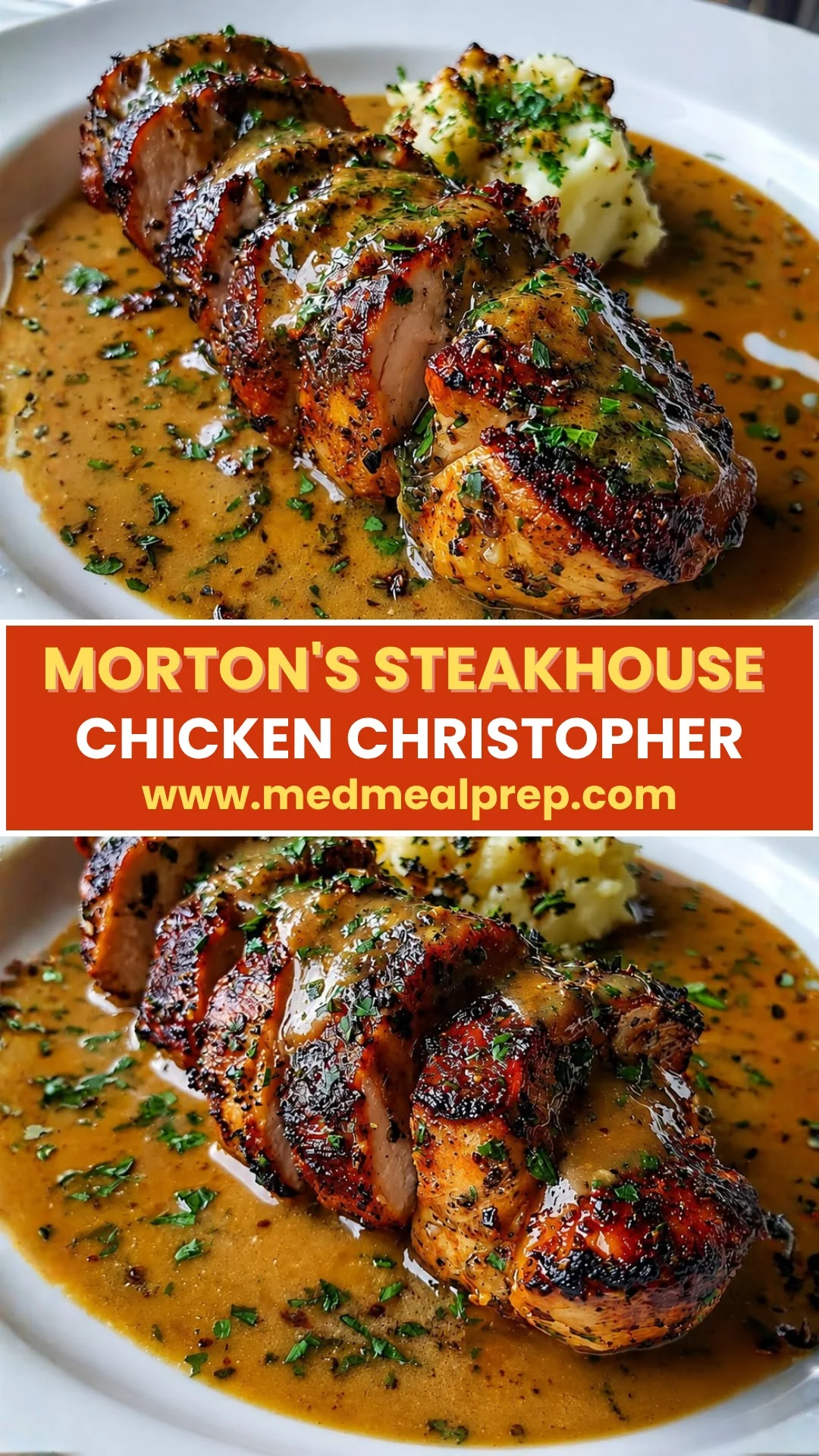
Morton’s The Steakhouse was founded in Chicago in 1978 by Arnie Morton and Klaus Fritsch. Known primarily for its prime-aged beef and classic American steakhouse atmosphere, Morton’s quickly built a loyal following across the United States. But the menu was never just about steak – the seafood and chicken dishes became quietly legendary among regulars who knew the full menu.
Chicken Christopher is named after Christopher Rapp, a longtime culinary figure associated with Morton’s brand identity. The dish became a signature not because it was complicated, but because it was perfected. A thick chicken breast, pounded slightly for even cooking, coated in a seasoned breadcrumb crust, pan-seared to golden perfection, and finished with a lemon-butter-garlic sauce – it was elegant simplicity at its best.
What makes Chicken Christopher interesting from a Mediterranean food perspective is that its core technique mirrors what cooks in Italy and Greece have been doing for generations. The concept of breading a protein in seasoned breadcrumbs and pan-frying it in fat before finishing with a bright, acidic butter sauce is deeply rooted in Mediterranean culinary tradition. Italian piccata, Greek kotopoulo me skordalia, and Lebanese djaj bi toum all share this same DNA of crispy chicken elevated with garlic and citrus.
Over the years, home cooks and food bloggers have tried to recreate this dish, but many versions miss the key details – the thickness of the crust, the balance of the sauce, the proper resting time after cooking. This guide is designed to give you the most accurate, kitchen-tested version of the Morton’s Steakhouse Chicken Christopher recipe with Mediterranean ingredient upgrades that make it even more nutritious and flavorful.
Why You’ll Love This Recipe
This dish earns a permanent spot in your recipe rotation for more reasons than just the incredible flavor. Here’s exactly why it works so well, especially for anyone following a Mediterranean approach to eating.
- Restaurant-quality results at home – You get that thick, golden, steakhouse-style crust without a professional kitchen or specialty equipment.
- Mediterranean ingredient alignment – Garlic, lemon, olive oil, fresh parsley, and herbs are all staples of the Mediterranean diet, making this feel right at home in this niche.
- High-protein and satisfying – Each serving delivers serious protein, keeping you full and energized without relying on heavy starches.
- Meal prep friendly – The chicken stores beautifully in the fridge for up to four days, making weekday lunches and dinners effortless.
- Minimal ingredients, maximum flavor – You won’t need a long shopping list. The depth of flavor comes from technique and quality ingredients, not a complicated pantry.
- Customizable to your dietary needs – Gluten-free breadcrumbs, dairy-free butter alternatives, and herb swaps make this recipe adaptable without losing its character.
- Ready in under 45 minutes – Even with prep, this dish moves quickly from counter to table, making it realistic on a busy weeknight.
- Kid-friendly and crowd-pleasing – The crispy coating and buttery sauce make this universally appealing, even for picky eaters who aren’t sure about “healthy” food.
- Pairs with almost anything – Roasted vegetables, whole grain couscous, a simple green salad, or warm pita – this chicken plays well with every Mediterranean side you can think of.
- Impressive enough for guests – The plating is naturally beautiful, with golden chicken glistening in garlic butter sauce. Your guests will think you trained at a culinary school.
Health Benefits and Ingredient Highlights
Every ingredient in this recipe pulls its weight from a nutritional standpoint. The Mediterranean approach to cooking has always emphasized using food as nourishment, not just fuel, and this dish reflects that philosophy perfectly.
Chicken Breast
Chicken breast is one of the leanest, highest-protein animal proteins available. A single six-ounce serving delivers approximately 42 grams of protein with very little saturated fat, making it a cornerstone of Mediterranean eating alongside fish and legumes.
Chicken also provides B vitamins, particularly niacin and B6, which support energy metabolism and nervous system health. When sourced from free-range or organic farms, the nutritional quality improves even further with better omega-3 to omega-6 ratios.
In the Mediterranean diet, poultry is consumed several times per week as a primary protein source. Using chicken breast in this recipe keeps the saturated fat content controlled while still delivering a rich, satisfying texture after it’s been properly coated and cooked.
Extra Virgin Olive Oil
Extra virgin olive oil is the cornerstone fat of Mediterranean cooking and one of the most studied foods in nutritional science. It’s rich in oleocanthal, a natural anti-inflammatory compound that behaves similarly to ibuprofen in the body, and it’s loaded with monounsaturated fats that support cardiovascular health.
Using extra virgin olive oil in this recipe alongside butter gives you the best of both worlds – the high smoke point and health properties of olive oil combined with the flavor and richness of butter. This combination is actually common in Southern Italian cooking and works beautifully in a pan sauce.
Studies published in journals like the New England Journal of Medicine have repeatedly linked extra virgin olive oil consumption with reduced risk of heart disease, stroke, and metabolic syndrome. Including it in everyday recipes like this one is one of the simplest ways to support long-term health.
Garlic
Garlic is not just a flavor powerhouse – it’s one of the most potent functional foods in the Mediterranean kitchen. It contains allicin, a sulfur compound released when garlic is crushed or chopped that has documented antimicrobial, antiviral, and anti-inflammatory effects.
Regular garlic consumption has been linked to lower blood pressure, improved cholesterol profiles, and enhanced immune function. Across the Mediterranean region, from Provence to Lebanon to Greece, garlic appears in virtually every savory dish as both a flavor base and a health ingredient.
In this recipe, you’ll use fresh garlic rather than garlic powder to get the full aromatic and nutritional benefit. The garlic is gently sauteed in the butter-olive oil mixture, which softens its sharpness and creates a fragrant, golden base for the sauce.
Fresh Lemon
Lemon juice and zest are arguably the most important flavor elements in Mediterranean cooking. They provide acidity that cuts through richness, brightens every other flavor in the dish, and acts as a natural tenderizer for proteins when used in marinades.
From a nutritional standpoint, lemons are an excellent source of vitamin C, which supports immune function, collagen synthesis, and iron absorption. The flavonoids in lemon peel have antioxidant and anti-inflammatory properties that add extra value when you include the zest.
In this recipe, lemon plays a dual role – a squeeze goes into the butter sauce at the end to create that tangy, restaurant-style finish, and a bit of zest can be added on top for an extra aromatic punch before serving.
Fresh Parsley
Parsley is one of the most underappreciated herbs in the Western kitchen, but in Mediterranean cooking it’s a star ingredient that shows up in everything from tabbouleh to gremolata to chimichurri-style sauces. It’s rich in vitamins K, C, and A, and contains apigenin, a flavonoid with anti-cancer properties.
Fresh flat-leaf parsley works best in this recipe. It’s more aromatic and less bitter than curly parsley, and it integrates beautifully into the butter sauce while also serving as a finishing garnish. Don’t skip it – it adds both color and a fresh, green note that balances the richness of the dish.
Panko Breadcrumbs
Panko breadcrumbs are lighter and crispier than traditional breadcrumbs, and they create that signature thick, crunchy crust that defines Chicken Christopher. Their open, airy texture allows them to absorb less oil during cooking, which means the coating stays crispier for longer.
For a more Mediterranean spin, you can blend the panko with a tablespoon of dried oregano, some lemon zest, and a pinch of garlic powder before coating the chicken. This transforms the crust from a blank canvas into a flavor-packed shell that matches the spirit of Greek or Italian herb-crusted chicken dishes.
Unsalted Butter
Butter is used in moderation here, which is entirely consistent with a balanced Mediterranean approach to eating. A small amount of high-quality butter adds richness, helps create the signature sauce consistency, and aids in browning the garlic to a golden, fragrant state.
If you want to keep things lighter, you can reduce the butter quantity and increase the olive oil. The result will be slightly less rich but still deeply flavorful and satisfying. Grass-fed butter is the best choice if available, as it has a better fatty acid profile and more fat-soluble vitamins.
Ingredients
These quantities serve four people. Double or triple the recipe for batch prep – the method scales perfectly.
- 4 boneless, skinless chicken breasts (about 6-8 oz each, pounded to even thickness – or use chicken cutlets)
- 1 cup panko breadcrumbs (substitute with gluten-free panko if needed)
- 1/2 cup all-purpose flour (substitute with almond flour or rice flour for gluten-free)
- 2 large eggs, beaten
- 1 teaspoon garlic powder
- 1 teaspoon dried oregano
- 1/2 teaspoon smoked paprika
- 1/2 teaspoon onion powder
- Salt and black pepper to taste
- 3 tablespoons extra virgin olive oil (plus more if needed)
- 4 tablespoons unsalted butter, divided (substitute with vegan butter for dairy-free)
- 6 cloves garlic, minced (about 2 tablespoons – use fresh, not jarred)
- 1/2 cup dry white wine (substitute with chicken broth for alcohol-free version)
- 1/2 cup chicken broth (use low-sodium for better control)
- Juice of 1 large lemon (about 3 tablespoons)
- Zest of 1 lemon
- 1/4 cup fresh flat-leaf parsley, roughly chopped
- Optional: 2 tablespoons capers, drained (adds a briny Mediterranean punch)
- Optional: 1/4 teaspoon red pepper flakes for gentle heat
Step-by-Step Instructions
Follow these steps carefully for perfect results every time. This method is beginner-friendly but produces professional-level results.
- Prep the chicken: Place each chicken breast between two sheets of plastic wrap or in a zip-lock bag. Use a meat mallet or rolling pin to pound them to an even thickness of about 3/4 inch. This ensures even cooking and prevents the outside from burning before the inside is cooked through.
- Season the flour: In a shallow bowl, combine the all-purpose flour with 1/2 teaspoon salt, 1/4 teaspoon black pepper, and 1/4 teaspoon garlic powder. Mix well. This first coating helps the egg wash adhere to the chicken.
- Prepare the egg wash: Beat the two eggs in a separate shallow bowl with a pinch of salt and a splash of water (about 1 tablespoon). Whisk until fully combined. The egg wash is the glue that holds your breadcrumb crust to the chicken.
- Season the panko: In a third shallow bowl, combine the panko breadcrumbs with dried oregano, smoked paprika, onion powder, the remaining garlic powder, 1/2 teaspoon salt, and 1/4 teaspoon black pepper. Stir thoroughly so the seasoning is evenly distributed throughout the breadcrumbs.
- Bread the chicken: Working one piece at a time, dredge each chicken breast in the seasoned flour, shaking off any excess. Dip it into the egg wash, letting any excess drip off. Then press it firmly into the seasoned panko, coating both sides generously. Press the crumbs in with your palm to ensure they stick. Set each breaded breast on a clean plate.
- Rest the breaded chicken: Let the coated chicken breasts rest at room temperature for 5-10 minutes before cooking. This brief rest helps the coating set and adhere more securely, which means less crust falling off in the pan.
- Heat the pan: In a large, heavy-bottomed skillet (cast iron or stainless steel works best), heat 3 tablespoons of extra virgin olive oil and 2 tablespoons of butter over medium-high heat. Wait until the butter melts and the foam begins to subside before adding the chicken. A properly heated pan is the secret to a golden, non-soggy crust.
- Sear the chicken: Carefully place the breaded chicken breasts in the pan, leaving space between each piece. Cook for 4-5 minutes on the first side without moving them. You’re looking for a deep, golden-brown crust – resist the urge to peek or move them early.
- Flip and finish: Flip each chicken breast carefully using tongs or a wide spatula. Cook the second side for another 4-5 minutes until golden and cooked through. The internal temperature should reach 165°F (74°C) on an instant-read thermometer. If your chicken is thicker, finish in a 375°F oven for 5-7 minutes after searing.
- Rest the chicken: Transfer the cooked chicken to a plate and tent loosely with foil. Let it rest for 5 minutes while you make the sauce. Resting allows the juices to redistribute, keeping the chicken moist when you cut into it.
- Start the garlic butter sauce: In the same pan (don’t clean it – those browned bits are flavor gold), reduce heat to medium. Add the remaining 2 tablespoons of butter. Once melted, add the minced garlic and cook for 60-90 seconds, stirring constantly, until fragrant and lightly golden. Watch carefully – burned garlic turns bitter instantly.
- Deglaze the pan: Pour in the white wine (or chicken broth if substituting) and stir vigorously to scrape up all the browned bits from the bottom of the pan. Let the liquid reduce by half, about 2-3 minutes. This step is what turns a simple pan sauce into something deeply flavorful.
- Build the sauce: Add the chicken broth and lemon juice to the pan. Stir to combine and let the sauce simmer for 2-3 minutes until it thickens slightly. If you’re using capers, add them now. Taste the sauce and adjust salt, pepper, or lemon juice as needed.
- Finish with parsley and zest: Remove the pan from heat and stir in the fresh parsley and lemon zest. These are added off the heat to preserve their fresh flavor and vibrant color. The parsley should wilt slightly from the residual heat of the sauce.
- Plate and serve: Place each chicken breast on a plate and spoon the garlic butter sauce generously over the top. Garnish with an extra pinch of fresh parsley and a lemon wedge on the side. Serve immediately for the crispiest coating and most vibrant sauce.
Make It Ahead and Batch Prep Guide
This Morton’s Steakhouse Chicken Christopher recipe is genuinely one of the best candidates for Mediterranean meal prep because the components can be handled separately, giving you flexibility throughout the week. The breading process is the most time-consuming step, so doing it all at once for four to six chicken breasts saves you enormous amounts of time on weeknights.
Bread all your chicken at once and either cook them immediately or freeze them raw on a parchment-lined baking sheet before transferring to a freezer bag. Raw breaded chicken can be frozen for up to three months, and you can cook them directly from frozen – just add 5-7 extra minutes of cook time and use your thermometer to confirm doneness. This is one of the most efficient freezer prep strategies you can use for a protein-heavy Mediterranean eating plan.
For weekly meal prep, cook all your chicken breasts in one session, then store them separately from the sauce. The sauce refrigerates well for up to three days, and you can reheat it gently on the stovetop before pouring it over warmed chicken. Keeping them separate preserves the crust’s texture much better than storing them together. You can also prep your sides in the same session – roast a full sheet pan of Mediterranean vegetables while your chicken cooks on the stovetop.
Consider doubling the garlic butter sauce recipe when you batch prep. It works beautifully as a sauce for roasted fish, steamed vegetables, or even tossed through whole wheat pasta later in the week. Batch cooking the sauce separately means you’re building a full Mediterranean meal prep ecosystem from one cooking session, not just prepping a single dish. Mediterranean Garlic Butter Shrimp Recipe
Common Mistakes to Avoid
These are the most common errors home cooks make with this dish, along with how to fix or avoid them.
- Skipping the pounding step: Uneven chicken breasts cook unevenly, leaving you with dry, overcooked edges and undercooked centers. Always pound to an even 3/4 inch thickness – it takes two minutes and makes a huge difference.
- Not drying the chicken before breading: Wet chicken means the flour won’t stick properly, which means the egg wash won’t adhere, which means your panko crust falls off in the pan. Pat every piece dry with paper towels before you start the breading process.
- Cooking over too high heat: High heat burns the panko crust before the inside cooks through. Medium-high is the sweet spot – you want a steady, energetic sizzle, not aggressive popping and spattering.
- Moving the chicken too early: The crust needs time to set and develop color. If you try to flip it too soon, it tears and sticks to the pan. Wait until it releases naturally – properly seared chicken will lift away from the pan cleanly when it’s ready.
- Burning the garlic in the sauce: Garlic goes from golden and fragrant to bitter and acrid in seconds. Keep your heat at medium, stir constantly, and never walk away from the pan during this step. If it starts to darken too quickly, immediately add your liquid to stop the cooking.
- Skipping the resting period: Cutting into chicken immediately after cooking releases all the accumulated juices onto your cutting board instead of back into the meat. A five-minute rest makes the difference between dry and juicy chicken every single time.
Notes, Tips and Variations
Substitutions
If you don’t have panko breadcrumbs, you can make your own by pulsing day-old sourdough or whole grain bread in a food processor until coarse crumbs form. Spread them on a baking sheet and toast at 350°F for 5 minutes to dry them out before using. This adds a rustic, Mediterranean flavor to the crust that works beautifully.
White wine can always be replaced with chicken broth in the sauce with minimal flavor impact. If you want to keep that slight acidity the wine provides, add an extra tablespoon of lemon juice or a small splash of white wine vinegar to the broth before deglazing. Both options work perfectly for an alcohol-free household.
Chicken thighs can replace chicken breasts in this recipe if you prefer darker, juicier meat. Boneless, skinless thighs don’t need to be pounded and they’re actually more forgiving of slight overcooking, making them an excellent choice for beginner cooks. The crust and sauce work identically with thighs as they do with breasts.
Dietary Variations
For a gluten-free version, swap the all-purpose flour for rice flour or a certified gluten-free flour blend, and use gluten-free panko breadcrumbs. The texture is nearly identical to the original, and most guests won’t notice the difference at all. Always check your broth label for hidden gluten, especially in flavored or seasoned varieties.
For a dairy-free adaptation, replace the butter entirely with a plant-based butter like Miyoko’s or Earth Balance. The sauce will be slightly less rich but still deeply flavorful thanks to the garlic, wine, and lemon. Increasing the olive oil quantity by one tablespoon can help compensate for the lower fat content of some vegan butter brands.
For a lower-calorie version, reduce the butter to one tablespoon and increase the chicken broth to 3/4 cup in the sauce. You can also bake the breaded chicken at 425°F for 20-25 minutes instead of pan-frying, spraying lightly with olive oil spray first. The crust won’t be quite as golden or rich, but it’s still incredibly satisfying.
Cooking Tips
A cast iron skillet is the best tool for this recipe because it holds heat evenly and creates an exceptionally even, golden crust across the entire surface of the chicken. If you only have a non-stick pan, it will still work, but you’ll get better browning results with stainless steel or cast iron.
Always taste your sauce before serving and adjust the balance. If it tastes too acidic, add a small knob of butter and stir to mellow it. If it tastes flat, add more lemon juice or a tiny pinch of salt. A great sauce should taste bright, garlicky, and slightly rich – not one-dimensional.
If you’re cooking for a crowd and need to keep multiple batches of chicken warm while you finish the rest, place the cooked breasts on a wire rack set over a baking sheet in a 200°F oven. The wire rack allows air circulation so the crust stays crispy rather than steaming on a flat pan.
Topping Ideas and Flavor Boosters
The base recipe is already outstanding, but these additions can take it in exciting Mediterranean directions depending on your mood or what you have on hand.
- Capers and caper brine – Stir two tablespoons of drained capers into the sauce for a briny, olive-forward Mediterranean kick that mimics a classic piccata.
- Sun-dried tomatoes – Roughly chop and stir into the finished sauce for an intense, sweet-acidic depth of flavor that pairs beautifully with the garlic butter base.
- Kalamata olive slices – Scatter over the plated chicken for a briny, rich counterpoint to the buttery sauce. They add great texture and authentic Mediterranean character.
- Crumbled feta cheese – A light sprinkle of high-quality Greek feta over the finished dish adds a creamy, tangy layer that melts slightly into the warm sauce.
- Toasted pine nuts – Add a tablespoon of lightly toasted pine nuts on top for a nutty crunch and a flavor profile that feels deeply Mediterranean and slightly luxurious.
- Fresh basil chiffonade – Thinly sliced fresh basil scattered over the top adds a bright, sweet herbal note that works especially well if you’ve used sun-dried tomatoes in the sauce.
- Roasted garlic cloves – Nestle a few whole roasted garlic cloves beside the chicken on the plate. They’re mellow, spreadable, and absolutely delicious pressed into each bite.
- Lemon zest microplane finish – A final pass of fresh lemon zest right before serving adds an aromatic, citrus perfume that wakes up the entire dish instantly.
- Chili flakes and fresh thyme – Scatter these over the plated chicken for a slightly rustic, herb-forward presentation with a gentle, warming heat.
- Artichoke hearts – Quartered and stirred into the sauce, canned or jarred artichoke hearts add a soft, earthy element and make the dish feel more substantial without adding many calories.
- Fresh dill – A small amount of fresh dill adds a Grecian character to the dish that works beautifully with the lemon and garlic in the sauce.
Who This Recipe Is For
This recipe was built to work for a wide range of people. Here’s exactly who will get the most out of it.
- Mediterranean diet followers – The olive oil, garlic, lemon, fresh herbs, and high-quality protein make this a natural fit for the Mediterranean way of eating.
- Meal preppers – The recipe scales easily, stores well, and the components can be mixed and matched with other dishes throughout the week.
- Home cooks who love restaurant food – If you’ve ever wanted to recreate a steakhouse experience at home, this is the perfect recipe to develop that skill and confidence.
- Busy weeknight families – With a 40-minute total cook time and simple ingredients, this works on Tuesday nights just as well as it does for Sunday dinners.
- High-protein diet followers – Each serving is loaded with lean protein, making it ideal for anyone tracking macros or prioritizing muscle maintenance.
- Beginner cooks building confidence – The step-by-step instructions are detailed enough that someone who rarely cooks can still produce impressive, restaurant-quality results.
- Anyone cooking for guests – The presentation is naturally elegant and the flavors are crowd-pleasing, making this an excellent dinner party or date night recipe.
- Those following an anti-inflammatory eating approach – With olive oil, garlic, lemon, parsley, and herbs as the main flavor drivers, this dish aligns beautifully with anti-inflammatory dietary principles.
Storage and Meal Prep Tips
Refrigerator
Store cooked chicken breasts in an airtight container in the refrigerator for up to four days. Keep the garlic butter sauce in a separate small container so the crust doesn’t absorb the moisture and lose its texture. When you’re ready to eat, reheat separately and combine on the plate.
Label your containers with the date so you can track freshness easily, especially during a full week of meal prep. If you’ve added capers or sun-dried tomatoes to the sauce, it will still keep for three days without any quality loss. The flavors actually deepen slightly after a day in the fridge, making leftover sauce taste even better.
Freezer
Cooked chicken Christopher freezes well for up to two months. Wrap each breast individually in plastic wrap before placing in a freezer-safe zip-lock bag to prevent freezer burn and make it easy to pull out individual portions. The crust will soften in the freezer but can be restored in the oven.
The garlic butter sauce can also be frozen in small portions using an ice cube tray. Once frozen solid, pop the cubes into a bag and store for up to two months. Reheat directly from frozen in a small saucepan over low heat, whisking until smooth. This is a fantastic strategy for adding a quick, flavorful sauce to any weeknight protein without starting from scratch. Mediterranean Meal Prep Sauce Recipes
Reheating
The best way to reheat this chicken and preserve the crust is in the oven. Place the chicken on a wire rack over a baking sheet and heat at 375°F for 10-12 minutes from refrigerated, or 20-22 minutes from frozen. The elevated wire rack allows hot air to circulate under the chicken, keeping the bottom crust from becoming soggy.
Avoid microwaving this dish if you can. The microwave steams the crust and turns it soft, which defeats the purpose of all your careful breading work. If the microwave is your only option, cover the plate loosely with a paper towel rather than plastic wrap to absorb some of the steam, and heat in 30-second intervals to avoid overcooking the chicken.
For the sauce, reheat gently in a small saucepan over low heat, stirring frequently. If it has separated or thickened too much in the fridge, add a splash of chicken broth and whisk until smooth. Fresh parsley should always be added after reheating, not before, so the color stays bright and vibrant.
Nutrition Facts
The following values are estimates per serving, based on the recipe as written serving four people. Actual values will vary based on the size of your chicken breasts, exact butter quantity, and any additions or substitutions made.
| Nutrient | Per Serving |
|---|---|
| Calories | 480 kcal |
| Protein | 42 g |
| Total Carbohydrates | 22 g |
| Total Fat | 22 g |
| Saturated Fat | 7 g |
| Monounsaturated Fat | 10 g |
| Dietary Fiber | 1.5 g |
| Total Sugars | 2 g |
| Sodium | 540 mg |
| Cholesterol | 175 mg |
| Vitamin C | 18% DV |
| Iron | 12% DV |
To reduce sodium, use unsalted broth and skip added salt in the breadcrumb mixture, relying instead on the lemon juice and fresh herbs for flavor. To reduce total fat, reduce the butter to two tablespoons and bake rather than pan-fry.
FAQs
What is Chicken Christopher at Morton’s Steakhouse?
Chicken Christopher is Morton’s Steakhouse signature chicken dish, featuring a thick-cut chicken breast coated in a seasoned breadcrumb crust, pan-seared until golden, and finished with a rich garlic butter and lemon sauce. It’s named after Christopher Rapp and has been one of the restaurant’s most beloved non-beef menu items for decades. This homemade version closely mirrors the original while incorporating fresh, Mediterranean-friendly ingredients.
Can I bake the chicken instead of pan-frying it?
Yes, absolutely. Preheat your oven to 425°F, place the breaded chicken on a wire rack set over a baking sheet, spray generously with olive oil spray, and bake for 22-25 minutes, flipping halfway through. The crust won’t be quite as deeply golden as the pan-fried version, but it will still be crispy, flavorful, and fully cooked. This is a great option if you’re cooking large batches and don’t want to manage multiple pans on the stovetop simultaneously.
How do I know when the chicken is fully cooked without cutting into it?
The most reliable method is using an instant-read meat thermometer inserted into the thickest part of the breast. You’re looking for an internal temperature of 165°F (74°C). This eliminates all guesswork and ensures food safety without risking overcooking from cutting into the chicken and letting the juices escape. A good thermometer is one of the best kitchen investments you can make for meal prep cooking.
What are the best Mediterranean sides to serve with this dish?
This chicken pairs beautifully with a wide range of Mediterranean sides. Try it with lemon herb couscous, a simple Greek salad with cucumber, tomato, red onion, and feta, roasted asparagus drizzled with olive oil, creamy hummus on the side, or sautéed spinach with garlic and lemon. Warm whole grain pita is also a wonderful addition for soaking up the garlic butter sauce. Best Mediterranean Side Dishes for Meal Prep
Can I make the sauce ahead of time and store it separately?
Yes, and it’s actually recommended when meal prepping. Make the garlic butter sauce separately, let it cool completely, then store in an airtight container in the refrigerator for up to three days or freeze in small portions for up to two months. Reheat gently on the stovetop with a splash of broth to loosen it if needed, and always add fresh parsley after reheating rather than before storing. The sauce reheats in about three minutes and tastes just as good as it did fresh.
Conclusion
This Morton’s Steakhouse Chicken Christopher recipe proves that restaurant-quality food doesn’t require a restaurant kitchen or a restaurant budget. With the right technique, fresh Mediterranean ingredients, and a bit of confidence at the stove, you can produce a dish that genuinely rivals the original – and in many ways surpasses it because you know exactly what went into it. The golden crust, the fragrant garlic butter sauce, and the juicy, perfectly cooked chicken all come together in a way that feels both indulgent and deeply satisfying.
What makes this dish especially exciting for Mediterranean meal prep is its versatility. You can scale it up for a week of lunches, freeze individual portions for later, pair it with a dozen different sides, and customize the flavor profile with capers, olives, fresh herbs, or feta. It’s the kind of recipe that earns a permanent spot in your rotation because it adapts to your week rather than demanding you adapt to it.
Give it a try this week. Share it with someone you love, serve it at your next dinner gathering, or just make it for yourself on a Tuesday night when you need something that feels genuinely special. You’ve got everything you need to make this extraordinary. Now go cook something beautiful.