THE BEST N°1 Strawberry Balsamic Glazed Salmon | Easy Gourmet Dinner in 30 Minutes
If you’ve been searching for a dinner that feels fancy but comes together in under 30 minutes, this strawberry balsamic glazed salmon is exactly what your weeknight routine needs. It’s vibrant, deeply flavorful, and rooted in the kind of wholesome, fresh ingredients that define Mediterranean cooking at its best.
In this post, you’ll learn how to make a restaurant-quality salmon dish using a sweet and tangy strawberry balsamic glaze, plus tips on batch prepping, ingredient swaps, storage, and everything in between. Whether you’re a seasoned home cook or just getting started with Mediterranean meal prep, this recipe is built for you.
Get ready to impress yourself and anyone sitting at your table tonight. This one is a keeper.
Table of Contents
Personal Note
I first made this dish on a warm Friday evening when I had a punnet of overripe strawberries sitting on the counter and a beautiful piece of wild-caught salmon defrosting in the fridge. I didn’t want to waste either, so I improvised with a balsamic reduction and a few pantry staples – and what came out of that pan honestly surprised me.
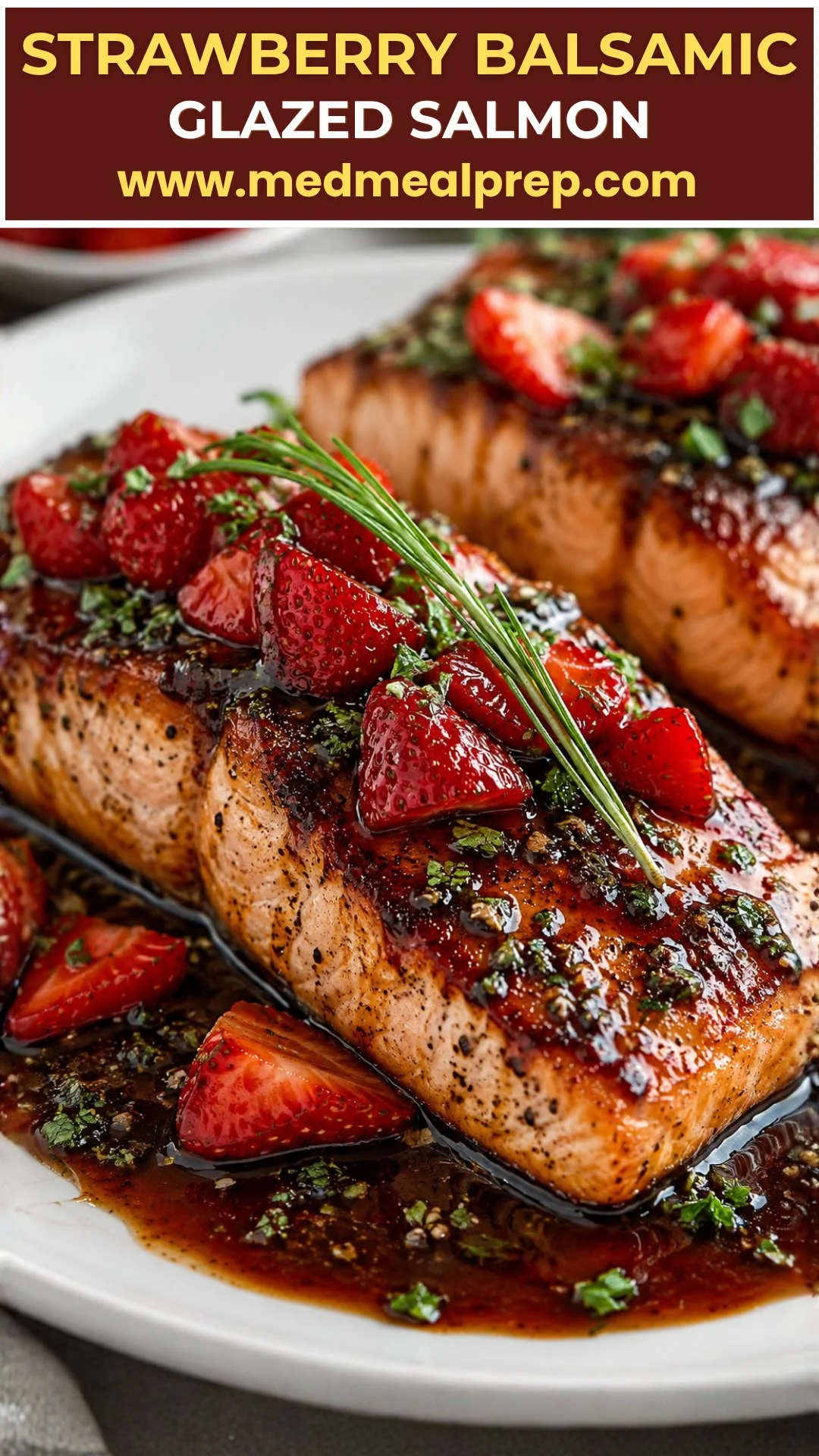
The glaze had this deep, jammy sweetness cut through with the tang of aged balsamic vinegar and a whisper of garlic. It clung to the salmon perfectly and caramelized at the edges in a way that made the whole kitchen smell incredible. That was the moment I knew this recipe had to be on regular rotation.
What I love most about this dish is how naturally it fits into a Mediterranean way of eating – fresh fruit, quality olive oil, fish as the protein centerpiece, and bold flavors that come from real ingredients rather than processed sauces. It’s the kind of meal that nourishes you without making you feel like you’re “eating healthy.” It just tastes delicious.
Origins of the Dish
Salmon has been a prized fish across coastal and riverside cultures for thousands of years. While it’s not a fish native to the Mediterranean Sea itself, it has long been embraced by Mediterranean cuisines, particularly in Greece, Italy, Spain, and Turkey, where fish plays a central role in the daily diet. The Mediterranean diet’s foundational principle of eating fish at least twice a week has made salmon a natural modern fit for this style of cooking.
Balsamic vinegar, on the other hand, is deeply rooted in Italian culinary tradition. Originating in Modena and Reggio Emilia in northern Italy, traditional balsamic vinegar – known as Aceto Balsamico Tradizionale – is made from freshly pressed grape juice that is cooked down and aged in a series of wooden barrels for a minimum of 12 years, and sometimes up to 25. The result is a thick, complex condiment that carries notes of fig, molasses, wood, and dried fruit. It has been used by Italian families for centuries, not just as a condiment but as a digestif and even a folk remedy.
The pairing of fruit and fish is a tradition that stretches far back in Mediterranean cooking. In Sicily, swordfish is paired with citrus and capers. In Morocco, fish tagines are often layered with preserved lemon and olives. In Turkey, pomegranate molasses is drizzled over grilled fish. The idea of using something sweet and acidic – like a strawberry balsamic glaze – to balance the richness of fish is a deeply Mediterranean instinct, even if the specific combination feels modern and creative.
Strawberries themselves have been cultivated in Europe since at least the 14th century, with wild varieties growing freely in Italy and France long before that. Using fresh strawberries in a savory reduction is a technique that nods to the Italian tradition of making fruit-based agrodolce sauces – sweet and sour sauces that are used to glaze meats, fish, and vegetables. This strawberry balsamic glazed salmon is, in many ways, a modern reinterpretation of that timeless tradition, made accessible for a weeknight kitchen.
Why You’ll Love This Recipe
This isn’t just another salmon recipe. Here’s why this one stands out from everything else in your rotation.
- Ready in 30 minutes or less – From prep to plate, this whole dish comes together fast enough for a busy weeknight without cutting any corners on flavor.
- Gourmet flavor with minimal effort – The strawberry balsamic glaze looks and tastes like something from a fine dining restaurant, but it takes about 10 minutes to make.
- Mediterranean-diet friendly – Every ingredient in this recipe aligns with the principles of the Mediterranean diet, from the olive oil to the wild-caught salmon to the fresh fruit.
- Packed with omega-3s – Salmon is one of the richest sources of omega-3 fatty acids, which support heart health, brain function, and inflammation reduction.
- Naturally gluten-free – Every ingredient in this recipe is naturally free from gluten, making it safe and satisfying for those with dietary restrictions.
- Meal prep approved – This recipe scales easily and stores beautifully, making it ideal for batch cooking and weekly Mediterranean meal prep.
- Family and dinner-party approved – The vibrant color and bold flavor make this a dish that impresses guests just as easily as it satisfies hungry kids.
- Seasonal and flexible – Fresh strawberries work beautifully in peak season, and frozen strawberries are a great substitute year-round.
- Pairs with everything – Serve it over farro, quinoa, couscous, roasted vegetables, or a simple Greek salad. It goes with just about anything.
- One-pan cleanup – Less mess, less stress, more time to enjoy your meal.
Health Benefits and Ingredient Highlights
Wild-Caught Salmon
Salmon is one of the most nutritionally dense proteins you can eat, and it sits at the heart of the Mediterranean diet for good reason. A single 6-ounce serving delivers around 34 grams of protein along with significant amounts of vitamin D, B12, selenium, and potassium.
What makes salmon especially valuable in a Mediterranean context is its omega-3 fatty acid content. Omega-3s – specifically EPA and DHA – are powerfully anti-inflammatory and have been linked to reduced risk of heart disease, improved cognitive function, and better joint health. Wild-caught salmon contains significantly higher levels of these beneficial fats compared to farmed varieties.
The Mediterranean diet consistently ranks as one of the healthiest dietary patterns in the world, and regular fish consumption is one of its defining characteristics. Eating salmon two to three times per week is one of the simplest and most delicious ways to support that lifestyle.
Fresh Strawberries
Strawberries are more than just a pretty fruit – they’re a nutritional powerhouse. They’re exceptionally high in vitamin C, with one cup delivering more than 100% of your daily recommended intake. Vitamin C is a critical antioxidant that supports immune function, skin health, and collagen production.
Strawberries are also rich in anthocyanins, the pigments that give them their bright red color and act as potent antioxidants in the body. Research suggests that anthocyanins help reduce oxidative stress, lower LDL cholesterol, and support cardiovascular health – all goals that align with the Mediterranean diet’s focus on heart health.
When you cook strawberries down into a glaze, their natural sugars concentrate and their flavor deepens, giving you a naturally sweet sauce without any need for refined sugar. It’s a clever and delicious way to let whole food do the work.
Balsamic Vinegar
Balsamic vinegar is a staple in Mediterranean kitchens and brings far more than just flavor. It contains polyphenols – antioxidants that have been shown to help reduce inflammation and protect against cellular damage. It’s also acetic acid-rich, which may support healthy blood sugar levels by slowing the digestion of carbohydrates.
From a culinary standpoint, balsamic vinegar acts as a natural tenderizer when used in a marinade, and when reduced into a glaze, it develops a beautiful syrupy consistency that clings to proteins like salmon without the need for thickeners or artificial additives.
When shopping for balsamic vinegar, look for one with simple ingredients – grape must and wine vinegar. Avoid brands that contain added caramel color or thickeners, as these indicate a lower-quality product that won’t reduce or taste as well.
Extra Virgin Olive Oil
Extra virgin olive oil is the cornerstone fat of the Mediterranean diet, and for excellent reason. It’s rich in monounsaturated fatty acids – particularly oleic acid – which have been linked to reduced inflammation, improved cholesterol ratios, and better heart health. It also contains oleocanthal, a natural compound with anti-inflammatory effects similar to ibuprofen.
In this recipe, olive oil serves two purposes. It’s used to sear the salmon skin-side down, creating a crisp, golden crust. It also forms the base for the glaze, adding richness and depth that balances the sweetness of the strawberries and the tang of the balsamic.
Always use a good-quality extra virgin olive oil for cooking salmon. The flavor difference is noticeable, and the nutritional benefits are significantly higher than refined or “light” olive oil varieties.
Garlic
No Mediterranean recipe is complete without garlic, and this one is no exception. Garlic contains allicin, a sulfur compound that forms when garlic is chopped or crushed. Allicin has well-documented antimicrobial, anti-inflammatory, and cardiovascular-protective properties.
Regular garlic consumption has been associated with lower blood pressure, reduced LDL cholesterol, and improved immune response – all things that the Mediterranean lifestyle actively supports. In this glaze, garlic adds a savory, aromatic depth that keeps the strawberry balsamic from being one-dimensional.
Fresh Herbs – Thyme and Basil
Fresh herbs are used generously across the Mediterranean coast, and in this recipe, thyme and fresh basil do serious flavor work. Thyme contains thymol, an antimicrobial and antifungal compound, as well as rosmarinic acid, which has antioxidant properties. It pairs exceptionally well with both fish and fruit.
Fresh basil brings brightness and a slightly peppery, anise-like note that cuts through the richness of the salmon. It’s added as a finishing herb rather than cooked into the glaze, which preserves its volatile aromatic compounds and keeps its flavor vibrant and fresh on the plate.
Ingredients
This recipe serves 4. Here’s everything you need to make your strawberry balsamic glazed salmon tonight.
- 4 wild-caught salmon fillets, about 6 oz each (skin-on preferred for best texture)
- 1 cup fresh strawberries, hulled and halved (or frozen, fully thawed and drained)
- 3 tablespoons good-quality balsamic vinegar (use aged balsamic for deeper flavor)
- 1 tablespoon raw honey (substitute maple syrup for vegan version)
- 2 cloves garlic, finely minced
- 2 tablespoons extra virgin olive oil, divided
- 1 teaspoon fresh thyme leaves (or 1/2 teaspoon dried thyme)
- 1/4 teaspoon crushed red pepper flakes (optional, for a subtle kick)
- 1/2 teaspoon sea salt, plus more to taste
- 1/4 teaspoon freshly ground black pepper
- Juice of half a lemon (for finishing)
- Fresh basil leaves, for garnish
- Flaky sea salt, for finishing (such as Maldon – optional but highly recommended)
Step-by-Step Instructions
Follow these simple steps for a perfect strawberry balsamic glazed salmon every single time.
- Prep the salmon. Remove the salmon fillets from the refrigerator about 15 minutes before cooking. Pat them completely dry with paper towels – this is essential for getting a proper sear. Season generously on both sides with sea salt and black pepper.
- Make the strawberry balsamic glaze. In a small saucepan over medium heat, add 1 tablespoon of olive oil and the minced garlic. Sauté for about 60 seconds until fragrant, being careful not to burn the garlic. Add the halved strawberries, balsamic vinegar, honey, and thyme. Stir everything together.
- Cook the glaze down. Let the strawberry mixture simmer over medium-low heat for 8 to 10 minutes, stirring occasionally, until the strawberries have broken down and the sauce has reduced by about half. Use the back of a spoon to press the strawberries and help them release all their juices. Taste and adjust seasoning, then remove from heat and set aside.
- Heat the pan for the salmon. Place a large oven-safe skillet or cast-iron pan over medium-high heat. Add the remaining 1 tablespoon of olive oil and let it get hot but not smoking. You’ll know it’s ready when it shimmers across the surface of the pan.
- Sear the salmon skin-side down. Carefully lay the salmon fillets skin-side down into the hot pan. Press them gently with a spatula for the first 10 seconds to prevent curling. Cook undisturbed for 4 to 5 minutes until the skin is golden and crisp and the flesh is opaque about halfway up the side of the fillet.
- Flip and glaze. Flip the salmon fillets carefully. Spoon a generous amount of the strawberry balsamic glaze over the top of each fillet immediately. Cook for another 2 to 3 minutes, depending on the thickness of your fillets, until the salmon is just cooked through. The internal temperature should reach 125-130°F for medium doneness, or 145°F if you prefer it fully cooked.
- Rest and finish. Remove the pan from heat and let the salmon rest for 2 minutes. Squeeze fresh lemon juice over each fillet. Spoon additional warm glaze from the pan over the top and garnish with fresh basil leaves and a pinch of flaky sea salt.
- Serve immediately. Plate the salmon over your chosen base – farro, herbed couscous, roasted vegetables, or a fresh green salad all work beautifully. Serve with extra glaze on the side.
Make It Ahead and Batch Prep Guide
This strawberry balsamic glazed salmon is an excellent candidate for Mediterranean meal prep, and a little planning ahead can make your whole week run more smoothly. The good news is that the most time-intensive component – the glaze – can be made completely in advance and stored separately, so when it’s time to cook, you’re just searing the salmon.
Make a double or triple batch of the strawberry balsamic glaze on Sunday and store it in a glass jar in the refrigerator. It keeps well for up to 5 days and works beautifully not just on salmon, but on grilled chicken thighs, roasted halloumi, pan-seared tofu, or drizzled over a grain bowl. Having it ready in the fridge means you can get a gourmet-quality meal on the table in under 15 minutes any night of the week.
If you want to fully batch cook this dish, sear all four fillets and glaze them fully, then divide them into individual airtight containers with your chosen sides. Pair each serving with a cup of cooked farro, a handful of arugula, some roasted cherry tomatoes, and a drizzle of extra olive oil. These make incredible grab-and-go Mediterranean lunch containers that will keep for up to 3 days in the refrigerator. Mediterranean grain bowl meal prep guide
One important tip for batch prep: cook the salmon slightly under your preferred doneness when you’re meal prepping. When you reheat it, it will continue cooking briefly, and this ensures the fish stays moist and flaky rather than dry and overcooked. Pulling the salmon off heat at an internal temperature of about 120°F rather than 130°F gives you a perfect result when reheated the next day.
Common Mistakes to Avoid
- Not drying the salmon before searing. Moisture on the surface of the fish creates steam instead of a sear, leaving you with pale, soft skin instead of a golden, crispy crust. Always pat your fillets completely dry with paper towels before they hit the pan.
- Using a cold pan. Adding salmon to a pan that hasn’t fully heated up means the fish sticks and tears when you try to flip it. Let the pan and oil get properly hot before the fish goes in – look for that shimmer in the oil.
- Burning the garlic in the glaze. Garlic goes from golden to bitter in a matter of seconds. Keep the heat at medium and watch it closely. Thirty seconds of inattention can ruin the flavor of the entire glaze.
- Overcooking the salmon. Salmon continues to cook after you remove it from heat. Pull it from the pan just before it looks fully done, let it rest, and you’ll have perfectly moist, tender fish every time.
- Using cheap balsamic vinegar. A thin, overly sharp balsamic won’t reduce properly and will taste harsh in the glaze. Invest in a decent bottle with simple ingredients. It makes an enormous difference in both flavor and texture.
- Skipping the resting time. Just like a steak, salmon benefits from a short rest after cooking. Two minutes off heat allows the juices to redistribute throughout the fillet, keeping every bite moist and flavorful.
Notes, Tips and Variations
Substitutions
If wild-caught salmon isn’t available or is outside your budget, Atlantic farmed salmon works well here – just be aware it has a slightly milder flavor and fattier texture. For a more budget-friendly option, trout fillets are an excellent substitute and behave very similarly in the pan.
Fresh strawberries give the best flavor and texture in the glaze, but frozen strawberries are a solid substitute especially outside of peak season. Thaw them fully, drain off excess liquid, and use them exactly as you would fresh. You can also substitute raspberries or blackberries for a different fruit profile that still pairs beautifully with balsamic.
If you’re out of honey, use maple syrup, date syrup, or a teaspoon of pomegranate molasses – a classic Mediterranean pantry staple that adds a beautiful tartness to the glaze. For a sugar-free option, skip the sweetener entirely and add an extra splash of balsamic, letting the natural fruit sugars carry the dish.
Dietary Variations
To make this recipe fully vegan, swap the salmon for thick slices of eggplant, extra-firm tofu, or portobello mushroom caps. The strawberry balsamic glaze works exceptionally well over roasted or grilled vegetables and plant-based proteins. Use maple syrup instead of honey to keep it completely plant-based.
For a Whole30-compatible version, omit the honey and balsamic vinegar and use coconut aminos with a splash of lemon juice to create the acidic backbone of the sauce. It won’t be quite the same glaze, but it will still be deeply flavorful. For a lower-carb Mediterranean variation, serve the salmon over a bed of cauliflower rice tossed with lemon and olive oil rather than a starchy grain.
Cooking Tips
If you prefer to bake the salmon rather than pan-sear it, preheat your oven to 400°F. Place the seasoned fillets on a parchment-lined baking sheet and spoon the glaze generously over the top. Bake for 12 to 15 minutes depending on thickness, spooning additional glaze halfway through. You’ll get a slightly different texture – softer rather than crispy – but it’s just as delicious and even more hands-off.
A cast-iron skillet is the best tool for this recipe because it holds heat evenly and creates the most consistent sear. If you don’t have one, a heavy stainless steel skillet is the next best option. Avoid non-stick pans for this recipe – they don’t get hot enough to create a proper crust on the salmon skin. Mediterranean sheet pan salmon with vegetables
Topping Ideas and Flavor Boosters
Take your strawberry balsamic glazed salmon to the next level with any of these finishing touches and flavor additions.
- Crumbled feta cheese – adds a salty, creamy contrast that balances the sweetness of the glaze beautifully.
- Toasted pine nuts – for a crunchy, buttery texture that plays perfectly against the soft salmon and jammy glaze.
- Fresh mint leaves – a surprising but natural pairing with strawberries that keeps the dish feeling light and bright.
- Microgreens or baby arugula – lay a handful under the salmon for a peppery, fresh bed that wilts slightly from the warm fish.
- Lemon zest – grated directly over the finished dish for an extra burst of citrus aroma and brightness.
- Pomegranate seeds – jewel-like bursts of tartness and color that make the plate look stunning.
- A drizzle of good extra virgin olive oil – finishing with a high-quality, fruity olive oil deepens the Mediterranean character of the dish.
- Capers – their briny, salty punch is a classic Mediterranean counterpoint to sweet and acidic flavors.
- Sliced almonds, toasted – add crunch and a subtle nuttiness that pairs well with both fish and fruit.
- A spoonful of Greek yogurt – swirled on the plate beneath the salmon adds a creamy, tangy element and bumps up the protein.
- Chopped Kalamata olives – a punchy, deeply savory addition that grounds the sweetness of the glaze with real Mediterranean character.
Who This Recipe Is For
This dish was designed to be as versatile as it is delicious. Here’s who will love it most.
- Mediterranean diet followers who want a fish-forward meal that hits every note of the eating pattern they love.
- Busy weeknight cooks who need something that feels indulgent but takes under 30 minutes from start to finish.
- Meal preppers who want to build a few days’ worth of satisfying, nutritious lunches or dinners from one cooking session.
- Health-conscious eaters who want a high-protein, anti-inflammatory meal that doesn’t sacrifice flavor for nutrition.
- Gluten-free diners looking for a naturally gluten-free main course that doesn’t taste like a compromise.
- Date night cooks who want to impress without spending hours in the kitchen or making a mess of every pan they own.
- Seasonal eaters who want to make the most of summer strawberry season with a savory, unexpected application.
- Picky eaters transitioning to healthier habits – the sweet glaze is a crowd-pleasing entry point into eating more fish regularly.
Storage and Meal Prep Tips
Refrigerator
Store cooked salmon fillets in an airtight container in the refrigerator for up to 3 days. Keep the glaze in a separate small container so you can reheat it gently and spoon it fresh over the fish when serving. This prevents the glaze from making the salmon skin soggy during storage.
If you’ve stored the salmon and glaze together, that’s completely fine too – the flavor actually develops nicely overnight. Just be aware the skin will soften, which is a minor trade-off for the convenience of a fully assembled meal ready to grab from the fridge.
Freezer
Cooked salmon can be frozen for up to 2 months. Wrap each fillet individually in plastic wrap and then place them in a zip-top freezer bag with as much air removed as possible. Label the bag with the date so you always know what you have on hand.
The glaze also freezes well on its own. Pour it into an ice cube tray, freeze until solid, then transfer the cubes to a freezer bag. This lets you thaw exactly as much glaze as you need without having to defrost the whole batch. Each cube is roughly one serving’s worth of glaze.
Reheating
The best way to reheat salmon without drying it out is in the oven at a low temperature. Place the fillet in an oven-safe dish, add a splash of water or a drizzle of olive oil, cover loosely with foil, and heat at 275°F for about 10 to 15 minutes until warmed through. This gentle method preserves the moisture and texture of the fish remarkably well.
Alternatively, you can enjoy the leftover salmon cold, flaked over a grain salad or on top of crusty whole-grain bread with a smear of hummus. Cold leftover salmon in a Mediterranean bowl with roasted vegetables, olives, and lemon tahini dressing is honestly one of the best lunches you’ll ever make. Easy Mediterranean salmon bowl with lemon tahini
Nutrition Facts
The following nutrition information is estimated per serving based on one 6-ounce salmon fillet with approximately 2 tablespoons of strawberry balsamic glaze. Actual values may vary depending on the exact ingredients used.
| Nutrient | Per Serving |
|---|---|
| Calories | 385 kcal |
| Protein | 34 g |
| Total Carbohydrates | 12 g |
| Total Fat | 22 g |
| Saturated Fat | 3.5 g |
| Monounsaturated Fat | 10 g |
| Omega-3 Fatty Acids | 2.4 g |
| Dietary Fiber | 1.5 g |
| Total Sugar | 9 g |
| Sodium | 420 mg |
| Vitamin C | 38% DV |
| Vitamin D | 87% DV |
| Potassium | 920 mg |
FAQs
Can I use frozen salmon for this recipe?
Yes, absolutely. Frozen salmon works very well here as long as you thaw it properly first. The best method is to place the frozen fillets in the refrigerator overnight. If you’re short on time, seal them in a zip-top bag and submerge in cold water for 30 to 45 minutes. Never thaw salmon at room temperature, as this creates an uneven texture and food safety concerns. Once thawed, pat the fillets very dry before seasoning and cooking.
Can I make the strawberry balsamic glaze ahead of time?
Yes, and it’s one of the best meal prep strategies for this recipe. The glaze can be made up to 5 days in advance and stored in a sealed jar in the refrigerator. When you’re ready to use it, warm it gently in a small saucepan over low heat or microwave it in 20-second intervals, stirring between each, until it’s loose and pourable again. Making the glaze ahead cuts your active cooking time down to under 15 minutes on the night you plan to serve this dish.
What sides go best with strawberry balsamic glazed salmon?
The Mediterranean pantry is your playground here. Some of the best pairings include cooked farro or pearl couscous tossed with lemon and herbs, roasted asparagus or broccolini with garlic and olive oil, a simple Greek salad with cucumbers and Kalamata olives, lemony white beans, or a bed of wilted spinach with garlic. The sweet and tangy nature of the glaze means it works with both earthy grains and bright, fresh salads equally well.
How do I know when the salmon is cooked through?
The most reliable method is to use an instant-read thermometer. For medium doneness with a slightly translucent, silky center – which is how most restaurants and chefs prefer salmon – aim for an internal temperature of 125 to 130°F. For fully cooked salmon, cook to 145°F. If you don’t have a thermometer, press gently on the center of the fillet with your finger. If it flakes apart easily and the flesh has changed from deep pink to a lighter, opaque pink throughout, it’s done.
Is this recipe suitable for kids?
Yes, this is a surprisingly family-friendly recipe. The strawberry balsamic glaze has a naturally sweet, jammy flavor that most kids find approachable – especially children who might otherwise be hesitant about fish. To make it even more kid-friendly, skip the red pepper flakes entirely and serve the salmon over plain pasta or rice alongside a mild vegetable. The bright color of the glaze also makes the plate visually engaging for little ones.
Conclusion
This strawberry balsamic glazed salmon is proof that eating well on the Mediterranean diet doesn’t require complicated techniques, expensive ingredients, or hours in the kitchen. With a handful of wholesome, fresh ingredients and about 30 minutes of your time, you can put a genuinely stunning, deeply nourishing meal on the table any night of the week.
What makes this recipe special isn’t just the flavor – it’s the way it represents everything the Mediterranean way of eating is about. Seasonal fruit used with intention, quality olive oil, wild-caught fish, fresh herbs, and a simple acid-based sauce that elevates every component without masking anything. It’s food that tastes like it was made with care, because it was.
Give this recipe a try this week and let it surprise you. Save the glaze recipe on its own because you’ll want to put it on everything. And if you’re building out your Mediterranean meal prep routine, this is exactly the kind of anchor recipe that makes the whole week easier, tastier, and so much more satisfying.