THE BEST N°1 Saffron Almond Basbousa with Syrup | Easy Mediterranean Dessert Recipe
If you’ve ever wanted a dessert that feels luxurious but comes together with minimal effort, this Saffron Almond Basbousa with Syrup is exactly what you need. Basbousa is a classic semolina cake soaked in fragrant syrup, and this version takes things up a notch with golden saffron threads and toasted almonds tucked into every bite.
This post covers everything you need to know, from the dish’s rich cultural history to step-by-step instructions, batch prep tips, storage guidance, and common mistakes to avoid. Whether you’re a first-timer or a seasoned home baker, you’ll walk away with a recipe you’ll make on repeat.
Get ready to fill your kitchen with the warm, floral aroma of saffron and the nutty sweetness of almonds. This recipe is simple, stunning, and absolutely unforgettable.
Table of Contents
Personal Note
The first time I tasted basbousa, I was standing in a tiny bakery with trays of golden semolina squares glistening under the light, each one drenched in syrup and crowned with a single almond. I didn’t know what I was eating, but I knew I’d never forget it.
That experience sent me on a years-long mission to perfect basbousa at home. I tested batch after batch, adjusting the syrup ratio, the bake time, and the type of semolina until I landed on a version that truly delivers. Adding saffron was the game-changer I didn’t know I needed.
Now this Saffron Almond Basbousa with Syrup is one of my most-requested recipes. It’s the kind of dessert that makes people stop mid-conversation just to ask what they’re eating. I hope it does the same for you.
Origins of the Dish
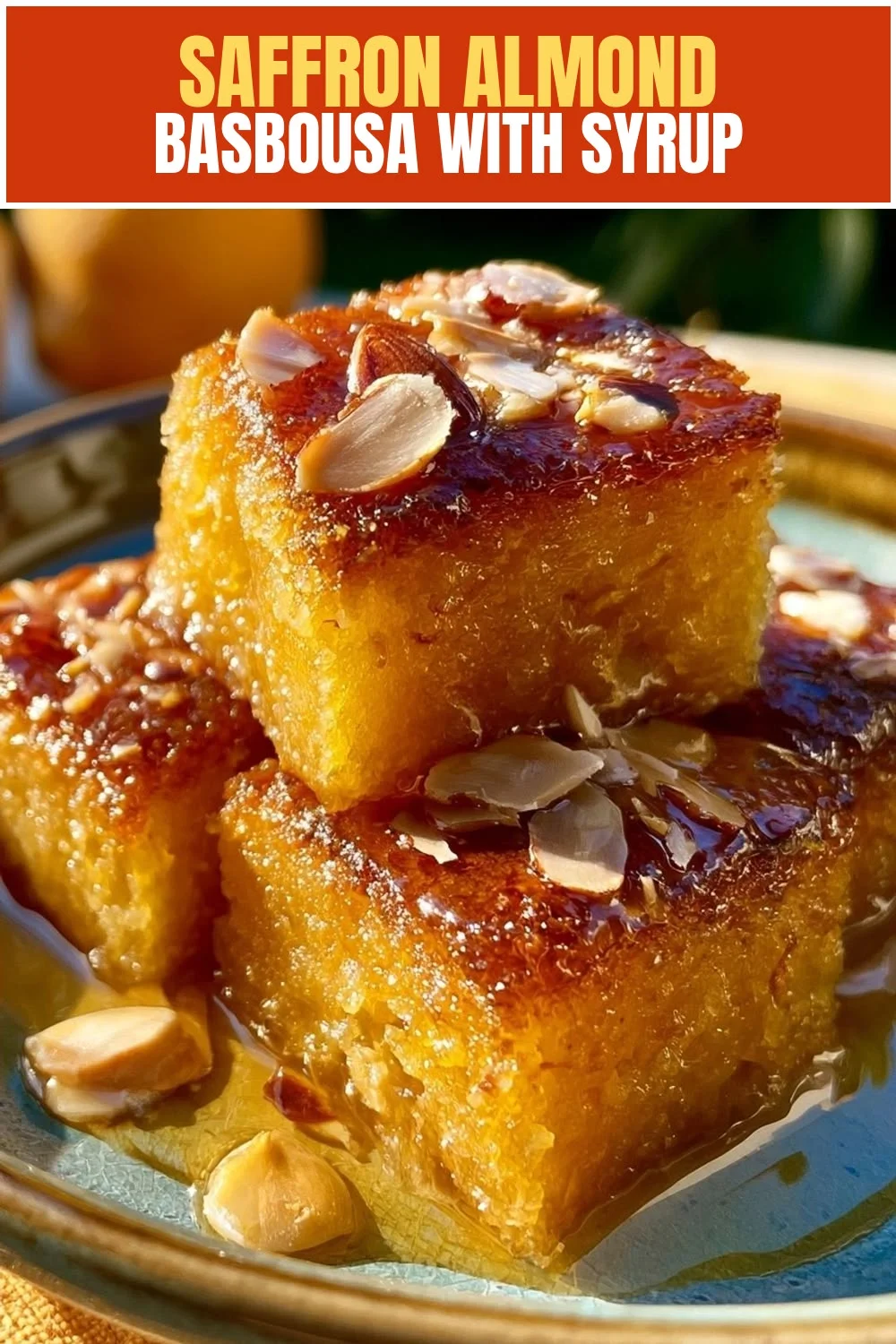
Basbousa is one of the most beloved sweets across the Middle East and North Africa, with roots tracing back centuries through Egypt, Lebanon, Syria, Turkey, and beyond. The name itself comes from Arabic, and the dessert goes by many names depending on the region, including harissa in some North African countries, revani in Turkey and Greece, and shamali in parts of the Levant.
At its heart, basbousa is a semolina-based cake that gets its signature moist, dense texture from a sugar syrup poured over it immediately after baking. The semolina absorbs the syrup beautifully, resulting in a cake that is simultaneously firm, tender, and sticky in the most satisfying way. Historically, the syrup was often flavored with rose water or orange blossom water, ingredients that remain popular today.
Saffron’s introduction into basbousa recipes likely came through trade routes that connected Persia, the Arabian Peninsula, and North Africa. Saffron was a prized commodity along these routes, used in everything from royal feasts to medicinal preparations. When bakers began incorporating it into sweet semolina cakes, they were following a culinary tradition of elevating humble ingredients with precious spices.
Almonds have been a staple of Mediterranean Desserts baking for thousands of years. They were cultivated throughout ancient Egypt, Persia, and the Levant, prized for their richness and versatility. Pairing them with saffron in basbousa creates a dessert that feels rooted in centuries of tradition while still tasting completely fresh and exciting. This is a recipe with a real story behind it, and every bite carries that history forward.
Why You’ll Love This Recipe
This isn’t just another semolina cake. This Saffron Almond Basbousa with Syrup hits every note you want in a show-stopping dessert, and it’s remarkably easy to put together. Here’s exactly why this recipe deserves a permanent spot in your rotation.
- One bowl batter: Everything comes together in a single mixing bowl, which means less cleanup and more time enjoying your dessert.
- No fancy equipment needed: You don’t need a stand mixer, food processor, or any special tools. A bowl, a spatula, and a baking pan are all it takes.
- Incredible flavor depth: Saffron adds a floral, earthy complexity that transforms this from a simple cake into something truly special.
- Perfect texture every time: The syrup soak guarantees a moist, tender crumb that improves as it sits, making it ideal for making ahead.
- Naturally gluten-adaptable: With easy swaps, you can make a version that works for different dietary needs without sacrificing flavor.
- Crowd-pleaser at gatherings: This dessert feeds a crowd beautifully and looks impressive on any table without requiring advanced baking skills.
- Great for gifting: Cut into squares and pack them into a box for a homemade gift that feels genuinely thoughtful and delicious.
- Keeps well for days: Unlike many cakes that dry out quickly, basbousa actually gets better over time as the syrup fully absorbs into the crumb.
- Customizable toppings: From shredded coconut to pistachios to rose petals, you can easily adapt the presentation to suit any occasion.
- Meal-prep friendly: Bake a full tray, portion it out, and you’ve got a week’s worth of dessert sorted in under an hour.
Health Benefits and Ingredient Highlights
Every ingredient in this recipe plays a role, not just in flavor, but in the overall quality of what you’re eating. Let’s break down the key players and what they bring to the table.
Saffron
Saffron is one of the world’s most prized spices, harvested by hand from the Crocus sativus flower. Even a small pinch delivers a stunning golden hue and a distinctive floral, slightly honeyed flavor that no other ingredient can replicate. It has been used in traditional cooking and herbal medicine across the Middle East, Persia, and the Mediterranean for millennia.
Beyond its flavor, saffron contains compounds like crocin, crocetin, and safranal, which have been studied for their antioxidant properties. Research suggests that these compounds may support mood, reduce oxidative stress, and have anti-inflammatory effects. In a dessert context, you’re getting that beautiful complexity along with ingredients that have real nutritional heritage behind them.
Almonds
Almonds are a nutritional powerhouse packed with healthy monounsaturated fats, protein, vitamin E, magnesium, and fiber. In Mediterranean Desserts baking, they appear in everything from marzipan to almond cakes to nut-studded pastries, and for good reason. They add richness, texture, and a natural sweetness that complements semolina beautifully.
The almond flour used in this recipe also adds moisture and structure to the batter, helping the basbousa hold together while staying tender. Toasting the almonds before using them as a topping intensifies their flavor and adds a satisfying crunch that contrasts perfectly with the soft, syrup-soaked cake below.
Semolina
Semolina is a coarsely ground durum wheat flour that gives basbousa its signature grainy, slightly chewy texture. It’s higher in protein than all-purpose flour and has a lower glycemic index than many refined grains, meaning it digests more slowly and provides more sustained energy. It’s also rich in B vitamins, iron, and magnesium.
The coarse texture of semolina is what allows it to absorb syrup so effectively, creating that iconic basbousa moisture that you just can’t achieve with regular flour. Using fine semolina gives a smoother crumb, while coarse semolina produces a more rustic, textured bite. Both work in this recipe, depending on your preference.
Greek Yogurt
Greek yogurt is a traditional addition to many basbousa recipes, and it serves a critical function in the batter. Its acidity reacts with baking powder to help the cake rise slightly, and its fat content adds richness and moisture without making the crumb greasy. It also gives the batter a subtle tang that balances the sweetness of the syrup beautifully.
From a nutritional standpoint, Greek yogurt is an excellent source of protein, calcium, and probiotics. Even in a dessert recipe, using yogurt means you’re adding functional ingredients that contribute real nutritional value to every slice.
Honey and Sugar Syrup
The syrup is what makes basbousa basbousa. A simple combination of sugar, water, lemon juice, and either rose water or orange blossom water gets poured hot over the freshly baked cake. For this recipe, you can add a touch of honey to the syrup for a floral depth that plays beautifully with the saffron.
Lemon juice in the syrup isn’t just for flavor. It prevents the sugar from crystallizing as it cools, ensuring a smooth, glossy syrup every time. If you opt to include honey, raw honey also contains antioxidants and trace enzymes that refined sugar doesn’t, giving your syrup a slight nutritional edge.
Ingredients
These quantities make one 9×13 inch tray of basbousa, which yields approximately 20-24 squares depending on how you cut it. All measurements are for a standard batch, and substitution notes are included in parentheses.
For the Basbousa Cake:
- 2 cups fine semolina (or coarse semolina for a more textured crumb)
- 1/2 cup almond flour (or finely ground blanched almonds)
- 1/2 cup granulated sugar (or coconut sugar for a more caramel-like flavor)
- 1 cup full-fat Greek yogurt (or plain full-fat yogurt, or dairy-free yogurt for a vegan version)
- 1/2 cup unsalted butter, melted (or coconut oil for a dairy-free option)
- 2 large eggs (or 2 flax eggs for vegan, see substitution note below)
- 1/4 teaspoon saffron threads, bloomed in 2 tablespoons warm water or warm milk
- 1 teaspoon baking powder
- 1/4 teaspoon fine sea salt
- 1 teaspoon vanilla extract
- 1/2 teaspoon ground cardamom (optional but highly recommended)
For the Topping:
- 1/2 cup whole blanched almonds or slivered almonds, lightly toasted
- 1 tablespoon tahini or melted butter for greasing the pan
For the Saffron Syrup:
- 1 cup granulated sugar
- 3/4 cup water
- 1 tablespoon fresh lemon juice
- 1 tablespoon raw honey (optional, for extra depth)
- 1 tablespoon rose water or orange blossom water (use whichever you prefer or have available)
- Pinch of saffron threads (bloomed in 1 tablespoon warm water)
Substitution Note for Flax Eggs: Mix 1 tablespoon ground flaxseed with 3 tablespoons water per egg. Let it sit for 5 minutes until it forms a gel before using.
Step-by-Step Instructions
Follow these steps carefully, especially the syrup-soaking step, as it’s the key to that perfect basbousa texture. This recipe is beginner-friendly, so don’t worry if it’s your first time making it.
- Bloom the saffron: Place 1/4 teaspoon saffron threads into 2 tablespoons of warm water or warm milk. Let it steep for at least 10 minutes until the liquid turns a deep golden orange. This releases the flavor and color compounds fully.
- Preheat your oven: Set your oven to 350°F (175°C) and position the rack in the center. Allow the oven to fully preheat before the batter goes in, which ensures even baking.
- Grease your pan: Brush a 9×13 inch baking pan generously with melted butter or tahini. Make sure to get into the corners and up the sides so the basbousa releases cleanly after baking.
- Mix the dry ingredients: In a large mixing bowl, combine the semolina, almond flour, granulated sugar, baking powder, salt, and ground cardamom if using. Stir together until evenly distributed.
- Add the wet ingredients: Add the melted butter, Greek yogurt, eggs, vanilla extract, and the bloomed saffron liquid (including the threads) to the dry mixture. Stir everything together until a thick, cohesive batter forms. Don’t overmix, just stir until there are no dry patches.
- Rest the batter: Let the batter sit for 10-15 minutes at room temperature. This allows the semolina to absorb the moisture from the yogurt and eggs, which improves the final texture significantly.
- Pour and smooth: Transfer the batter to your prepared pan and use a spatula or the back of a wet spoon to spread it into an even, smooth layer. The batter will be thick, so take your time getting it even.
- Score the top: Using a sharp knife or bench scraper, score the top of the batter into diamond or square shapes. Don’t cut all the way through, just about halfway down. This scoring makes it easy to place almonds and cut clean squares after baking.
- Add the almond topping: Press one whole blanched almond (or a small cluster of slivered almonds) into the center of each scored square. Press them in firmly so they don’t fall off during baking.
- Bake the basbousa: Place the pan in the preheated oven and bake for 25-30 minutes, until the top is golden brown and the edges are pulling slightly away from the sides of the pan. The center should feel set but not hard when you press it lightly.
- Make the saffron syrup while the basbousa bakes: Combine the sugar and water in a small saucepan over medium heat. Stir until the sugar dissolves, then stop stirring. Add the lemon juice, bloomed saffron, and honey if using. Let it simmer for 8-10 minutes until it thickens slightly and coats the back of a spoon. Remove from heat and stir in the rose water or orange blossom water.
- Soak the basbousa immediately: As soon as the basbousa comes out of the oven, pour the hot syrup slowly and evenly over the entire surface. Work from the edges inward and pour in stages so the cake can absorb each addition before you add more. You should hear a satisfying sizzle when the syrup hits the hot cake.
- Rest and absorb: Allow the basbousa to sit in the pan at room temperature for at least 30 minutes before cutting. This resting time is non-negotiable, it’s when the syrup fully soaks into the crumb and creates that signature moist texture.
- Cut and serve: Follow the score lines you made before baking and cut the basbousa into clean squares or diamonds. Use a sharp knife and wipe it clean between cuts for the neatest presentation. Serve at room temperature or slightly warm.
Make It Ahead and Batch Prep Guide
This Saffron Almond Basbousa with Syrup is one of the best desserts you can make for batch prep because it genuinely improves with time. The syrup continues to absorb and redistribute through the crumb for 24-48 hours after baking, which means a tray made on Sunday will taste even better by Tuesday. If you’re prepping desserts for the week, this is your best friend.
To batch prep efficiently, consider doubling the recipe and baking two trays at once. Use two 9×13 inch pans side by side on the same oven rack, or bake them one after the other if your oven doesn’t accommodate both. Make a double batch of syrup as well and have it ready to pour the moment each tray comes out of the oven. The syrup needs to go on hot, so timing matters.
Once the basbousa has fully cooled and absorbed the syrup, portion it into individual squares and store them in airtight containers. This makes grabbing a dessert portion throughout the week effortless. You can keep them layered with parchment paper between rows to prevent them from sticking together if you’re storing multiple pieces.
The batter can also be prepared the night before and stored covered in the refrigerator. Just be sure to bring it back to room temperature for 20-30 minutes before baking, so the batter spreads evenly and the baking time stays accurate. The syrup, however, should always be made fresh and used hot directly after baking for the best results.
Common Mistakes to Avoid
Even experienced bakers make a few missteps with basbousa. Here are the most common ones and exactly how to avoid them.
- Skipping the batter resting step: If you go straight from mixing to baking, the semolina won’t have time to hydrate properly. The result is a grainy, dry texture instead of the tender crumb you’re after. Always rest the batter for at least 10-15 minutes.
- Pouring cold syrup over hot cake: Temperature contrast matters enormously here. Hot syrup poured over hot cake creates the rapid absorption that makes basbousa so incredibly moist. Cold syrup sits on top and doesn’t penetrate the crumb properly. Always pour the syrup while both the cake and syrup are hot.
- Under-blooming the saffron: Saffron needs time and warmth to release its color and flavor compounds. Rushing this step means you’ll get very little of that signature golden hue or floral flavor in your finished dessert. Always bloom it for a minimum of 10 minutes in warm, not boiling, liquid.
- Overbaking the cake: Basbousa should come out of the oven looking golden and set, but not hard or cracked. If it’s overbaked, the syrup will be absorbed unevenly and the edges may become too firm. Start checking at the 25-minute mark and pull it as soon as the top is golden and the sides begin to pull away.
- Cutting too soon: It’s tempting to cut into the tray immediately after pouring the syrup, especially when your kitchen smells that good. But cutting before the syrup has fully absorbed means the squares will fall apart and the texture won’t be right. Wait at least 30 minutes, ideally longer.
- Using the wrong semolina type without adjusting: Fine and coarse semolina behave differently in this recipe. If you use coarse semolina, your batter may need a few extra tablespoons of yogurt or melted butter to stay cohesive. Always check the batter consistency before resting it and adjust if needed.
Notes, Tips and Variations
Substitutions
If you don’t have almond flour, you can use finely ground blanched almonds processed in a food processor until they reach a fine, sandy consistency. The texture will be very similar. You can also substitute almond flour with desiccated coconut for a completely different but equally delicious flavor profile.
Rose water and orange blossom water are both traditional flavoring options for the syrup. If you can’t find either, a splash of pure vanilla extract or a strip of lemon zest simmered in the syrup works as a fragrant alternative. Avoid artificial flavorings, as the subtlety of real extracts is what gives basbousa its distinctive character.
Dietary Variations
To make this recipe dairy-free, swap the butter for coconut oil and use a full-fat plant-based yogurt such as coconut yogurt or almond yogurt. The texture will be slightly different but still very good. Make sure your plant-based yogurt is thick and creamy rather than thin and watery for the best result.
For a vegan version, use the flax egg substitution mentioned in the ingredients section and choose dairy-free alternatives for both the butter and yogurt. The basbousa will be slightly denser, but the flavor will still be wonderful. You can also reduce the sugar in the syrup by 20-25% and add a bit more honey to compensate if you prefer a less intensely sweet result.
Cooking Tips
For the most even bake, use a metal baking pan rather than glass or ceramic. Metal conducts heat more evenly and helps the base of the basbousa brown properly without burning the edges. If you only have a glass dish, reduce the oven temperature by 25°F and check for doneness a few minutes earlier.
When scoring the batter before baking, dip your knife in cold water between each cut to prevent the batter from sticking to the blade. This gives you cleaner score lines, which makes the final cutting much easier. The scoring also allows the syrup to penetrate more deeply into the cake, reaching every part of the crumb.
Topping Ideas and Flavor Boosters
Once you’ve mastered the base recipe, there are so many ways to customize and elevate your Saffron Almond Basbousa with Syrup. Here are some of the best options to try.
- Crushed pistachios: Scatter finely chopped pistachios over the top after the syrup soak for a pop of green color and a rich, buttery crunch.
- Dried rose petals: A few edible dried rose petals scattered on top make this look extraordinarily beautiful for a dinner party or special occasion.
- Desiccated coconut: Mix 1/4 cup into the batter or sprinkle it on top before baking for a subtle tropical note that pairs surprisingly well with the saffron.
- Clotted cream or Ashta: Serve each square with a small dollop of clotted cream or the Middle Eastern cream called Ashta for an indulgent, restaurant-worthy presentation.
- Cardamom whipped cream: Whip heavy cream with a pinch of cardamom and a touch of honey for a topping that complements every element of this dessert.
- Orange zest: Add 1 teaspoon of freshly grated orange zest to the batter or the syrup for a bright citrus note that cuts through the richness.
- Sesame seeds: Toast them lightly and sprinkle over the top before baking for a nutty flavor and a gorgeous visual contrast against the golden cake.
- Honey drizzle: Right before serving, drizzle a thin stream of raw honey over the cut squares for extra shine and sweetness.
- Pomegranate seeds: Scatter a handful over the top of the cooled, cut basbousa for a jewel-like garnish with a tart pop of flavor.
- Mastic-scented syrup: Add a small piece of mastic gum (ground to a powder) to the syrup for a unique pine-like, aromatic flavor that is traditional in Greek and Levantine sweets.
- Tahini swirl: Drizzle a thin ribbon of tahini across the top of the baked basbousa before pouring the syrup for a nutty, sesame-forward variation.
Who This Recipe Is For
This recipe works for a wide range of people and situations. Here’s who will love it most.
- Home bakers who want to try something new: If you’re bored of the same chocolate cake or banana bread routine, basbousa offers a completely different and exciting baking experience.
- Meal preppers: This dessert is made for batch cooking. It stores beautifully and gets better over time, making it perfect for weekly prep sessions.
- Hosts and entertainers: Need a dessert that serves a crowd, looks stunning, and can be made ahead? This is it. It travels well and doesn’t need refrigeration for serving.
- Lovers of Mediterranean Desserts sweets: If you have a soft spot for baklava, kanafeh, or ma’amoul, you’ll fall head over heels for basbousa.
- Beginner bakers: With no creaming, no folding, and no tempering, this is one of the most forgiving cake recipes you can make. If you can stir, you can make basbousa.
- Parents looking for a dessert kids will love: The soft texture and honey-sweet syrup make this universally appealing, and even picky eaters tend to go back for seconds.
- Anyone exploring saffron for the first time: This recipe uses just enough saffron to make an impact without being overwhelming, making it a perfect introduction to this beautiful ingredient.
Storage and Meal Prep Tips
Refrigerator
Store cut basbousa squares in an airtight container in the refrigerator for up to 5-6 days. Place a sheet of parchment paper between layers if you’re stacking multiple pieces to prevent them from sticking together. The syrup keeps the cake moist, so you won’t need to add anything extra before storing.
When you’re ready to eat a piece from the fridge, let it come to room temperature for about 15 minutes first. Basbousa tastes best at room temperature or slightly warm, as the cold dulls the floral saffron notes and makes the crumb feel denser than it actually is.
Freezer
Basbousa freezes exceptionally well. Cut it into individual portions, wrap each piece tightly in plastic wrap, and place them in a freezer-safe zip-lock bag or airtight container. Frozen basbousa will keep well for up to 2 months without losing quality.
To freeze the whole tray before cutting, allow it to cool completely, then cover the pan with plastic wrap followed by a layer of foil. Label with the date and use within 6 weeks for the best flavor. Thaw overnight in the refrigerator and bring to room temperature before serving.
Reheating
To reheat individual squares, place them on a microwave-safe plate and heat for 15-20 seconds. This is enough to take the chill off and soften the crumb slightly without drying it out. If the basbousa seems a touch dry after refrigeration, brush a little warm simple syrup over the top before reheating.
For oven reheating, place the squares in a baking dish covered with foil at 300°F (150°C) for 8-10 minutes. This method is better for reheating a larger batch, as it warms everything evenly without drying out the edges. Remove the foil for the last 2 minutes if you want the top to firm up slightly.
Nutrition Facts
The following nutritional values are estimates per serving, based on the recipe yielding 20 squares. Actual values may vary depending on specific ingredients used and exact portion sizes.
| Nutrient | Per Serving (1 square) |
|---|---|
| Calories | 195 kcal |
| Protein | 4 g |
| Total Carbohydrates | 28 g |
| Total Fat | 8 g |
| Fiber | 1.5 g |
| Sugar | 18 g |
| Sodium | 85 mg |
These values are based on using full-fat Greek yogurt, unsalted butter, and the full syrup recipe. Using coconut oil, reducing the syrup amount, or swapping to a lower-fat yogurt will change the values accordingly.
FAQs
Can I make basbousa without eggs?
Yes, you can make a vegan version using flax eggs. Mix 1 tablespoon of ground flaxseed with 3 tablespoons of water for each egg and let it gel for 5 minutes before adding it to the batter. The texture will be slightly denser than the egg-based version, but the flavor and that signature syrup-soaked quality will still come through beautifully. Vegan Middle Eastern Desserts Roundup
Why is my basbousa dry or crumbly?
The most likely cause is either overbaking or not using enough syrup. Make sure the syrup is poured hot and immediately after baking, covering the entire surface evenly. If the basbousa still seems dry after the syrup has absorbed, you can brush on a little extra warm syrup and allow it to sit for another 20 minutes before serving. Also check that you rested the batter before baking, as skipping this step can result in a drier, grainier crumb.
Can I use coarse semolina instead of fine?
Absolutely. Coarse semolina produces a more textured, rustic crumb that many people actually prefer. The key adjustment is to let the batter rest for a full 20-30 minutes rather than the usual 10-15 minutes to give the larger semolina granules enough time to absorb the moisture from the yogurt and eggs. You may also need to add an extra tablespoon of yogurt or melted butter if the batter looks too dry after mixing.
How much saffron should I use, and can I substitute it?
This recipe uses 1/4 teaspoon in the batter and a small pinch in the syrup. That amount gives you a noticeable golden color and floral flavor without being overpowering. If you don’t have saffron or find it too expensive, you can substitute a small amount of ground turmeric (1/8 teaspoon) for the color and add an extra 1/2 teaspoon of vanilla or a few drops of orange blossom water for the floral element. The flavor won’t be identical, but it will still be delicious. Saffron Recipes for Mediterranean Desserts Lovers
Can I make this recipe gluten-free?
Traditional basbousa is made with semolina, which contains gluten. For a gluten-free version, you can experiment with a combination of rice flour and almond flour, though the texture will be quite different. Some bakers use a certified gluten-free semolina alternative, but availability varies. If gluten-free baking is a priority for you, look for dedicated gluten-free basbousa recipes that have been specifically tested with alternative flours to ensure the right result. Gluten-Free Mediterranean Desserts Guide
Conclusion
This Saffron Almond Basbousa with Syrup is the kind of recipe that earns its place in your permanent dessert rotation. It’s approachable enough for a beginner, impressive enough for a dinner party, and delicious enough that you’ll find yourself sneaking squares straight from the container at midnight. The combination of golden saffron, nutty almonds, and fragrant syrup creates something truly magical.
What makes this recipe even more special is how well it lends itself to meal prep. Bake a full tray, store it properly, and you’ll have a week of gorgeous desserts ready to go. It gets better as it sits, which means your Monday batch will taste even more incredible by Wednesday. That’s the kind of cooking that fits into real life.
Now it’s your turn. Gather your ingredients, bloom that saffron, and get baking. Once you taste your first piece of freshly syrup-soaked basbousa, you’ll understand exactly why this dessert has been beloved across cultures for centuries. Share it with the people you love, and don’t forget to come back and leave a comment telling us how yours turned out.