THE BEST N°1 Blackberry Opera Torte: The Elegant Bakery-Style Dessert Everyone Will Be Talking About
If you have ever walked past a French patisserie window and stopped dead in your tracks at the sight of a perfectly layered, glossy, jewel-toned cake, you already know the feeling this Blackberry Opera Torte delivers. It is one of those desserts that looks impossibly sophisticated but rewards every ounce of effort with flavor that lingers long after the last bite.
This post walks you through everything you need to know about making this stunning torte at home – from its rich pastry history and Mediterranean ingredient benefits to a full step-by-step recipe, batch prep guide, storage tips, and expert variations. Whether you are baking for a dinner party or treating yourself to something truly special, this guide has you covered.
Get ready to impress your table with layers of almond sponge, blackberry buttercream, espresso syrup, and a mirror-shine glaze that looks like it came straight from a high-end bakery. You do not need professional training – just patience, quality ingredients, and this guide.
Table of Contents
Personal Note
The first time I tasted an Opera Cake was at a small café tucked into a narrow street in the south of France, just a short drive from the Italian border. It arrived on a white ceramic plate, perfectly rectangular, paper-thin chocolate on top, and I remember thinking it looked too beautiful to eat. I ate three slices.
When I started building Mediterranean-inspired meal prep recipes for this site, I kept coming back to that memory. The original Opera Cake already leans on almonds and good coffee – two ingredients deeply woven into Mediterranean food culture. Adding blackberries felt like a natural evolution, not a departure. Fresh, dark berries are a staple from the Adriatic coast to the orchards of Andalusia.
This Blackberry Opera Torte is my love letter to that tradition. It honors the original French technique while pulling in the bold, fruit-forward flavors the Mediterranean table does so well. I hope it becomes a recipe you return to again and again, especially when you want to show off just a little.
Origins of the Dish
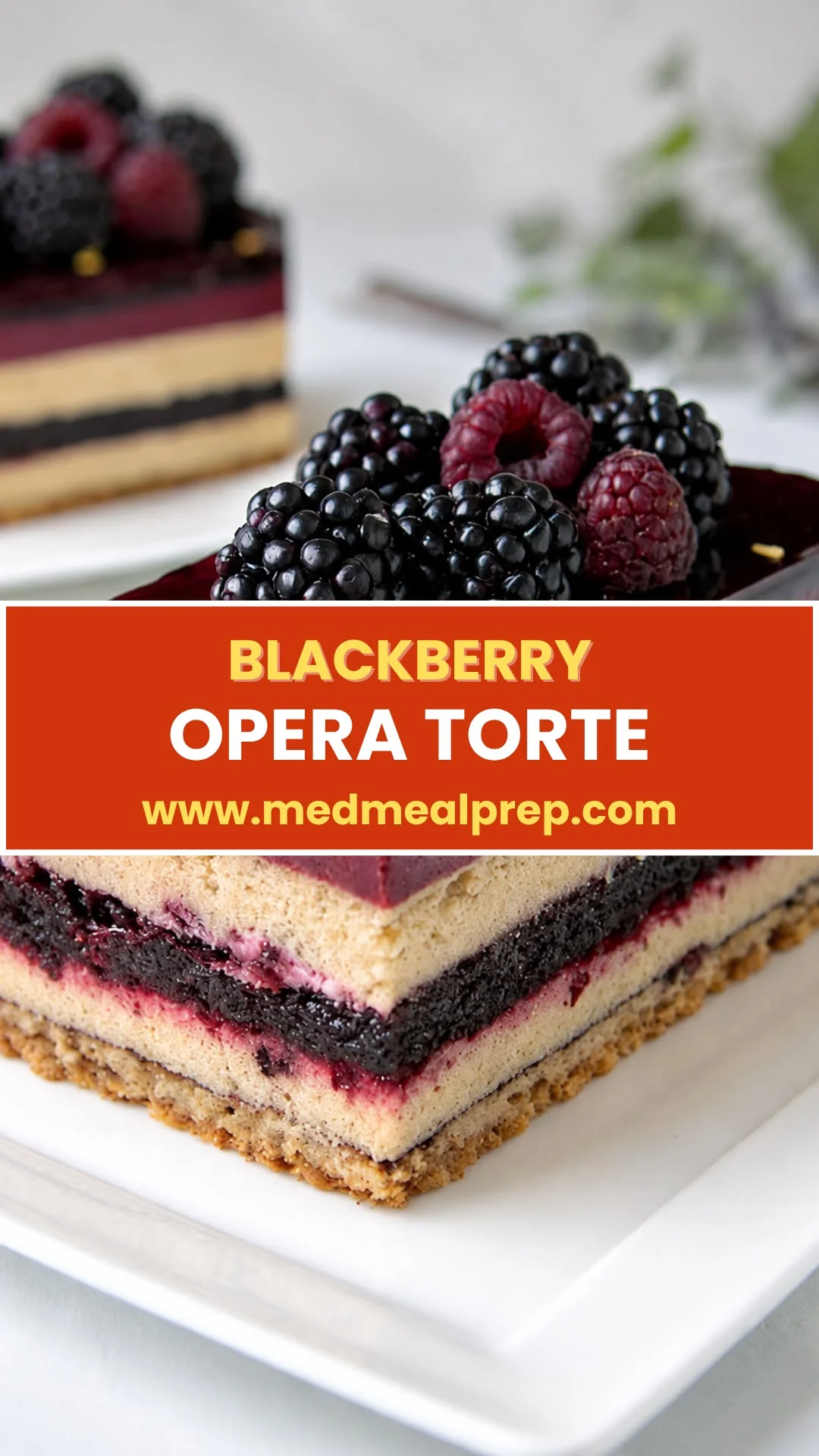
The Opera Cake – known in French as “Gâteau Opéra” – is widely credited to the Parisian patisserie Dalloyau, which claims the recipe was created in the 1950s and named in honor of the Paris Opera. The iconic layered construction – jaconde sponge soaked in coffee syrup, layered with coffee buttercream and chocolate ganache – quickly became a benchmark of French pastry skill. It spread across Europe and into the Mediterranean basin as French culinary influence shaped the bakery traditions of Italy, Spain, Greece, and North Africa.
Some historians point to Gaston Lenôtre as a rival claimant, suggesting he introduced the Opera Cake to a wider Parisian audience in the 1960s through his own patisserie empire. Regardless of who got there first, the cake became synonymous with Parisian elegance. Its construction demands precision – thin, even layers, a perfect glaze, and a balance of bitter coffee against rich buttercream and dark chocolate.
The Mediterranean connection runs deeper than geography. Almonds, the core of the jaconde sponge, have been cultivated across the Mediterranean for thousands of years. Ancient almond orchards still grow in Sicily, Portugal, and Spain. Coffee culture, another pillar of the Opera Cake experience, is equally rooted across the Mediterranean – from the espresso bars of Naples to the thick coffee of Istanbul and the café culture of Marseille. When you eat an Opera Cake, you are tasting centuries of Mediterranean trade and flavor exchange.
The Blackberry Opera Torte takes this storied dessert and introduces the berry-forward brightness that defines Mediterranean summer cooking. Wild blackberries grow across the hillsides of Provence, Tuscany, and the Iberian Peninsula. Incorporating them into the opera structure is not reinvention – it is homecoming. The tartness of blackberries cuts through the richness of buttercream in exactly the way Mediterranean cooks have always balanced fat with fruit, sweetness with acidity.
Why You’ll Love This Recipe
There are plenty of impressive desserts in the world, but very few deliver this combination of visual drama, layered flavor, and genuine make-ahead practicality. Here is exactly why this torte deserves a permanent spot in your baking rotation.
- Stunning visual impact: The glossy blackberry mirror glaze and clean, layered cross-section make this torte look like it came straight from a professional bakery case.
- Deeply complex flavor: Bitter espresso, sweet-tart blackberry, rich almond sponge, and velvety buttercream work together in every single bite.
- Mediterranean ingredient synergy: Almonds, olive oil, fresh berries, and coffee are all cornerstone ingredients of Mediterranean cooking and eating culture.
- Perfect for meal prep: This torte actually improves after a night in the refrigerator as the layers meld and the flavors deepen – making it ideal for advance preparation.
- Freezer friendly: You can freeze individual slices and pull them out whenever you need a showstopping dessert with zero extra work.
- Adaptable to dietary needs: With simple swaps, you can make this dairy-free, gluten-light, or refined-sugar-reduced without sacrificing the core experience.
- Genuine crowd pleaser: Every person at the table will be asking for the recipe. It works for birthdays, dinner parties, holidays, or a very good Tuesday.
- Teaches real baking skills: Making this torte builds your confidence with jaconde sponge, Italian buttercream, ganache, and mirror glaze – four techniques that translate across dozens of other recipes.
- Uses seasonal ingredients: Blackberries peak in late summer across the Mediterranean, making this a beautiful way to celebrate the season’s best produce.
- Scales beautifully: You can make a small four-portion version for a quiet dinner or scale up to feed a crowd at a celebration table.
Health Benefits and Ingredient Highlights
While this is a dessert – and a luxurious one at that – several of its core ingredients carry genuine nutritional value. The Mediterranean diet has always embraced the idea that indulgence and nourishment are not opposites. Here is a closer look at what makes this torte more than just beautiful.
Blackberries
Blackberries are one of the most antioxidant-dense fruits you can eat. They are loaded with anthocyanins – the pigments that give them their deep purple-black color – which have been studied for their role in reducing inflammation and supporting cardiovascular health, two pillars of Mediterranean wellness.
One cup of fresh blackberries delivers around 30 milligrams of vitamin C, along with vitamin K, manganese, and a respectable amount of dietary fiber. The fiber content helps slow the absorption of sugars in a dessert context, making blackberries one of the smarter fruit choices for a rich bake.
The tartness of blackberries also means you need less added sugar to achieve a bright, balanced flavor. That natural acidity does real work in this recipe, keeping the torte from feeling cloying despite its multiple rich layers.
Almond Flour
Almonds are one of the defining foods of the Mediterranean region. From the almond groves of Majorca to the marzipan traditions of Sicily and the almond milk of medieval Andalusia, this nut has shaped the region’s cuisine for millennia. The jaconde sponge in an opera torte relies on almond flour as its structural base, and it brings much more than texture.
Almond flour is rich in vitamin E, magnesium, and heart-healthy monounsaturated fats. These are the same fats celebrated in the Mediterranean diet for their role in supporting healthy cholesterol levels and brain function. Using almond flour instead of standard all-purpose flour also means the sponge carries more protein and fewer refined carbohydrates per gram.
The fat content in almonds also contributes to the sponge’s incredible moisture retention. Even after a day or two in the refrigerator, the jaconde layers stay tender and never dry out – a practical benefit that makes this recipe even better for meal prep purposes.
Espresso
The espresso syrup that soaks each layer of the torte is more than a flavor vehicle – it is a direct expression of Mediterranean café culture. Espresso is consumed daily across Italy, Spain, Greece, France, and the broader Mediterranean world, and moderate coffee consumption has been associated in multiple studies with improved cognitive function and reduced risk of certain chronic diseases.
Coffee contains polyphenols and chlorogenic acids that act as antioxidants in the body. It also contributes a deep bitterness that is essential to balancing the sweetness of the buttercream and the fruity brightness of the blackberries. Without the espresso component, this torte would be one-dimensional.
Dark Chocolate
The thin chocolate ganache layer in this torte uses high-quality dark chocolate – ideally 70 percent cacao or above. Dark chocolate at this percentage is a genuine source of flavonoids, compounds that support heart health and reduce oxidative stress. The Mediterranean diet consistently includes small amounts of dark chocolate as part of a balanced approach to eating.
Beyond nutrition, dark chocolate performs a structural role in the torte. It creates a firm, slightly crisp layer that gives each slice its characteristic clean cross-section. It also provides the deepest flavor note in what is ultimately a symphony of complementary tastes.
Eggs
Eggs are a Mediterranean kitchen cornerstone. They provide the lift, structure, and richness in both the jaconde sponge and the Italian buttercream. Eggs are a complete protein source and supply choline, a nutrient important for brain health and liver function, as well as fat-soluble vitamins A, D, E, and K.
In the context of this recipe, eggs do heavy lifting. Whole eggs beaten with almond flour create a stable foam that traps air and produces the light-but-moist texture that makes the jaconde sponge so prized. Egg whites whipped separately add additional airiness, making each layer cloud-like despite being thin.
Ingredients
These quantities make one full 9×13 inch torte, cut into approximately 12 generous slices. All components can be made in stages over two days.
For the Jaconde Almond Sponge (makes 3 thin layers):
- 200g (2 cups) almond flour, finely ground (substitute: hazelnut flour for a nuttier flavor)
- 200g (1 and 3/4 cups) powdered sugar, sifted
- 6 large eggs, room temperature
- 6 large egg whites, room temperature
- 30g (3 tablespoons) all-purpose flour, sifted (substitute: 1:1 gluten-free blend for gluten-free version)
- 30g (2 tablespoons) unsalted butter, melted and cooled (substitute: refined coconut oil for dairy-free)
- Pinch of fine sea salt
For the Espresso Soaking Syrup:
- 120ml (1/2 cup) strong brewed espresso, cooled (substitute: very strong brewed coffee)
- 60g (1/4 cup) granulated sugar
- 30ml (2 tablespoons) coffee liqueur, optional (substitute: vanilla extract for alcohol-free)
For the Blackberry Buttercream:
- 300g (2 and 1/2 cups) fresh or frozen blackberries (thawed if frozen)
- 200g (1 cup) granulated sugar, divided
- 80ml (1/3 cup) water
- 4 large egg whites
- 350g (1 and 1/2 cups) unsalted butter, softened and cubed (substitute: high-quality dairy-free butter)
- 1 teaspoon pure vanilla extract
- Pinch of fine sea salt
For the Dark Chocolate Ganache Layer:
- 150g (5.3 oz) dark chocolate, 70 percent cacao or higher, finely chopped
- 120ml (1/2 cup) heavy cream (substitute: full-fat coconut cream for dairy-free)
- 15g (1 tablespoon) unsalted butter, softened
For the Blackberry Mirror Glaze:
- 200g (about 1 and 1/2 cups) fresh blackberries
- 150g (3/4 cup) granulated sugar
- 100ml (7 tablespoons) water
- 10g (1 tablespoon) powdered gelatin, bloomed in 3 tablespoons cold water
- 15ml (1 tablespoon) fresh lemon juice
For Garnish (optional but recommended):
- Fresh blackberries
- Edible gold leaf or gold dust
- Fresh mint leaves
Step-by-Step Instructions
Read through the entire recipe once before starting. This torte has multiple components that can be prepared in stages – knowing the full picture makes the process far less daunting.
Make the Jaconde Sponge:
- Preheat your oven to 220°C (425°F). Line three half-sheet pans (or one large pan used three times) with parchment paper and lightly grease. Set aside.
- In a large mixing bowl, combine the almond flour and powdered sugar. Add the 6 whole eggs and beat with a stand mixer or hand mixer on high speed for 5 minutes until the mixture is pale, thick, and has tripled in volume.
- Sift the all-purpose flour into the almond-egg mixture and fold gently with a spatula until no dry streaks remain. Fold in the melted butter in a thin stream, being careful not to deflate the batter.
- In a separate clean bowl, beat the 6 egg whites with a pinch of salt until stiff peaks form. The whites should be glossy and hold their shape when you lift the beater. Do not overbeat to dry peaks.
- Fold one-third of the egg whites into the almond batter to lighten it, then gently fold in the remaining whites in two additions. Use slow, sweeping motions to preserve as much air as possible.
- Divide the batter evenly among three prepared pans and spread it thinly and evenly using an offset spatula. Each layer should be about 4-5mm thick. Bake each layer for 5-7 minutes until golden and just set. Cool completely on a wire rack.
Make the Espresso Soaking Syrup:
- Combine the espresso and sugar in a small saucepan over medium heat. Stir until the sugar fully dissolves, about 2 minutes. Do not boil for long or the syrup will thicken too much.
- Remove from heat, stir in the coffee liqueur if using, and let cool to room temperature. Store in a jar in the refrigerator if making ahead.
Make the Blackberry Buttercream:
- Puree the blackberries in a blender or food processor until smooth. Press the puree through a fine-mesh sieve to remove seeds. You should end up with about 150-180ml of smooth blackberry puree. Set aside.
- Place 150g of the sugar and 80ml of water in a small saucepan. Cook over medium-high heat without stirring until the syrup reaches 118°C (245°F) on a candy thermometer.
- While the syrup heats, beat the 4 egg whites in a stand mixer on medium speed until foamy. Add the remaining 50g of sugar gradually and beat to soft peaks.
- With the mixer running on medium-high, pour the hot sugar syrup down the side of the bowl in a slow, steady stream. Avoid pouring directly onto the beater. Continue beating until the meringue is completely cooled to room temperature, about 8-10 minutes.
- Add the softened butter one cube at a time, beating well after each addition. The mixture may look curdled at first – keep beating and it will come together into a silky buttercream.
- Add the blackberry puree, vanilla extract, and salt. Beat on medium speed until fully incorporated and the buttercream is smooth, light purple, and holds its shape. Refrigerate for 15 minutes to firm up slightly before using.
Make the Dark Chocolate Ganache:
- Place the finely chopped chocolate in a heatproof bowl. Heat the heavy cream in a small saucepan over medium heat until it just begins to simmer – do not boil.
- Pour the hot cream over the chocolate and let it sit undisturbed for 2 minutes. Then stir gently from the center outward until completely smooth and glossy. Stir in the softened butter until incorporated.
- Let the ganache cool at room temperature until it is thick enough to spread but still slightly fluid, about 20-25 minutes.
Assemble the Blackberry Opera Torte:
- Line a 9×13 inch rectangular pan with parchment paper, leaving an overhang on all sides to help lift the finished torte. Trim your jaconde sponge layers to fit the pan precisely.
- Place the first sponge layer in the bottom of the pan. Brush generously with espresso syrup using a pastry brush – the sponge should be moist but not soggy. A thin, even coat of syrup is essential for flavor development.
- Spread half of the blackberry buttercream over the soaked sponge layer in an even layer using an offset spatula. Work slowly and carefully to avoid disturbing the sponge beneath.
- Place the second sponge layer on top. Brush with espresso syrup and spread the chocolate ganache evenly across the entire surface. Allow the ganache layer to chill in the freezer for 10 minutes to set before continuing.
- Place the third sponge layer on top of the set ganache. Brush with espresso syrup and spread the remaining blackberry buttercream in an even layer. Smooth the top as flat as possible – this is the surface that will receive the mirror glaze.
- Cover the assembled torte loosely with plastic wrap and refrigerate for at least 4 hours, or overnight. Chilling is non-negotiable – it locks in the layers and gives you clean slices later.
Make the Blackberry Mirror Glaze:
- Bloom the gelatin by sprinkling it over 3 tablespoons of cold water. Let it sit for 5 minutes until it absorbs the water and becomes spongy.
- Puree the blackberries with the sugar, water, and lemon juice in a blender. Press through a fine-mesh sieve. Transfer the strained puree to a saucepan and warm over medium heat until it just reaches a simmer.
- Remove from heat and stir in the bloomed gelatin until completely dissolved. Let the glaze cool to 35-37°C (95-98°F) before pouring – this is the window where it flows smoothly without melting your buttercream.
- Remove the chilled torte from the refrigerator. Pour the mirror glaze slowly and evenly over the surface, starting from the center and working outward. Tilt the pan slightly to encourage even coverage. Do not spread with a spatula or you will lose the mirror effect.
- Return the glazed torte to the refrigerator for at least 2 hours to allow the glaze to fully set before slicing and serving.
Slice and Serve:
- Use the parchment overhang to lift the torte onto a cutting board. Trim the edges with a sharp, hot knife for clean, professional-looking sides.
- Slice into neat rectangles using a sharp knife dipped in hot water and wiped dry between each cut. Garnish with fresh blackberries, mint leaves, and a touch of edible gold if desired. Serve immediately or store refrigerated.
Make It Ahead and Batch Prep Guide
The Blackberry Opera Torte is one of the most meal-prep-friendly desserts in this category precisely because it demands time and rewards patience. Every component can be made separately, stored, and assembled over two to three days. This means you never have to tackle the whole recipe in one marathon session.
Start with the jaconde sponge layers on day one. Once baked and cooled, wrap each layer tightly in plastic wrap and store at room temperature for up to 24 hours, or refrigerate for up to three days. The espresso syrup keeps for two weeks in a sealed jar in the refrigerator, so you can easily make a double batch and use it in other coffee-soaked cakes or over vanilla ice cream. Espresso Soaked Tiramisu Cups
The blackberry buttercream and ganache can both be made up to three days ahead. Store the buttercream in an airtight container in the refrigerator and let it come to room temperature before using – then re-whip briefly to restore its smooth, spreadable texture. The ganache can be refrigerated and gently rewarmed in 10-second microwave intervals, stirring between each, until it reaches a spreadable consistency again.
For batch prep at scale, consider doubling the recipe and making two full tortes simultaneously. One can be served fresh and one frozen whole for later. Wrap the un-glazed assembled torte tightly in plastic wrap and then in aluminum foil before freezing. Make and apply the mirror glaze fresh after thawing for the best visual results. This approach is ideal for catering, holidays, or any occasion where you want maximum impact with minimal day-of stress.
Common Mistakes to Avoid
- Overbeating the egg whites to dry peaks: Stiff but glossy peaks are what you want for the jaconde sponge. Dry, clumpy egg whites will not fold smoothly and the sponge will crack during baking and handling.
- Pouring mirror glaze at the wrong temperature: Too hot and it melts the buttercream beneath. Too cool and it sets before spreading evenly. Use a thermometer and wait for that 35-37°C sweet spot every time.
- Adding butter to warm Italian meringue: If the meringue base is still warm when you add the butter, the fat will melt instead of emulsify, leaving you with a soupy mess. Wait until the bowl feels completely cool to the touch before adding any butter.
- Using low-quality chocolate for the ganache: The ganache layer is thin but central to the torte’s depth of flavor. Using chocolate chips or lower-quality baking chocolate will produce a grainy, flat-tasting ganache. Use at least 70 percent cacao couverture for best results.
- Skipping the chilling time between layers: If you try to rush the assembly without proper chilling, the layers will slip and smear into each other. The cold is what holds the structure. Do not skip or shorten refrigeration steps.
- Cutting slices with a warm knife: A room-temperature or cold knife will drag through the glaze and smear the layers. Dip your knife in very hot water, wipe it dry completely, then make one clean cut. Repeat for every single slice.
Notes, Tips and Variations
Substitutions
If fresh blackberries are out of season, frozen blackberries work beautifully in both the buttercream and the mirror glaze. Thaw them completely and drain any excess liquid before pureeing to avoid a watery result. You can also substitute raspberries or a mixed berry blend for a different flavor profile while keeping the same technique.
For a dairy-free version, replace the butter in the buttercream with a high-quality plant-based butter – look for one with at least 80 percent fat content to ensure proper emulsification. Replace the heavy cream in the ganache with full-fat coconut cream and use dairy-free dark chocolate. The texture difference is minimal when done with quality ingredients.
Dietary Variations
To make this torte gluten-free, replace the 30g of all-purpose flour in the jaconde sponge with a 1:1 gluten-free flour blend or an additional 30g of almond flour. The texture will be slightly more delicate but equally delicious. Make sure all other ingredients including chocolate and liqueur are certified gluten-free if cross-contamination is a concern.
To reduce refined sugar, you can use coconut sugar in the espresso syrup and in the mirror glaze base. Note that coconut sugar will add a slight caramel tone to the glaze, shifting it from a deep jewel purple to a slightly darker, earthier hue. The flavor remains excellent. For the buttercream, however, regular granulated sugar works best for achieving a stable Italian meringue base.
Cooking Tips
Use an offset spatula for every spreading task in this recipe. It gives you the control to apply thin, even layers without pressing down on the sponge. A regular butter knife will leave drag marks and uneven surfaces that show in the cross-section when you slice.
If your buttercream breaks or looks curdled, do not panic and do not throw it out. Place the bowl over a pot of barely simmering water for 10-15 seconds to warm the outside of the mixture, then beat again on high speed. In almost every case, it will come back together within two minutes of re-beating. Italian Meringue Buttercream Guide
When trimming the sponge layers to fit the pan, save the trimmings. They can be crumbled over yogurt, soaked with a little espresso syrup and layered into a small glass for a quick trifle, or simply eaten immediately as a very good baker’s reward.
Topping Ideas and Flavor Boosters
The classic blackberry mirror glaze finish is stunning on its own, but these options let you personalize each torte to your audience and season.
- Fresh blackberry cluster: Arrange a tight cluster of fresh berries in one corner of the torte for a natural, abundant garnish.
- Edible gold leaf: A few torn pieces of edible gold leaf pressed gently onto the set glaze add extraordinary visual drama with almost no effort.
- Lemon zest curls: The bright citrus aroma of lemon zest placed just before serving cuts through the richness and adds a Mediterranean freshness.
- Crushed toasted pistachios: Scatter these along one edge of the torte for a Mediterranean nut note, a pop of green color, and a welcome crunch contrast.
- Dried rose petals: Food-safe dried rose petals echo Mediterranean floral traditions and make the presentation breathtaking for special occasions.
- Dark chocolate shards: Break tempered dark chocolate into irregular shards and press them at an angle into the glaze before it fully sets for a dramatic sculptural effect.
- Lavender sugar dusting: A light dusting of lavender-infused powdered sugar over individual slices at plating time adds a Provençal touch that pairs beautifully with blackberry.
- Whipped ricotta cream: Serve a small quenelle of lightly sweetened whipped ricotta alongside each slice – the Mediterranean dairy note complements every layer of the torte.
- Orange blossom syrup drizzle: A thin drizzle of orange blossom water syrup on the plate beneath each slice adds a floral, North African-inspired perfume that elevates the dessert.
- Fresh thyme sprig: One small sprig of fresh thyme placed beside each slice is a subtle, herbal nod to the savory side of Mediterranean flavor pairing with fruit.
- Blackberry coulis on the plate: Spoon a thin pool of fresh blackberry coulis beneath each slice to intensify the berry flavor and create a restaurant-quality plate presentation.
Who This Recipe Is For
This torte was designed with a specific kind of home baker in mind – but it reaches much further than that. Here is who will love this recipe most.
- Mediterranean diet followers who want a dessert that honors the diet’s core ingredients – almonds, dark chocolate, fresh fruit, and quality eggs.
- Home bakers who love a challenge and want to graduate from simple cakes to professional-level patisserie techniques without enrolling in a baking course.
- Meal preppers and planners who appreciate a dessert that can be broken into manageable stages across multiple days and stores beautifully.
- Dinner party hosts who want a centerpiece dessert that sparks conversation, photographs beautifully, and impresses even the most discerning guests.
- Gluten-sensitive bakers who can adapt the recipe with minimal changes and still achieve a result that is every bit as elegant as the original.
- Berry lovers who want to go beyond a basic crumble or pie and celebrate the full potential of blackberries in a sophisticated format.
- Gift bakers who want to create something handmade that genuinely rivals what you could buy from a fine bakery. A boxed slice of this torte is an extraordinary gift.
- Anyone celebrating a special occasion – birthdays, anniversaries, graduations, or simply the end of a very good week.
Storage and Meal Prep Tips
Refrigerator
Store the finished Blackberry Opera Torte tightly covered with plastic wrap in the refrigerator for up to 5 days. The flavors actually improve on days two and three as the espresso syrup fully penetrates the sponge and the layers meld together. Keep it on a flat shelf away from strong-smelling foods, as the mirror glaze can absorb odors.
If you have already sliced the torte, press a piece of plastic wrap directly against the cut faces of each slice before replacing the cover. This prevents the exposed layers from drying out and keeps every slice tasting as fresh as the first. Remove slices from the refrigerator about 10 minutes before serving to take the chill off.
Freezer
Individual slices freeze exceptionally well. Wrap each slice in plastic wrap, then in aluminum foil, and freeze for up to 2 months. Label each parcel with the date so you never lose track of what is in there. To thaw, transfer a slice to the refrigerator overnight and let it come up to temperature slowly – rushing with a microwave will damage the mirror glaze and soften the layers too quickly.
For a whole un-glazed torte, wrap tightly and freeze for up to 2 months. Thaw completely in the refrigerator over 12-24 hours before preparing and applying fresh mirror glaze. This gives you the best of both worlds – a make-ahead dessert that looks freshly made when you serve it.
Reheating
This torte is served cold or at cool room temperature and does not require reheating. If you prefer a slightly softer texture – particularly in the buttercream layers – simply allow the slice to sit at room temperature for 15-20 minutes before serving. Do not microwave this dessert, as the glaze will melt and the buttercream will separate.
If you are serving the torte at a summer outdoor event, keep it refrigerated until the very last moment before cutting and plating. The mirror glaze and buttercream are both sensitive to heat and will begin to soften if left out in warm conditions for more than 30 minutes. Plan ahead and plate individual slices just before guests are seated.
Nutrition Facts
Estimated per serving based on 12 servings per torte. Values are approximate and will vary based on specific brands and substitutions used.
| Nutrient | Per Serving |
|---|---|
| Calories | 485 kcal |
| Protein | 8g |
| Total Carbohydrates | 42g |
| Dietary Fiber | 4g |
| Total Sugars | 32g |
| Total Fat | 32g |
| Saturated Fat | 14g |
| Sodium | 95mg |
This torte is a treat designed for occasions, not everyday eating. Within a Mediterranean dietary pattern that emphasizes whole foods, vegetables, legumes, and healthy fats most of the time, a generous slice of this dessert fits perfectly as a celebratory indulgence.
FAQs
Can I make this torte without a stand mixer?
Yes, you can use a hand mixer throughout this recipe. The Italian meringue buttercream stage will take a bit longer – around 12-15 minutes of beating instead of 8-10 – because hand mixers have less power than stand mixers. Make sure your bowl is large and stable. For the jaconde sponge, a hand mixer works perfectly for both the whole egg stage and the egg white stage.
My blackberry buttercream looks grey instead of purple. What went wrong?
The most common cause is over-mixing after adding the blackberry puree. Anthocyanins – the pigments in blackberries – are sensitive to air and oxidation. Beat the puree in just until combined, then stop. Using very fresh or recently thawed berries also helps maintain the vibrant purple hue. A few drops of fresh lemon juice stirred into the puree before adding it to the buttercream can brighten the color significantly.
How do I get perfectly even layers when building the torte?
Use a kitchen scale to weigh the buttercream and ganache as you spread each layer. Dividing by weight ensures true evenness that eyeballing cannot achieve. You can also use adjustable layer cake strips or ruler guides placed along the sides of the pan to maintain a consistent layer height. Once the torte is assembled and chilled, the layers lock into place and any slight imperfections in spreading become invisible in the final slice.
Can I use store-bought blackberry jam instead of fresh berries in the buttercream?
You can, but the result will taste noticeably sweeter and less vibrant than using fresh or frozen berries. If you do use jam, choose a high-fruit, low-sugar variety and reduce the sugar in the Italian meringue base by about 20 percent to compensate for the additional sweetness. Press the jam through a sieve to remove any large fruit pieces before folding it into the buttercream.
Is it possible to make this recipe without gelatin for the mirror glaze?
Yes. You can substitute the powdered gelatin with an equal quantity of agar agar for a vegetarian and vegan-friendly mirror glaze. Note that agar sets firmer and at a higher temperature than gelatin, so you will need to pour it slightly warmer – around 40-45°C (104-113°F) – and work faster. The resulting glaze will be less jelly-like and slightly more matte but still beautiful. Vegan Mirror Glaze Techniques
Conclusion
The Blackberry Opera Torte is proof that home baking can be genuinely extraordinary when you take your time, use quality ingredients, and trust the process. This recipe brings together the almond-rich foundation of the Mediterranean pantry, the deep fruit brightness of summer blackberries, and the precise elegance of French patisserie technique. The result is a dessert that is more than the sum of its parts.
What makes it especially powerful as a meal prep recipe is that every stage of effort happens in advance – the sponge, the syrup, the buttercream, the ganache, the glaze. By the time you serve it, all you have to do is slice and arrange. That kind of make-ahead magic is the heart of smart, Mediterranean-inspired kitchen planning.
Whether you are baking this for the first time or coming back to refine your technique, know that every attempt gets you closer to the kind of dessert that makes a room go quiet in the very best way. Share your torte, enjoy the moment, and come back here for your next baking adventure. You have got this.