THE BEST N°1 Walnut Baklava Rolls | Easy Mediterranean Dessert Recipe
If you have ever tasted a crispy, honey-soaked pastry filled with crunchy walnuts, you already know the magic of baklava. These walnut baklava rolls take everything you love about the classic dessert and wrap it into a stunning, easy-to-make roll format that is perfect for any occasion.
Whether you are planning a dinner party, holiday spread, or just craving something sweet and indulgent, this recipe delivers rich flavor without overwhelming complexity. You will get a beautifully golden, flaky pastry layered with spiced walnuts and finished with a fragrant honey syrup.
In this post, you will find the full history behind baklava rolls, a detailed ingredient breakdown, step-by-step instructions, batch prep tips, storage guidance, and answers to your most common questions. Let’s get into it.
Table of Contents
Personal Note
The first time I made walnut baklava rolls from scratch, I was honestly nervous. Phyllo dough has a reputation for being fussy, and the idea of working with paper-thin layers felt intimidating. But once I got my hands on that buttery, crackling pastry, I was completely hooked.
What drew me to this roll-style variation is how much easier it is to handle compared to the traditional layered pan version. You roll each piece individually, which means you get perfectly portioned treats every single time. No cutting through layers, no uneven pieces.
These rolls have become my go-to when I want to impress guests without spending hours in the kitchen. The combination of warm spices, crunchy walnuts, and floral honey syrup is simply irresistible. I hope they become a staple in your home too.
Origins of the Dish
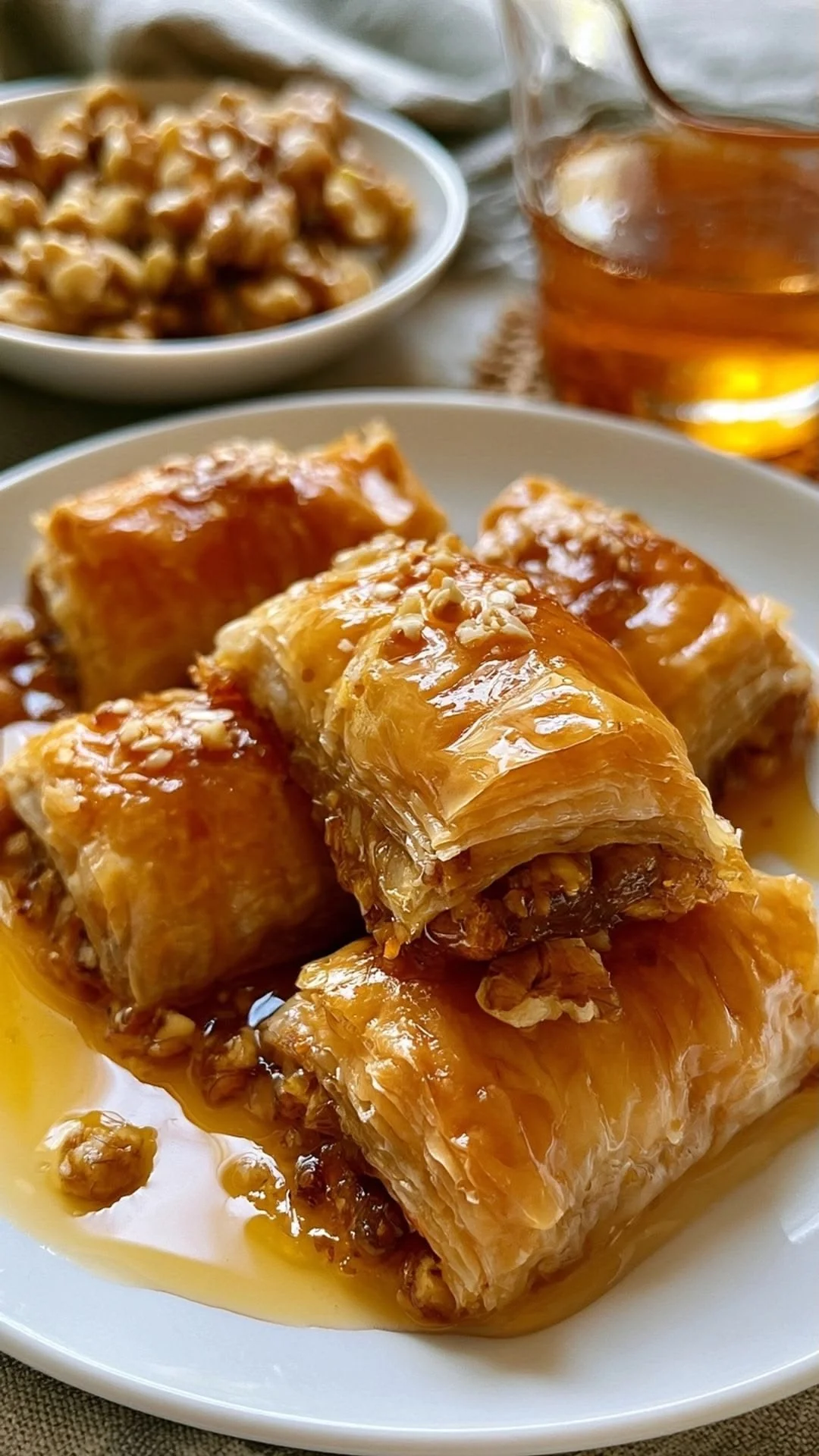
Baklava is one of the most celebrated desserts in the world, with roots stretching back thousands of years across the Eastern Mediterranean, Middle East, and Central Asia. Its exact origin is hotly debated, with Turkey, Greece, and several Arab nations all laying claim to the dessert. What is universally agreed upon is that baklava has been bringing people together over sweet, sticky bites for centuries.
The earliest known records of layered pastry desserts date back to the Assyrian Empire around the 8th century BC. Thin layers of dough were baked with nuts and sweetened with honey, a format that would evolve dramatically over time. When the Ottoman Empire rose to prominence, baklava became a fixture in palace kitchens, with chefs in the Topkapi Palace in Istanbul reportedly competing to create the most elaborate versions.
The rolled format, which is what we are making today, is particularly popular across Lebanon, Syria, and parts of Greece. Known in some regions as “baklawa rolls” or “finger baklava,” these cigar-shaped pastries are especially beloved because they are easy to pick up and eat without a fork. They became a staple at weddings, religious celebrations, and festive gatherings throughout the Mediterranean Desserts tradition.
Over the centuries, different regions developed their own signature touches. Turkish baklava leans heavily on pistachios and clarified butter. Greek versions often include a mix of walnuts and almonds with a cinnamon-forward spice profile. Lebanese and Syrian rolls tend to use rose water and orange blossom water in the syrup, adding a floral complexity that is absolutely stunning. The beauty of this dessert is that every version feels personal, and you can make it your own.
Why You’ll Love This Recipe
These walnut baklava rolls are genuinely one of the most rewarding desserts you can make at home. Here is exactly why this recipe deserves a permanent spot in your collection.
- Easier than traditional baklava: The roll format eliminates the need to stack dozens of phyllo layers perfectly, making this far more beginner-friendly.
- Incredible flavor payoff: Toasted walnuts, warm cinnamon, fragrant honey syrup, and flaky phyllo create layers of flavor in every single bite.
- Perfectly portioned: Each roll is an individual serving, making them ideal for sharing, gifting, or plating at a party.
- Make-ahead friendly: These rolls actually taste better the next day once the syrup has fully soaked in, making them perfect for advance prep.
- Freezer-friendly: You can freeze unbaked rolls and bake fresh whenever a craving hits, or store baked rolls for up to three months.
- Customizable: Swap walnuts for pistachios, add a pinch of cardamom, or use orange blossom water for a floral twist.
- Crowd-pleasing: Everyone loves baklava. These rolls disappear fast at every gathering, guaranteed.
- No fancy equipment needed: A baking sheet, pastry brush, and sharp knife are all you need.
- Beautiful presentation: The golden, glossy rolls look stunning on any dessert platter with minimal decoration required.
- Great for gifting: Pack them into a tin or box and you have a thoughtful, homemade gift that anyone would love to receive.
Health Benefits and Ingredient Highlights
While walnut baklava rolls are undeniably a dessert meant to be enjoyed, several of the core ingredients carry genuine nutritional benefits worth knowing about. Here is a closer look at the star players in this recipe.
Walnuts
Walnuts are one of the most nutrient-dense nuts you can eat. They are exceptionally high in omega-3 fatty acids, specifically alpha-linolenic acid (ALA), which supports heart and brain health. Just a small handful provides meaningful amounts of protein, fiber, magnesium, and manganese.
Research published in various nutrition journals has linked regular walnut consumption to reduced inflammation, improved cholesterol profiles, and better cognitive function. In the context of a dessert like this one, walnuts add more than just crunch – they bring actual substance and nutrition to every roll.
Toasting the walnuts before using them in this recipe deepens their flavor and enhances their natural oils, making every bite richer and more satisfying. It is one small step that makes a genuinely big difference in the final result.
Raw Honey
Raw honey is the backbone of a great baklava syrup. Unlike refined sugar, raw honey contains trace enzymes, antioxidants, and minerals that have been associated with anti-inflammatory and antimicrobial properties. It also carries a complex floral flavor profile that plain sugar simply cannot replicate.
When used in syrup for baklava rolls, honey provides that sticky, glossy finish that clings to the phyllo and seeps into every layer. The flavor continues to develop as the rolls sit, which is part of why day-old baklava is often even better than freshly baked.
If you have access to a local or single-origin honey, this is a great recipe to use it in. Varieties like orange blossom, thyme, or wildflower honey add an extra dimension of flavor that makes your walnut baklava rolls truly special.
Phyllo Dough
Phyllo dough is surprisingly lighter than many other pastry types. Because it is so thin, the actual amount of dough per roll is quite minimal compared to puff pastry or shortcrust. Much of the richness in baklava comes from the butter brushed between the layers rather than the dough itself.
When baked properly, phyllo creates an incredibly satisfying crunch without feeling heavy. It is also naturally cholesterol-free on its own, with the fat content determined almost entirely by how much butter or oil you use in preparation.
Cinnamon
Cinnamon is a powerhouse spice that does far more than add warmth to your walnut filling. It contains cinnamaldehyde, a compound that has been studied for its anti-inflammatory and antioxidant effects. Some research also suggests cinnamon may help support healthy blood sugar levels when consumed regularly.
In this recipe, cinnamon works beautifully with the sweetness of the honey and the richness of the walnuts, creating a balanced, warming flavor that feels distinctly festive. Ceylon cinnamon, sometimes called “true” cinnamon, is a particularly excellent choice for desserts because of its sweeter, more delicate flavor compared to the common Cassia variety.
Butter
Unsalted butter is what creates those shatteringly crisp, golden phyllo layers. While butter is a saturated fat and should be enjoyed in moderation, it is a natural, minimally processed ingredient that contributes significantly to the texture and flavor of this dessert. Using quality European-style butter with a higher fat content will give you even better results.
Many traditional baklava recipes use clarified butter, also known as ghee, because it has a higher smoke point and a more concentrated, nutty flavor. If you have ghee on hand, it is absolutely worth using here for a more authentic result.
Ingredients
These are everything you need to make approximately 24 walnut baklava rolls. All quantities are listed clearly, with substitution notes in parentheses where relevant.
For the Rolls:
- 1 package (16 oz / 450g) frozen phyllo dough, thawed overnight in the refrigerator
- 1 cup (225g) unsalted butter, melted (or clarified butter / ghee for a richer flavor)
- 3 cups (300g) raw walnuts, finely chopped (substitute pistachios, almonds, or a mix)
- 3 tablespoons granulated sugar (or coconut sugar for a deeper, caramel-like sweetness)
- 1.5 teaspoons ground cinnamon
- 0.25 teaspoon ground cloves (optional, but highly recommended)
- 0.25 teaspoon ground nutmeg (optional)
For the Honey Syrup:
- 1 cup (240ml) water
- 1 cup (200g) granulated sugar
- 0.75 cup (255g) raw honey (substitute with agave nectar for a vegan option)
- 1 tablespoon fresh lemon juice (brightens and prevents crystallization)
- 1 cinnamon stick
- 2 tablespoons rose water or orange blossom water (optional but traditional – adds beautiful floral aroma)
- 2 whole cloves (optional)
For Garnish (Optional):
- Finely chopped pistachios or walnuts, for sprinkling over the top
- Dried rose petals for a decorative, fragrant finish
Step-by-Step Instructions
Follow these steps carefully for perfect walnut baklava rolls every time. Read through the full instructions once before you begin so you feel confident with each step.
- Thaw the phyllo dough properly. Remove the phyllo from the freezer the night before and let it thaw in the refrigerator for at least 8 hours. When you are ready to work, bring it to room temperature on the counter for 30-45 minutes. Cold phyllo will crack and tear when you try to unroll it.
- Toast the walnuts. Spread the chopped walnuts in a single layer on a dry baking sheet and toast in a preheated 350°F (175°C) oven for 7-8 minutes, until fragrant and lightly golden. Watch them closely because they go from toasted to burned quickly. Let them cool completely before mixing.
- Make the walnut filling. In a medium bowl, combine the cooled toasted walnuts, granulated sugar, ground cinnamon, ground cloves, and nutmeg if using. Stir well until everything is evenly combined. Set aside.
- Make the honey syrup. Combine water, sugar, honey, lemon juice, cinnamon stick, and cloves in a small saucepan over medium heat. Stir to dissolve the sugar, then bring to a gentle boil. Reduce heat and simmer uncovered for 10-12 minutes until slightly thickened. Remove from heat, discard the cinnamon stick and cloves, and stir in the rose water or orange blossom water. Let the syrup cool completely before using – this is essential for getting that crisp phyllo texture.
- Prepare your workspace. Preheat your oven to 350°F (175°C). Line a large baking sheet with parchment paper. Have your melted butter and a pastry brush ready. Keep the phyllo sheets covered with a barely damp kitchen towel at all times to prevent them from drying out.
- Layer the phyllo sheets. Carefully unroll the phyllo and place one sheet flat on your clean work surface. Brush the entire sheet lightly but evenly with melted butter. Place a second phyllo sheet directly on top and brush again with butter. Add a third sheet and brush once more. You will work with three stacked, buttered sheets for each roll.
- Add the filling and roll. Spread about 3 tablespoons of the walnut filling in a thin, even line along the bottom edge of the layered phyllo, leaving about one inch of space on each side. Fold the two side edges inward over the filling by about half an inch to seal the ends. Then roll the phyllo tightly from the bottom upward, like a cigar or spring roll, keeping the tension firm and consistent.
- Brush and place on the baking sheet. Place the finished roll seam-side down on the prepared baking sheet. Brush the outside of the roll generously with more melted butter. Repeat with the remaining phyllo sheets and filling until you have used everything up, placing rolls close together but not touching.
- Score the rolls before baking. Using a very sharp knife, score each roll into 2-3 smaller pieces without cutting all the way through. This prevents the phyllo from shattering explosively when you cut them after baking. Scoring also allows the syrup to penetrate more deeply into each section.
- Bake until golden and crispy. Bake in the preheated oven for 25-30 minutes, or until the rolls are deep golden brown and completely crispy throughout. Rotate the pan halfway through baking for even coloring. Keep a close eye during the last 5 minutes.
- Pour cold syrup over hot rolls. As soon as the rolls come out of the oven, pour the completely cooled syrup slowly and evenly over the hot rolls. You will hear a satisfying sizzle. The temperature contrast between hot pastry and cold syrup is the key to maintaining that iconic crunch. Use all of the syrup.
- Rest and soak. Let the rolls sit uncovered at room temperature for a minimum of 2 hours, but ideally overnight. The syrup will soak in fully and the flavor will deepen significantly. Slice along your score marks before serving. Garnish with chopped pistachios or dried rose petals if desired.
Make It Ahead and Batch Prep Guide
These walnut baklava rolls are genuinely one of the best make-ahead desserts you can prepare. Unlike many pastries that go stale quickly, baklava actually improves with time as the syrup infuses every layer. This makes it ideal for meal prepping your dessert schedule in advance.
The easiest approach is to make a double batch on a weekend afternoon. Set aside a portion for immediate enjoyment and store the rest in an airtight container at room temperature or in the freezer. The hands-on time is roughly the same whether you make one batch or two, so you save a significant amount of effort over the course of the week.
If you want to freeze unbaked rolls for ultimate freshness, assemble all the rolls and place them on a parchment-lined baking sheet in the freezer for 1-2 hours until firm. Then transfer them to a zip-lock bag or airtight container. When you are ready to bake, there is no need to thaw – just brush with melted butter and bake directly from frozen at 350°F for 30-35 minutes. Make the syrup fresh on baking day for the best result. Honey Pistachio Phyllo Cups Recipe
You can also prepare the walnut filling and honey syrup several days in advance and store them separately. The filling keeps in an airtight container at room temperature for up to 5 days, and the syrup stays fresh in the refrigerator for up to two weeks. This means that on the day you want to bake, you only need to handle the phyllo assembly, cutting your active time significantly.
Common Mistakes to Avoid
Even experienced bakers can run into issues with baklava. Knowing what to watch out for will save you a lot of frustration and ensure your walnut baklava rolls come out perfectly every time.
- Using warm or hot syrup on hot rolls: This is the number one mistake. When both the syrup and the pastry are hot, the phyllo steams instead of absorbs, leaving you with a soggy result. Always use fully cooled syrup poured over just-out-of-the-oven rolls.
- Not keeping phyllo covered while you work: Phyllo dries out within minutes of exposure to air. Always keep unused sheets covered with a barely damp towel and work quickly. Cracked, dried phyllo cannot be saved.
- Using too much filling: Overfilling the rolls makes them difficult to close neatly and can cause the filling to spill out during baking. Use only about 3 tablespoons per roll and spread it in a thin, even line.
- Skipping the butter between layers: The butter is what creates those distinct, flaky, shatteringly crisp layers. Skimp on the butter and your rolls will be dry and tough rather than light and golden. Be generous but even with each brush stroke.
- Not toasting the walnuts: Raw walnuts have a slightly bitter, flat flavor compared to toasted ones. Toasting takes less than 10 minutes and dramatically improves the depth of flavor in your filling. Do not skip this step.
- Cutting rolls before they have rested: Cutting into baklava rolls before the syrup has had time to absorb, ideally at least 2 hours, will cause the layers to slide apart and the filling to spill out. Patience here is genuinely worth it.
Notes, Tips and Variations
Substitutions
If walnuts are not your thing or you want to mix it up, pistachios are the most popular alternative and produce a beautiful green-flecked filling. Almonds, pecans, or hazelnuts all work beautifully as well, either on their own or blended with walnuts for extra complexity.
For the syrup, you can replace honey partially or entirely with agave nectar or maple syrup for a vegan version. Maple syrup adds a distinctly warm, caramel-like flavor that is not traditional but absolutely delicious. If you prefer a less sweet syrup, reduce the honey by a few tablespoons and add a small strip of orange peel while simmering instead.
Dietary Variations
To make these rolls vegan, substitute the butter with high-quality vegan butter or a neutral-flavored refined coconut oil. Brush generously between layers just as you would with dairy butter. Use agave nectar instead of honey in the syrup. The result will be slightly different in flavor but still wonderfully crispy and delicious.
For a gluten-free version, seek out gluten-free phyllo dough, which is available in some specialty stores and online retailers. The handling is slightly different and the sheets tend to be more fragile, so work extra gently. The flavor and texture are very close to the original when handled correctly.
Cooking Tips
Use a pastry brush with soft bristles rather than a silicone brush for buttering the phyllo. Silicone brushes can be too heavy-handed and tear the delicate sheets. A soft natural bristle brush applies butter evenly and gently without damaging the layers.
When rolling the phyllo around the filling, keep the tension consistent, firm but not so tight that the dough tears. Think of rolling a burrito – gentle, even pressure all the way across. If a sheet tears slightly during rolling, do not panic. Simply press it back together gently and continue. Once baked, minor tears are completely invisible.
If you notice your rolls browning unevenly in the oven, rotate the baking sheet 180 degrees at the halfway point. If the tops are browning too quickly before the inside is fully cooked, loosely tent the pan with aluminum foil for the last 5-10 minutes of baking. Classic Greek Honey Cake Recipe
Topping Ideas and Flavor Boosters
Once your walnut baklava rolls are baked, syrup-soaked, and ready to plate, the fun continues. Here are some finishing touches and flavor additions that take these rolls to the next level.
- Finely chopped pistachios: Scatter over the top immediately after pouring the syrup for a pop of vibrant green color and extra crunch.
- Dried rose petals: A few scattered petals add a romantic, aromatic touch that is especially lovely for special occasions.
- Orange zest: A light grating of fresh orange zest over the finished rolls brightens the whole flavor profile with a citrusy lift.
- Extra honey drizzle: A thin drizzle of raw honey just before serving adds extra gloss and sweetness for honey lovers.
- Powdered sugar dusting: A very light dusting of powdered sugar adds a beautiful white contrast against the golden rolls.
- Sesame seeds: Toasted white or black sesame seeds add a subtle nutty flavor and attractive visual texture.
- Cardamom sugar: Mix a pinch of ground cardamom with a teaspoon of sugar and sprinkle over the top for a fragrant, spiced finish.
- Dark chocolate drizzle: A light drizzle of melted dark chocolate over cooled rolls is a non-traditional but absolutely irresistible addition.
- Fresh mint leaves: A small sprig of fresh mint alongside each roll on a serving platter adds freshness and visual appeal.
- Coconut flakes: Lightly toasted unsweetened coconut flakes add an unexpected tropical twist that pairs surprisingly well with the honey and cinnamon.
- Crushed freeze-dried raspberries: A dusting of tart, vibrant raspberry powder cuts through the sweetness and adds stunning color.
Who This Recipe Is For
These walnut baklava rolls are for a wide range of home cooks and dessert lovers. Here is a quick look at who will benefit most from this recipe.
- Home bakers who want to try something impressive without spending an entire day in the kitchen.
- Dessert meal preppers who want to make a large batch once and enjoy treats throughout the week without daily effort.
- Anyone hosting a dinner party who needs a show-stopping dessert that can be made entirely in advance.
- Gift givers looking for a thoughtful, homemade treat to pack beautifully into tins or boxes for holidays and special occasions.
- Baklava lovers who want to recreate their favorite restaurant or bakery dessert at home with full control over ingredients.
- Beginner bakers who are ready to try working with phyllo dough for the first time and want a forgiving, manageable format.
- Vegans and dairy-free eaters who can easily adapt this recipe with plant-based swaps without sacrificing flavor.
- Parents and families who want to introduce children to traditional Mediterranean Desserts flavors through a fun, hands-on recipe.
Storage and Meal Prep Tips
Refrigerator
Once your walnut baklava rolls have fully soaked in the syrup and are at room temperature, transfer them to an airtight container. Store at room temperature for up to 5 days if your kitchen is not too warm. If your home tends to run hot or humid, store them in the refrigerator to prevent spoilage, where they will keep well for up to 10 days.
Note that refrigerating baklava can cause the phyllo to soften slightly over time as the syrup continues to migrate. Many people actually prefer the softer texture that develops after a day or two. If you like them crispier, bring them to room temperature for 30 minutes before serving or warm briefly in a low oven at 300°F for about 5 minutes.
Freezer
Baked and syrup-soaked baklava rolls freeze exceptionally well. Place them in a single layer on a baking sheet and freeze until solid, about 2 hours. Then transfer to a zip-lock freezer bag or airtight container, layering with parchment paper to prevent sticking. They will keep for up to 3 months in the freezer.
You can also freeze unbaked rolls before the syrup stage. Assemble the rolls, brush with butter, and freeze on a baking sheet before transferring to a freezer bag. Bake from frozen at 350°F for 30-35 minutes, then apply freshly made cooled syrup immediately upon removing from the oven. This method gives you the freshest possible result.
Reheating
To reheat frozen or refrigerated walnut baklava rolls and restore some of their crispiness, place them on a baking sheet in a 300°F (150°C) oven for 5-8 minutes. Avoid microwaving because the moisture from the microwave will make the phyllo chewy and limp rather than crisp. The oven method preserves the texture much better.
If you are serving them at room temperature from the refrigerator, simply take them out 20-30 minutes beforehand and let them come to room temperature naturally. They are genuinely delicious at any temperature, so do not stress too much about serving them warm unless that is your preference. Lebanese Semolina Cake with Orange Syrup
Nutrition Facts
The following nutritional information is an estimate based on one walnut baklava roll (approximately 1/24 of the total recipe). Values may vary depending on specific brands and ingredient substitutions used.
| Nutrient | Per Serving (1 Roll) |
|---|---|
| Calories | 185 kcal |
| Total Fat | 12g |
| Saturated Fat | 4g |
| Total Carbohydrates | 18g |
| Dietary Fiber | 1g |
| Total Sugar | 13g |
| Protein | 3g |
| Sodium | 55mg |
These rolls are a satisfying dessert indulgence best enjoyed in moderation. The walnuts provide most of the protein and healthy fat content, while the honey syrup accounts for the majority of the sugar. If you are watching your sugar intake, you can reduce the amount of syrup used by about 25% for a less intensely sweet result.
FAQs
Can I use store-bought phyllo dough for walnut baklava rolls?
Absolutely. Store-bought frozen phyllo dough is what most home bakers use for this recipe, and it works beautifully. The key is to thaw it correctly, in the refrigerator overnight rather than at room temperature, and to bring it fully to room temperature before unrolling. This prevents the sheets from cracking. Brands vary slightly in sheet size and thickness, so you may need to adjust the number of layers slightly based on what you buy.
Why is my baklava soggy instead of crispy?
The most common cause of soggy baklava is using warm syrup poured over the rolls. The syrup must be completely cold or at least at room temperature when you pour it over the freshly baked, piping hot rolls. The temperature contrast is what creates that signature crunch. Another possible cause is underbaking, so make sure the rolls are deeply golden brown throughout before removing them from the oven.
How long does walnut baklava keep at room temperature?
Properly stored walnut baklava rolls will keep at room temperature in an airtight container for up to 5 days. In a cooler kitchen environment, they can sometimes last even longer. The honey in the syrup acts as a natural preservative, which is part of why baklava has such an impressive shelf life compared to other pastries. Avoid storing them in the refrigerator unless necessary, as the cold can soften the phyllo over time.
Can I make baklava rolls without a pastry brush?
Yes, you can. If you do not have a pastry brush, you can use a clean, food-safe foam brush or even a folded piece of paper towel to apply the butter between phyllo layers. The goal is to coat each sheet lightly and evenly without tearing it. Work gently and quickly to keep the phyllo from drying out while you work. A proper pastry brush is worth investing in for future recipes, but it is not essential for getting good results today.
Can I make these walnut baklava rolls without sugar in the syrup?
You can reduce the sugar in the syrup significantly if you prefer a more honey-forward, less intensely sweet result. Try using just 0.5 cup of sugar and increasing the honey to a full cup. The syrup will be slightly thinner but still beautifully fragrant and flavorful. A pure honey syrup without any added sugar is also an option – simply combine honey with a small amount of water and lemon juice, heat gently until combined, and use as directed. Keep in mind the texture and sweetness level will differ from the original recipe.
Conclusion
These walnut baklava rolls are proof that truly impressive desserts do not require professional training or complicated techniques. With a few pantry staples, a package of phyllo dough, and a little patience with the syrup step, you can produce a dessert that looks and tastes like it came from a high-end bakery. Every crispy, honey-drenched, walnut-filled bite is worth every second of effort.
What makes this recipe particularly special is how well it adapts to your lifestyle. Make a big batch on the weekend, stash extras in the freezer, customize the filling and syrup to your taste, and enjoy a little slice of Mediterranean Desserts tradition whenever the mood strikes. This is the kind of recipe you will come back to again and again.
If you try this recipe, I would love to hear how it turned out for you. Leave a comment below with your favorite variation, share it with a friend who loves baklava, or tag us on social media. Happy baking, and enjoy every golden, flaky, honey-soaked roll.