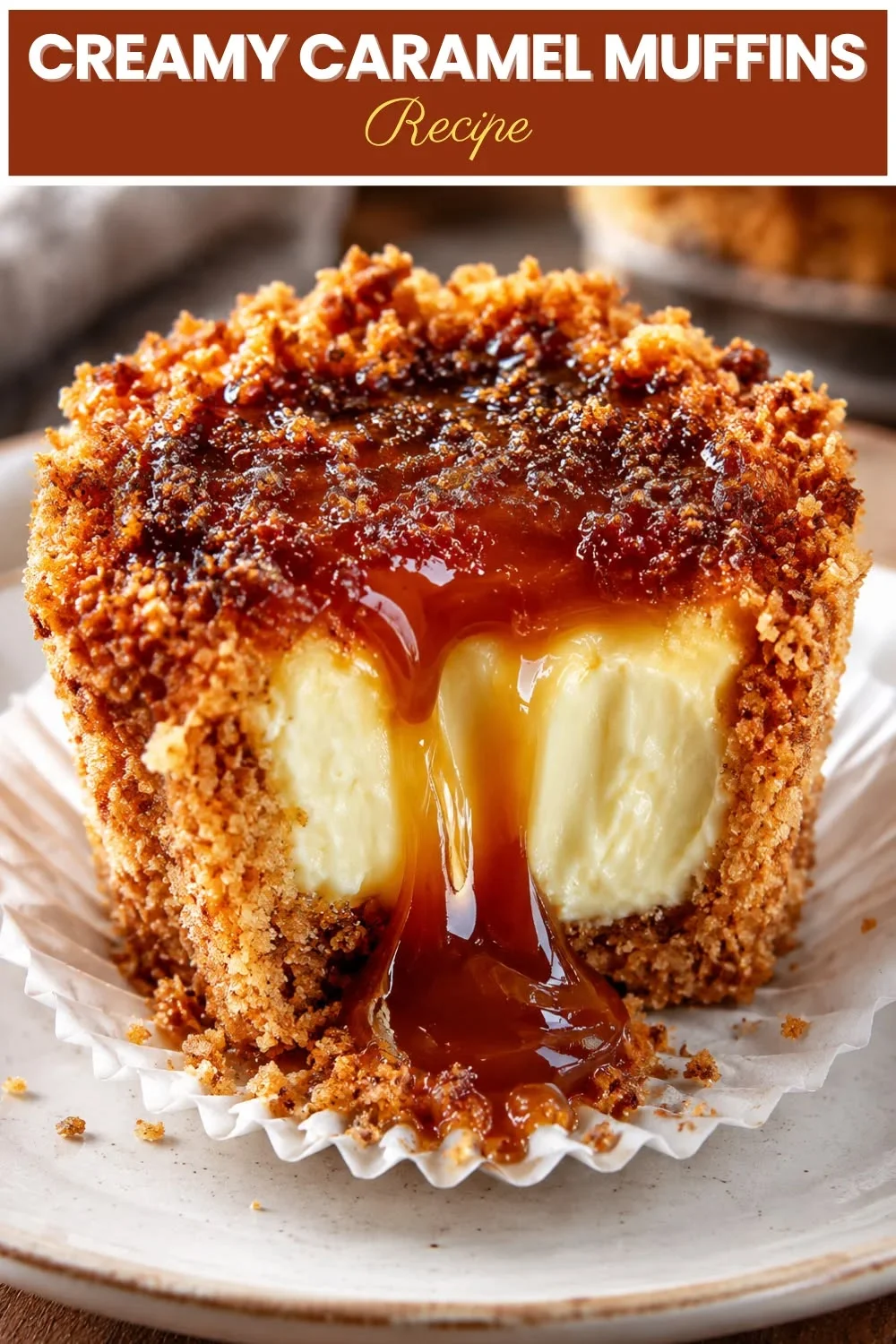
THE BEST N°1 Creamy Caramel Muffins with Tangy Lemon Curd: Easy Dessert Recipe You’ll Make Again and Again
If you’ve been searching for a dessert that delivers both rich, buttery sweetness and a bright, citrusy punch, these creamy caramel muffins with tangy lemon curd are exactly what you need. They hit every note – soft crumb, golden caramel swirl, and a silky lemon curd center that makes each bite feel like a little celebration.
This recipe is designed to be simple enough for beginners but impressive enough for a dinner party dessert spread. You’ll learn how to make the muffins from scratch, prep a quick lemon curd, and swirl in a smooth caramel sauce that ties everything together.
In this post, you’ll find the full recipe, step-by-step instructions, batch prep tips, storage guidance, and plenty of variations to make this your own. Whether you’re baking for a crowd or stocking your freezer with ready-to-grab treats, this guide covers everything you need.
Table of Contents
Personal Note
I first made these muffins on a rainy Sunday afternoon when I had a jar of homemade lemon curd sitting in the fridge and a craving for something deeply satisfying. I didn’t want plain muffins, and I didn’t want a full layer cake. I wanted something in between – something you could eat warm with a cup of tea without feeling like you’d taken on a full baking project.
The moment I pulled that first batch out of the oven, golden and domed with a glossy caramel swirl on top, I knew I had something worth sharing. The lemon curd peeked through the center when I broke one open, and that contrast of sweet caramel and tart lemon was genuinely one of the best flavor combinations I’d ever put in a muffin.
Now these are a staple in my dessert prep rotation. I make a double batch on the weekend, freeze half, and keep the rest on the counter for the week. They’re the kind of treat that makes an ordinary Tuesday feel special.
Origins of the Dish
Muffins as we know them today have a long and interesting history rooted in English baking traditions. The word “muffin” itself traces back to early 18th-century England, derived from the Low German word “muffe,” meaning a type of small cake. Early English muffins were yeast-leavened and cooked on a griddle, quite different from the tender, cake-like American muffin that became popular in the 19th century.
The American-style muffin – the kind we’re baking today – is essentially a quick bread baked in individual cups. It became a household staple in the United States during the 1800s, evolving from simple cornmeal or bran recipes into the flavor-forward, indulgent creations we see now. The addition of sweet mix-ins like chocolate chips, fruit, and eventually caramel sauces came as home bakers pushed the boundary between muffin and cupcake.
Lemon curd, meanwhile, has its own rich heritage. It originated in England during the 19th century as a fresh alternative to jam for spreading on toast and scones. The earliest versions were made by rubbing lemon zest into sugar and combining it with butter and eggs over low heat. It became a beloved component in British afternoon tea spreads and eventually found its way into tarts, cakes, and – more recently – baked goods like muffins and cupcakes.
Caramel sauce has roots going back even further, with French confectioners perfecting the technique of cooking sugar to a deep amber in the 17th century. The combination of caramel and lemon is a more modern innovation in dessert baking, born from the growing trend of pairing sweet and tart flavors for a more complex, balanced taste. When you combine all three elements – fluffy muffin, lemon curd, and caramel – you get a dessert that draws on centuries of baking tradition while feeling completely fresh and contemporary.
Why You’ll Love This Recipe
These creamy caramel muffins are the kind of recipe you’ll return to over and over. Here’s exactly why they deserve a permanent spot in your dessert rotation.
- Incredible flavor contrast: The tangy lemon curd against the sweet caramel creates a balanced, layered flavor profile that keeps every bite interesting.
- Soft and tender crumb: Using sour cream in the batter keeps these muffins incredibly moist without being dense or heavy.
- Perfect for batch baking: This recipe doubles easily, making it ideal for freezing and having desserts ready for the whole week.
- Beginner-friendly: No special equipment needed beyond a muffin tin and a hand mixer. Even first-time bakers can nail this.
- Crowd-pleasing presentation: The swirled caramel on top makes these look bakery-quality with minimal effort.
- Customizable: You can swap in different curds, change up the caramel, or add mix-ins to make these your own every time.
- No fancy ingredients: Everything you need is likely already in your pantry or easy to find at any grocery store.
- Make-ahead friendly: You can prep the lemon curd and caramel sauce days in advance, so baking day is quick and stress-free.
- Works for any occasion: These muffins work as a weekend treat, a potluck dessert, a gift, or a midweek pick-me-up without any changes to the recipe.
- Freezer-stable: They freeze beautifully for up to 3 months, so you always have something impressive ready to go.
Health Benefits and Ingredient Highlights
While these muffins are absolutely a dessert treat, several of the key ingredients bring real quality and even some nutritional value to the table. Understanding what goes into your bake helps you make smarter choices and appreciate the role each ingredient plays.
Lemon Juice and Zest
Fresh lemon juice is one of the most important flavoring agents in this recipe and it does more than just taste bright. Lemons are a natural source of vitamin C, an antioxidant that supports immune function and skin health. Even in small amounts used for flavoring, fresh lemon adds real nutritional value compared to artificial lemon extract.
Lemon zest, specifically, contains essential oils that carry an intense, aromatic citrus flavor that juice alone can’t replicate. These oils are also where much of the antioxidant content is concentrated in a lemon. Using both zest and juice in your lemon curd gives you a deeper, more complex flavor and maximizes the citrus impact in every bite.
Eggs
Eggs are the backbone of both the muffin batter and the lemon curd. They provide structure, help the batter rise, and add richness to the overall texture. Eggs are also a complete protein source, meaning they contain all nine essential amino acids your body needs.
The yolks, in particular, are important for the lemon curd – they give it that golden color and velvety, thick texture. Egg yolks contain fat-soluble vitamins like A, D, E, and K, which contribute to the nutritional density of the curd even in a dessert context.
Butter
Real, unsalted butter is essential in both the muffin batter and the lemon curd. It creates a tender, flavorful crumb in baked goods and gives the lemon curd its signature silky, spreadable texture. Butter from grass-fed cows, when you can find it, contains higher levels of omega-3 fatty acids and conjugated linoleic acid (CLA), which are beneficial fats.
In baking, butter also acts as a tenderizer by coating flour proteins and limiting gluten development. This is a big reason why butter-based muffins have a soft, delicate crumb rather than a chewy, bread-like texture. Using good quality butter makes a noticeable difference in the final result.
Sour Cream
Sour cream is the secret weapon in this muffin batter. It adds fat for moisture, and its natural acidity reacts with the baking soda to help the muffins rise higher and develop a lighter crumb. The result is a muffin that stays moist for days without becoming gummy or soggy.
Sour cream also contains beneficial bacteria from the fermentation process, similar to yogurt. This makes it slightly more digestible than regular cream for many people. If you prefer, full-fat Greek yogurt is an excellent swap that works almost identically in this recipe.
All-Purpose Flour
All-purpose flour provides the structure for these muffins, giving them enough body to hold the caramel swirl and lemon curd filling without collapsing. It has a moderate protein content – typically around 10-12% – which creates just enough gluten for structure without making the crumb tough.
If you’re looking to add a bit more nutrition, swapping half the all-purpose flour for whole wheat pastry flour is an easy adjustment. It adds fiber and a slightly nutty flavor without drastically changing the texture. Just avoid using regular whole wheat flour in a full swap, as it can make the muffins dense.
Brown Sugar
Brown sugar is used in both the muffin batter and the caramel sauce, and it’s not just there for sweetness. The molasses content in brown sugar adds depth of flavor – that warm, slightly smoky undertone that makes caramel taste so complex. It also contributes moisture to the batter, helping the muffins stay soft longer.
Brown sugar contains small amounts of minerals like iron, potassium, and calcium from the molasses, though these are present in minor quantities. The more important role it plays here is flavor – no other sweetener gives caramel its distinctive richness the way brown sugar does.
Ingredients
This recipe makes 12 standard-sized muffins. Here’s everything you need, organized by component.
For the Muffin Batter
- 2 cups (250g) all-purpose flour (substitute: 1 cup all-purpose + 1 cup whole wheat pastry flour for a nuttier flavor)
- 1 teaspoon baking powder
- 1/2 teaspoon baking soda
- 1/4 teaspoon fine sea salt
- 1/2 cup (115g) unsalted butter, softened to room temperature (substitute: same amount of coconut oil for a dairy-lite version)
- 3/4 cup (150g) light brown sugar, packed (substitute: coconut sugar for a less refined option)
- 2 large eggs, room temperature
- 1 teaspoon pure vanilla extract
- 1/2 cup (120g) full-fat sour cream (substitute: full-fat Greek yogurt for a similar texture and tang)
- 1/4 cup (60ml) whole milk (substitute: any plant-based milk)
For the Lemon Curd
- 3 large egg yolks
- 1/2 cup (100g) granulated white sugar
- 1/3 cup (80ml) freshly squeezed lemon juice (about 2-3 lemons)
- 1 tablespoon finely grated lemon zest
- 4 tablespoons (60g) cold unsalted butter, cubed
For the Caramel Sauce
- 1 cup (200g) granulated white sugar
- 6 tablespoons (85g) unsalted butter, cubed and at room temperature
- 1/2 cup (120ml) heavy cream, warmed
- 1/4 teaspoon fine sea salt (increase to 1/2 teaspoon for a salted caramel version)
Step-by-Step Instructions
Make the Lemon Curd (Do This First)
- Whisk together the egg yolks and sugar in a small, heavy-bottomed saucepan until the mixture is pale and slightly thickened, about 1 minute. Add the lemon juice and zest and whisk to combine.
- Place the saucepan over medium-low heat. Cook, stirring constantly with a wooden spoon or silicone spatula, for about 8-10 minutes. The curd is ready when it coats the back of the spoon and you can draw a clean line through it with your finger.
- Remove from heat and add the cold cubed butter a few pieces at a time, stirring until each addition melts fully. This emulsification step creates that silky, glossy texture. Pour the finished curd through a fine mesh strainer into a jar or bowl, press plastic wrap directly on the surface, and refrigerate for at least 1 hour until firm and scoopable.
Make the Caramel Sauce
- Pour the sugar into a medium, heavy-bottomed saucepan in an even layer. Cook over medium heat without stirring. Watch the edges carefully – when the sugar begins to melt and turn amber at the edges, gently swirl the pan to distribute the heat.
- Continue cooking until all the sugar is melted and has reached a deep amber color, which should take about 8-10 minutes total. Don’t walk away from the pan during this step – caramel can go from perfect to burnt very quickly.
- Remove from heat and immediately add the cubed butter. The mixture will bubble aggressively – that’s normal. Stir vigorously until the butter is fully incorporated. Slowly pour in the warmed cream while stirring constantly, then add the salt. Let the caramel cool to room temperature before using it in the muffins. It will thicken as it cools.
Make the Muffin Batter and Assemble
- Preheat your oven to 375°F (190°C). Line a 12-cup standard muffin tin with paper liners or grease it thoroughly with butter and flour to prevent sticking.
- Whisk together the flour, baking powder, baking soda, and salt in a medium bowl. Set aside. This is your dry ingredient mixture and you’ll use it in a moment.
- In a large bowl, beat the softened butter and brown sugar together with a hand mixer on medium speed for about 3 minutes until the mixture is light and fluffy. Proper creaming here makes a big difference in the final texture of your muffins.
- Add the eggs one at a time, beating well after each addition. Then mix in the vanilla extract and sour cream until just combined. Don’t overmix at this stage.
- Add the dry ingredients to the wet ingredients in two additions, alternating with the milk. Mix until just combined – a few streaks of flour are fine. Overmixing at this point will make your muffins tough.
- Fill each muffin cup about one-third full with batter. Add 1 teaspoon of chilled lemon curd directly to the center of each cup. Top with another layer of batter until each cup is about two-thirds to three-quarters full.
- Drizzle about 1 teaspoon of cooled caramel sauce over the top of each muffin. Use a toothpick or skewer to swirl it slightly into the batter for a marbled effect. Don’t go too deep or you’ll disturb the lemon curd center.
- Bake for 18-22 minutes until the tops are golden and a toothpick inserted into the outer edge of the muffin (not the center where the curd is) comes out clean. Avoid overbaking – pull them out as soon as they’re done to keep the crumb moist.
- Allow the muffins to cool in the tin for 5 minutes before transferring to a wire rack. Drizzle extra caramel sauce over the tops while they’re still slightly warm for the most dramatic, glossy finish.
Make It Ahead and Batch Prep Guide
These creamy caramel muffins are perfect for batch baking, and planning ahead means you’ll have impressive homemade desserts ready throughout the week with almost no effort on the day you want to serve them. The key is knowing which components to prep first and how to store everything efficiently.
Start by making the lemon curd and caramel sauce up to 5 days in advance. Store the lemon curd in a sealed jar in the refrigerator – it actually tastes better after 24 hours as the flavors meld together. The caramel sauce can be stored in a jar at room temperature for up to 2 days or in the fridge for up to 2 weeks. Just warm the caramel gently before using it if it’s been refrigerated, since it firms up significantly when chilled.
When it comes to the muffins themselves, the batter can be mixed and kept in the refrigerator for up to 24 hours before baking. Cold batter actually produces taller, more domed muffins because the cold fat takes longer to melt in the oven, giving the batter more time to rise before setting. Just fill your muffin cups directly from the fridge and add 2-3 extra minutes to the baking time.
For large-scale batch prep, double or even triple the recipe and bake two full trays. Let the muffins cool completely, then arrange them in a single layer on a baking sheet and freeze for 2 hours before transferring to freezer bags. This prevents them from sticking together and makes it easy to grab just one or two at a time. Label everything with the date so you can track freshness. easy dessert batch cooking guide
Common Mistakes to Avoid
- Overmixing the batter: This is the number one muffin mistake. Overmixing develops gluten and leads to dense, rubbery muffins with large tunnels through the crumb. Mix until the flour just disappears – lumps are your friend here.
- Using cold eggs and butter: Cold butter won’t cream properly with the sugar, and cold eggs can cause the batter to curdle. Take your eggs, butter, and sour cream out of the fridge at least 30 minutes before you start baking.
- Skipping the lemon curd chilling step: If your lemon curd isn’t firm enough when you add it to the muffin cups, it will spread out and mix into the batter instead of staying as a distinct, gooey center. Make sure it’s cold and thick before assembling.
- Adding caramel that’s too hot: Hot caramel will thin out in the batter and sink to the bottom of the muffin cups rather than swirling on top. Let it cool to room temperature – it should be pourable but thick, like a loose honey consistency.
- Overbaking: Muffins continue to cook from residual heat after you pull them from the oven. Pull them out as soon as the edges look set and a toothpick in the outer portion comes out clean. Even 2-3 extra minutes can dry them out significantly.
- Overfilling the muffin cups: More than three-quarters full and you risk batter spilling over the sides during baking. The muffins will also bake unevenly, with raw centers and overdone tops. Fill to exactly two-thirds to three-quarters for the best results.
Notes, Tips and Variations
Substitutions
If you don’t have sour cream, full-fat Greek yogurt works as a 1:1 replacement and gives a similar tang and moisture level. You can also use creme fraiche for an even richer result. For a dairy-free version, use coconut yogurt and vegan butter throughout – the texture changes slightly but the flavor is still excellent.
Don’t have fresh lemons? Bottled lemon juice works in a pinch for the curd, but skip the zest or use dried lemon peel sparingly, as the flavor will be noticeably more flat. If you can get fresh lemons, it’s worth it – the flavor difference is significant. For the caramel, you can substitute brown butter (beurre noisette) for regular butter to add an extra layer of nuttiness to the sauce.
Dietary Variations
To make these muffins gluten-free, use a 1:1 gluten-free baking flour blend. Bob’s Red Mill and King Arthur both make reliable blends that work well in muffin recipes. Add 1/4 teaspoon of xanthan gum if your blend doesn’t already include it, as this helps bind the structure in the absence of gluten.
For a reduced-sugar version, you can cut the sugar in the batter by up to 25% without dramatically affecting the texture. The lemon curd sugar is harder to reduce because sugar plays a functional role in the gelling process, but you can try reducing it by about 2 tablespoons. Using a sugar substitute like erythritol or allulose works reasonably well in the batter, though it may affect browning.
Cooking Tips
For the tallest, most dome-shaped muffins, try the high-heat trick: start the oven at 425°F (220°C) for the first 5 minutes of baking, then reduce to 375°F (190°C) without opening the oven door. The initial blast of heat causes the batter to spring up quickly before the crust sets, creating that beautiful bakery-style dome.
When making the caramel, resist the urge to stir the sugar while it’s melting. Stirring introduces crystals and can cause the caramel to seize up and turn grainy. Swirling the pan gently is the right technique. If your caramel does seize, don’t panic – add a tablespoon of water and return it to low heat, stirring until the crystals dissolve.
Topping Ideas and Flavor Boosters
Once your creamy caramel muffins come out of the oven, the fun doesn’t stop there. Here are over ten ways to dress them up or give them an entirely different personality.
- Extra lemon curd drizzle: Warm a spoonful of lemon curd and drizzle it over the tops after baking for a bright citrus finish that doubles the lemon impact.
- Flaky sea salt: A pinch of flaky Maldon salt on top of the caramel swirl right before baking creates a salted caramel effect that elevates the whole muffin.
- Lemon glaze: Mix 1 cup powdered sugar with 2 tablespoons fresh lemon juice for a simple drizzle glaze that sets into a glossy, tangy coating.
- Toasted almond slices: Scatter a few sliced almonds on top before baking. They add crunch and a subtle nuttiness that pairs beautifully with the caramel.
- Cream cheese frosting: A small dollop of tangy cream cheese frosting turns these muffins into almost-cupcakes – perfect for a party spread. easy cream cheese frosting recipe
- Candied lemon slices: Thin candied lemon rounds placed on top make for a stunning, professional-looking finish with almost no effort.
- Crushed graham crackers: Sprinkle crushed graham crackers over the batter before baking for a lemon bar-inspired crunch topping.
- Coconut flakes: Lightly toasted coconut flakes add tropical sweetness and texture that works surprisingly well with the lemon curd filling.
- White chocolate drizzle: Melt a small amount of white chocolate and drizzle it over the cooled muffins for an extra layer of creamy sweetness.
- Powdered sugar dusting: The simplest option – a light dusting of powdered sugar over cooled muffins gives them a clean, elegant look with no extra prep.
- Brown butter glaze: Drizzle cooled brown butter mixed with a little powdered sugar over the tops for a nutty, sophisticated finish that complements the caramel beautifully.
Who This Recipe Is For
These creamy caramel muffins are wonderfully versatile, and you don’t have to be an experienced baker to make them work. Here’s exactly who will love this recipe.
- Beginner bakers who want to make something impressive without complicated techniques or special equipment.
- Dessert meal preppers who want to bake once and have satisfying treats available for the entire week without daily effort.
- Home bakers who love classic flavors but want a creative twist that elevates a familiar format into something truly memorable.
- Parents and caregivers looking for a homemade treat kids will love and that can be made in advance for school events or weekend snacks.
- Entertainers and hosts who need a crowd-pleasing dessert that looks bakery-quality but can be made the day before the event.
- Gift bakers who want to bring something homemade and thoughtful to a friend, neighbor, or holiday gathering.
- Lemon lovers who want that bright citrus pop in every bite but balanced with something rich and sweet rather than overwhelmingly tart.
- Caramel enthusiasts who appreciate the depth of real, homemade caramel sauce and want to use it in something beyond ice cream sundaes.
Storage and Meal Prep Tips
Refrigerator
Because these muffins contain a lemon curd filling, they should be stored in the refrigerator if you’re keeping them for more than one day. Place them in an airtight container to prevent them from absorbing fridge odors and drying out. They’ll stay fresh and moist in the fridge for up to 5 days.
When you’re ready to eat a refrigerated muffin, let it sit at room temperature for about 15-20 minutes before eating, or warm it briefly in the microwave for 15-20 seconds. This brings back the soft, tender crumb and makes the caramel and lemon curd filling slightly gooey again.
Freezer
These muffins freeze exceptionally well for up to 3 months. Cool them completely after baking – this is non-negotiable, as freezing warm muffins creates ice crystals that make the crumb soggy when thawed. Wrap each muffin individually in plastic wrap, then place them in a labeled zip-lock freezer bag or airtight container for best results.
If you’re making a large batch specifically for the freezer, consider holding off on the extra caramel drizzle until after thawing. Fresh caramel on top after reheating always looks more polished than caramel that’s been frozen and thawed. Keep a small jar of caramel sauce in the fridge for this purpose.
Reheating
To reheat frozen muffins, remove them from the freezer and unwrap them. You can thaw overnight in the refrigerator, then warm in the microwave for 20-25 seconds. Alternatively, reheat directly from frozen by placing unwrapped muffins in a 300°F (150°C) oven for about 12-15 minutes until warmed through. The oven method gives a slightly crispier top which many people prefer.
Avoid microwaving on high power for more than 25 seconds – beyond that point the caramel can become very hot and the crumb can toughen. A lower power setting (50-60%) for a slightly longer time gives you more control and a better result every time.
Nutrition Facts
The following nutrition information is estimated per muffin (1 of 12) and includes the lemon curd filling and caramel swirl. Actual values may vary slightly based on specific brands used.
| Nutrient | Per Muffin (1 of 12) |
|---|---|
| Calories | 320 kcal |
| Total Fat | 16g |
| Saturated Fat | 9g |
| Carbohydrates | 42g |
| Sugars | 26g |
| Fiber | 0.7g |
| Protein | 4g |
| Sodium | 145mg |
These are indulgent dessert muffins meant to be enjoyed as a treat. For a lighter version, reduce the caramel sauce amount used per muffin and swap the sour cream for low-fat Greek yogurt to shave off some fat and calories while keeping the texture close to the original.
FAQs
Can I use store-bought lemon curd instead of making it from scratch?
Yes, absolutely. Store-bought lemon curd works perfectly in this recipe and is a great time-saver. Look for a high-quality jar with real lemon juice and butter listed in the ingredients – avoid versions with artificial lemon flavoring, as the taste difference is noticeable. Make sure the curd is cold and firm before you spoon it into the muffin cups so it stays as a distinct center rather than mixing into the batter.
Can I use store-bought caramel sauce instead of homemade?
Yes, store-bought caramel sauce is a perfectly fine shortcut. Use a thick, good-quality sauce rather than a thin, syrupy one, as thinner caramel will spread and sink into the batter instead of swirling on top. If the store-bought sauce is very runny, chill it in the fridge for 15-20 minutes before using it in the muffins to thicken it up enough for swirling.
Why did my muffins sink in the middle?
Sunken centers are usually caused by one of three things: underbaking, overfilling the muffin cups, or opening the oven door too early during baking. The lemon curd filling can also contribute if it’s too warm when added, causing steam pockets that collapse. Make sure your lemon curd is cold and firm, don’t open the oven before 15 minutes have passed, and test doneness in the outer edge of the muffin rather than the center.
Can I make mini muffins with this recipe?
Yes, this batter works beautifully in a mini muffin tin. Use about half a teaspoon of lemon curd per mini muffin and reduce the baking time to 10-13 minutes at the same temperature. Watch them closely, as mini muffins overbake quickly. This recipe will yield approximately 30-36 mini muffins from the quantities listed above, making them ideal for party platters or gifting. mini dessert muffin variations
How do I know when the caramel is ready without burning it?
The color is your best guide. You’re looking for a deep amber – think the color of dark honey or old pennies. If you have an instant-read thermometer, the caramel should read about 350°F (175°C) at this stage. The moment you smell a slight smokiness, that’s your warning that you’re at the edge of burnt – pull the pan from the heat immediately and add the butter to stop the cooking. It takes practice, but once you’ve made caramel a couple of times you’ll learn to trust your senses.
Conclusion
These creamy caramel muffins with tangy lemon curd are everything a great dessert should be – rich, bright, satisfying, and just impressive enough to feel special without demanding hours in the kitchen. The combination of homemade caramel, silky lemon curd, and a tender, buttery crumb is genuinely one of the most rewarding things you can pull out of your oven on a weekend afternoon.
Whether you’re baking a single batch for the week or doubling the recipe to stock your freezer, this is the kind of dessert that earns you compliments every single time. The techniques you practice here – making a proper caramel, cooking a smooth curd, and mixing a tender muffin batter – are foundational skills that will improve your baking across the board.
Give these a try this weekend and let yourself enjoy the process as much as the result. Once you’ve had a warm caramel muffin with that gooey lemon curd center, plain muffins are going to feel like a step down. Happy baking.