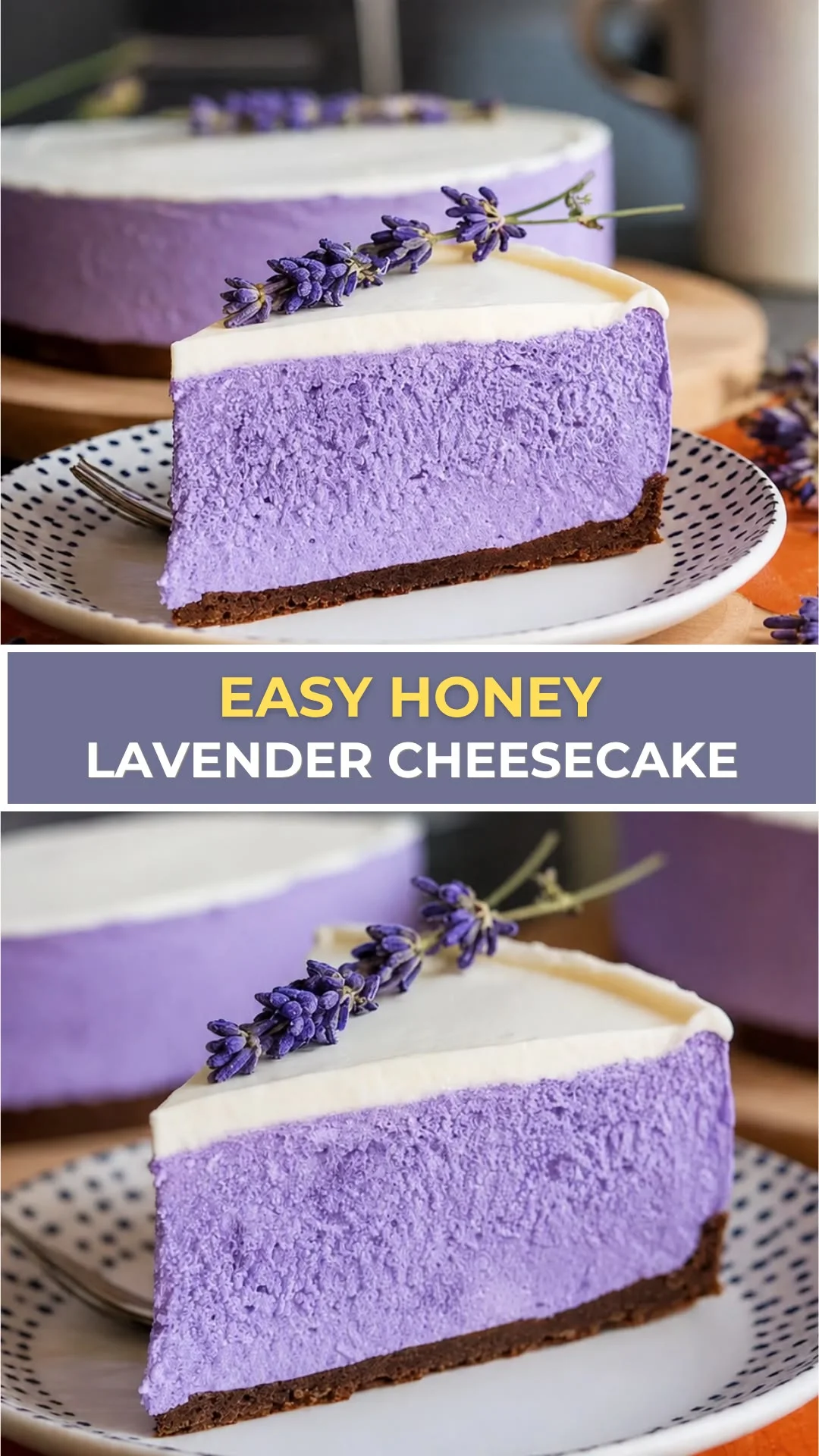
THE BEST N°1 Easy Honey Lavender Cheesecake – No-Bake Creamy Dessert Everyone Will Ask For
If you have ever wanted a dessert that looks stunning, tastes like pure luxury, and requires zero oven time, this easy honey lavender cheesecake is exactly what you need. It combines the floral sweetness of culinary lavender with rich, velvety cream cheese and golden honey for a flavor combination that feels truly special.
This post walks you through everything – the history behind this unique flavor pairing, the health highlights of key ingredients, a full step-by-step recipe, batch prep tips, storage advice, and answers to the most common questions. Whether you are making it for a dinner party or treating yourself on a weeknight, this cheesecake delivers every single time.
You do not need any baking experience or fancy equipment. Just a handful of pantry staples, a springform pan, and a few hours in the fridge. Let us dive in.
Table of Contents
Personal Note
The first time I made a no-bake cheesecake with lavender, I honestly had no idea if it would work. Lavender can go from “elegant floral dessert” to “soap bar” very quickly if you use too much. But when you get the balance right with honey and cream cheese, something magical happens.
I started experimenting with this combination after stumbling across culinary lavender at a farmers market. The vendor told me that even just a teaspoon in a dessert could transform it completely. She was not wrong.
This recipe is now one of my most-requested desserts. I have made it for birthdays, baby showers, and casual Sunday afternoons when I just want something that feels a little extra. It always gets rave reviews, and I am so excited to share it with you.
Origins of the Dish
Cheesecake itself has an incredibly ancient history that stretches back to ancient Greece. Historians believe that a primitive form of cheesecake was served to athletes at the first Olympic Games around 776 BC. The early version was simple – fresh cheese, wheat, and honey blended together and baked or pressed into shape.
When the Romans conquered Greece, they adopted and evolved the recipe, spreading versions of cheesecake across Europe. As the dish traveled through different cultures and centuries, the ingredients changed dramatically. Cream cheese as we know it was not invented until 1872 in New York, when dairy farmer William Lawrence accidentally created it while trying to make a French cheese called Neufchâtel. That moment changed the dessert world forever.
The no-bake cheesecake variation gained huge popularity in the mid-20th century when home cooks began using gelatin and refrigeration as alternatives to traditional baking. This method produced a lighter, creamier texture that many people actually prefer over the dense baked version. No-bake cheesecakes became a staple of home dessert culture precisely because they required minimal skill and delivered maximum results.
Lavender has been used in cooking and baking for centuries, particularly in French and Provençal cuisine. The herb was prized both for its aroma and its natural calming properties. Pairing lavender with honey is a combination rooted in culinary tradition – beekeepers in lavender-growing regions of France have long produced lavender honey, a specialty that remains highly sought after today. Bringing these two ingredients into a modern no-bake cheesecake creates a dessert that honors centuries of flavor history while keeping things completely accessible for the home kitchen.
Why You’ll Love This Recipe
This is not just another cheesecake. The honey lavender combination makes it stand out on any dessert table, and the no-bake method means you can pull it together without any stress. Here is exactly why this recipe earns a permanent spot in your rotation.
- Absolutely no baking required – Your oven stays off the entire time, making this perfect for warm weather or busy days.
- Stunning visual presentation – The pale lavender hue and honey drizzle make this cheesecake look like it came from a boutique bakery.
- Deeply creamy texture – The filling is lush, silky, and melts on your tongue with every bite.
- Beginner-friendly – If you can use a hand mixer and a refrigerator, you can make this recipe successfully.
- Make-ahead friendly – This cheesecake actually gets better after chilling overnight, making it ideal for entertaining.
- Unique flavor profile – Honey and lavender together create a sophisticated, floral sweetness that most desserts simply cannot replicate.
- Customizable – You can adjust the lavender intensity, swap the crust, or add toppings to make it your own.
- Crowd pleaser every time – This is the kind of dessert that gets people asking for the recipe before they have even finished their slice.
- Freezer friendly – You can prep individual slices and freeze them for a grab-and-go dessert all week long.
- Uses simple ingredients – No obscure specialty items needed. Everything is easy to find at your local grocery store.
Health Benefits and Ingredient Highlights
Every ingredient in this easy honey lavender cheesecake brings something meaningful to the table – not just in terms of flavor, but in terms of nutritional value and functional benefits. Here is a breakdown of what makes each key ingredient worth celebrating.
Raw Honey
Raw honey is one of nature’s most complex sweeteners, containing trace amounts of vitamins, minerals, and antioxidants that refined sugar simply does not offer. It provides natural glucose and fructose for quick energy, while its antioxidant content – particularly flavonoids and phenolic acids – helps combat oxidative stress in the body.
Honey also has well-documented antimicrobial properties and has been used in traditional wellness practices for thousands of years. When used in desserts, it adds a depth of sweetness that table sugar cannot match – a slight caramel-like richness that enhances every other flavor around it.
Using honey as your primary sweetener in this cheesecake means you are getting more flavor with a slightly lower glycemic impact compared to white sugar. That is a small but meaningful upgrade in any dessert recipe.
Culinary Lavender
Culinary lavender is not just a flavor – it is a functional herb with a long history of use in wellness traditions. Lavender contains linalool and linalyl acetate, two compounds studied for their calming and stress-reducing effects on the nervous system. Adding it to a dessert means you are essentially building in a gentle, relaxing quality.
Lavender also has mild antioxidant and anti-inflammatory properties, making it a genuinely interesting addition beyond its beautiful aroma. It has been used historically to support digestion and reduce bloating, which is a nice bonus after indulging in a rich cheesecake.
It is important to use food-grade or culinary lavender in this recipe – never decorative lavender, which may be treated with chemicals. A small amount goes a very long way, so the flavor stays floral and elegant rather than overpowering.
Cream Cheese
Cream cheese is the backbone of this cheesecake, providing the rich, tangy base that makes every bite so satisfying. It contains a decent amount of protein per serving, along with fat-soluble vitamins like vitamin A, which supports eye health and immune function.
Full-fat cream cheese gives you the best texture and stability in a no-bake cheesecake. The fat content is what allows the filling to set properly when chilled, creating that perfectly sliceable consistency. Reduced-fat versions can work, but they may result in a softer, less stable filling.
When you let cream cheese come to room temperature before mixing, it blends smoothly without lumps and incorporates air more efficiently, giving the final filling a lighter, creamier texture. This single step makes a noticeable difference in the finished dessert.
Heavy Whipping Cream
Heavy whipping cream is what gives this no-bake cheesecake its airy, mousse-like quality. When whipped to stiff peaks and folded into the cream cheese mixture, it creates a filling that is simultaneously rich and light – a balance that makes this dessert completely irresistible.
Heavy cream contains conjugated linoleic acid (CLA), a fatty acid that has been studied for various health benefits including supporting a healthy body composition. It is also a source of fat-soluble vitamins A, D, E, and K. While this is certainly an indulgent ingredient, it serves an important structural and textural role in the recipe.
Graham Cracker Crust
The classic graham cracker crust adds the perfect contrast to the creamy filling – slightly crunchy, subtly sweet, and deeply satisfying. Graham crackers provide a small amount of dietary fiber and whole grain content depending on the brand you choose.
Combining crushed graham crackers with melted butter creates a crust that holds together beautifully when pressed into a pan and chilled. You can also add a pinch of cinnamon to the crust for a warm spice note that pairs wonderfully with lavender and honey.
Lemon Juice and Zest
A touch of lemon brightens the entire filling and prevents it from tasting too heavy or overly rich. The acidity of lemon juice also helps balance the sweetness of the honey, creating a more complex and well-rounded flavor profile.
Lemon zest in particular adds a burst of citrus oil that elevates the floral notes of the lavender without competing with them. Lemons are also a classic source of vitamin C and bioflavonoids, making this a small but smart nutritional addition to your dessert.
Ingredients
Here is everything you need to make this easy honey lavender cheesecake from start to finish. All quantities are for a standard 9-inch springform pan, which yields approximately 10 to 12 slices.
For the Crust:
- 2 cups graham cracker crumbs (about 16 full crackers, or substitute digestive biscuits)
- 1/4 cup granulated sugar (or substitute coconut sugar for a deeper flavor)
- 1/2 cup unsalted butter, melted (or substitute coconut oil for a dairy-free option)
- 1/4 teaspoon ground cinnamon (optional but recommended)
- Pinch of fine sea salt
For the Lavender Honey Filling:
- 3 packages (24 oz total) full-fat cream cheese, softened to room temperature
- 1/2 cup raw honey, plus more for drizzling (or substitute pure maple syrup)
- 1 tablespoon dried culinary lavender buds (food-grade only)
- 1/4 cup warm heavy cream (for lavender infusion)
- 1 and 1/2 cups cold heavy whipping cream
- 1 teaspoon pure vanilla extract
- 2 tablespoons fresh lemon juice
- 1 teaspoon lemon zest
- 1/4 cup powdered sugar (or substitute 3 tablespoons honey for an all-honey version)
- 1 teaspoon unflavored gelatin powder dissolved in 2 tablespoons warm water (optional but helps with firmer slices)
For Garnish:
- 2 to 3 tablespoons raw honey for drizzling
- 1 teaspoon dried culinary lavender buds
- Fresh edible flowers (optional, for a beautiful presentation)
- Lemon zest curls (optional)
Step-by-Step Instructions
Follow these steps carefully and you will end up with a flawless, stunning honey lavender cheesecake that sets beautifully and slices cleanly. Read through all the steps once before you begin.
- Infuse the lavender. Warm 1/4 cup of heavy cream in a small saucepan over low heat until it just begins to steam. Remove from heat, add 1 tablespoon of culinary lavender buds, and let steep for 15 to 20 minutes. Strain through a fine mesh sieve, pressing the buds to extract maximum flavor, and set the infused cream aside to cool completely.
- Make the crust. In a medium bowl, combine the graham cracker crumbs, granulated sugar, cinnamon, and salt. Pour in the melted butter and stir until the mixture resembles wet sand and holds together when pressed.
- Press the crust into the pan. Pour the crust mixture into a 9-inch springform pan. Use the bottom of a flat measuring cup or glass to firmly press it into an even layer across the bottom and slightly up the sides. Place the pan in the freezer for 15 minutes to firm up.
- Beat the cream cheese. In a large bowl, beat the softened cream cheese with a hand mixer or stand mixer on medium speed for 2 to 3 minutes until completely smooth and fluffy. Scrape down the sides of the bowl at least once during this process.
- Add honey, lemon, and vanilla. Pour in the honey, lemon juice, lemon zest, and vanilla extract. Beat on medium speed for another 2 minutes until everything is fully combined and silky smooth. The mixture should look glossy and uniform.
- Add the lavender infused cream. Pour the cooled lavender-infused cream into the cream cheese mixture and beat on low speed until incorporated. This is where the magical floral flavor gets distributed throughout the entire filling.
- Prepare the gelatin (optional). If using gelatin for a firmer set, sprinkle the gelatin powder over 2 tablespoons of warm water in a small bowl. Let it bloom for 5 minutes, then microwave for 10 to 15 seconds until completely dissolved. Let it cool slightly, then slowly drizzle it into the cream cheese mixture while beating on low.
- Whip the heavy cream. In a separate clean bowl, add the cold heavy whipping cream and powdered sugar. Beat with clean beaters on high speed until stiff peaks form, about 3 to 4 minutes. Do not over-beat or the cream will become grainy.
- Fold the whipped cream into the filling. Add the whipped cream to the cream cheese mixture in three additions, folding gently with a rubber spatula after each addition. Use a light hand here – you want to keep as much air in the mixture as possible for a fluffy, creamy texture.
- Pour filling into the crust. Remove the springform pan from the freezer and pour the filling over the prepared crust. Use an offset spatula or the back of a spoon to smooth the top into an even, level layer.
- Refrigerate to set. Cover the pan loosely with plastic wrap and refrigerate for at least 6 hours. Overnight is ideal and will give you the cleanest slices and the best flavor development.
- Garnish and serve. When ready to serve, carefully release and remove the springform ring. Drizzle honey generously over the top, scatter a pinch of lavender buds, and add lemon zest or edible flowers if desired. Slice with a sharp knife wiped clean between each cut for picture-perfect portions.
Make It Ahead and Batch Prep Guide
This easy honey lavender cheesecake is one of the most meal-prep-friendly desserts you can add to your rotation. Because it needs time in the refrigerator to set anyway, making it ahead is not just possible – it is actually the recommended approach. The flavor deepens and the texture becomes even creamier after a full night of chilling.
If you want to batch prep this for the week or for a gathering, you have a few great options. You can make one large 9-inch cheesecake and slice it into portions once fully set. Wrap each slice individually in plastic wrap and store them in an airtight container in the refrigerator. Each slice stays fresh for up to 5 days, meaning you have a grab-and-go dessert ready every single day without any extra effort.
Another smart batch prep method is to use a muffin tin lined with cupcake liners to make individual mini cheesecakes. Press about 2 tablespoons of crust mixture into each liner, add the filling, and refrigerate until set. These portion-controlled mini cheesecakes are perfect for parties, lunchbox treats, or whenever you want a single-serving dessert without the temptation of a full cake sitting in your fridge.
You can also prepare the lavender infusion and the crust up to two days in advance and store them separately. Keep the crust covered in the springform pan in the refrigerator and the strained lavender cream in a sealed jar. When you are ready to assemble, just make the filling and put it all together. This splits the prep into manageable steps that fit easily into a busy schedule. No-Bake Strawberry Cheesecake Cups
Common Mistakes to Avoid
Even a simple no-bake dessert has a few pitfalls that can affect the final result. Here are the most common mistakes people make with this recipe and exactly how to avoid them.
- Using cold cream cheese. If your cream cheese is not fully softened to room temperature, it will not beat smoothly. You will end up with a lumpy filling that never fully comes together no matter how long you mix it. Pull your cream cheese out at least 1 to 2 hours before you start.
- Skipping the lavender infusion step. Adding dried lavender buds directly to the filling without infusing them first gives you an unpleasant, gritty texture and uneven flavor. Always infuse the buds in warm cream first and strain them out completely.
- Using too much lavender. Lavender is extremely potent. Even half a teaspoon more than the recipe calls for can make your cheesecake taste like soap or bath products. Stick to the recommended 1 tablespoon for infusing and adjust from there once you know your personal preference.
- Not chilling long enough. Pulling the cheesecake out of the refrigerator before it has fully set leads to a runny, soft filling that will not slice cleanly. Give it a minimum of 6 hours, and overnight is always better.
- Over-whipping the heavy cream. If you beat the heavy cream past stiff peaks, it will start to turn grainy and butter-like. Stop the mixer the moment you see stiff, glossy peaks – the cream should hold its shape but still look smooth.
- Not pressing the crust firmly enough. A loosely pressed crust will crumble when you cut the cheesecake. Use the bottom of a flat glass or measuring cup and apply firm, even pressure across the entire surface to get a compact, cohesive base.
Notes, Tips and Variations
Substitutions
If you cannot find culinary lavender in your area, you can order it online very easily. Look for food-grade or culinary-grade labels specifically. Alternatively, you can use 1 teaspoon of lavender extract in place of the infused cream – just be even more cautious with the quantity, as extracts are highly concentrated.
Honey can be swapped for pure maple syrup if you prefer a different sweetness profile or need a vegan-friendly option. The flavor will shift slightly – less floral, more earthy – but the result is still delicious. For a completely vegan cheesecake, use vegan cream cheese, coconut cream instead of heavy cream, and maple syrup instead of honey.
The graham cracker crust can be replaced with crushed shortbread cookies, vanilla wafers, digestive biscuits, or even a nut-based crust made from ground almonds and dates for a more wholesome twist.
Dietary Variations
To make this cheesecake gluten-free, simply use gluten-free graham crackers or gluten-free cookies for the crust. The filling itself is naturally gluten-free, so just swapping the crust is all you need to do. Always check your individual product labels to confirm they are certified gluten-free.
For a lower-sugar version, use a sugar-free sweetener like powdered erythritol or monk fruit sweetener in place of the powdered sugar in the whipped cream. You can also reduce the honey slightly and add a few drops of pure stevia to maintain sweetness without extra sugar. Sugar-Free Lemon Cheesecake Bars
Cooking Tips
Always use a springform pan for this recipe. It allows you to release the cheesecake cleanly without inverting it or damaging the delicate filling. If you do not have a springform pan, a deep pie dish works, but you will be scooping rather than slicing.
For ultra-clean slices, dip your knife in hot water and wipe it dry between each cut. This prevents the creamy filling from dragging and smearing, which makes a huge difference in the visual presentation of each slice.
If your honey is crystallized and thick, warm it gently in a bowl of warm water or microwave it for 10 to 15 seconds before measuring. It will blend into the filling much more smoothly when it is in a liquid state.
Topping Ideas and Flavor Boosters
The beauty of this honey lavender cheesecake is how well it plays with a wide range of toppings. Here are over ten ideas to customize your cheesecake and make it even more spectacular.
- Honey drizzle – The classic choice. Use raw wildflower honey or specialty lavender honey for an extra layer of floral flavor.
- Fresh blueberries – Their tartness and natural purple color complement the lavender theme beautifully.
- Blueberry compote – Simmer fresh blueberries with a tablespoon of honey and a squeeze of lemon for a warm, jammy topping.
- Sliced fresh figs – Their subtle sweetness and jewel-like interior make for a stunning, sophisticated garnish.
- Lemon curd swirl – Drop spoonfuls of lemon curd on top of the filling before refrigerating and swirl gently with a toothpick for a marbled effect.
- Candied lemon slices – Translucent and glossy, these add a chewy-sweet citrus element that ties the whole dessert together.
- Crushed pistachios – The green color and subtle nuttiness pair incredibly well with the floral, honey notes.
- Edible flowers – Pansies, rose petals, or viola flowers make this cheesecake look like a work of art with zero extra effort.
- Whipped cream rosettes – Pipe sweetened whipped cream around the border for a classic, elegant finish.
- Lavender simple syrup glaze – Simmer equal parts water and sugar with a teaspoon of lavender buds, strain, and brush lightly over the top for a subtle sheen.
- Toasted coconut flakes – Add a tropical twist and a satisfying crunch that contrasts beautifully with the creamy filling.
- Fresh raspberries – Their bright acidity cuts through the richness of the cheesecake and adds a pop of vibrant red color.
Who This Recipe Is For
This recipe was designed with a wide range of dessert lovers in mind. Here is a quick look at who will get the most out of this cheesecake.
- Beginner home bakers who want impressive results without complicated techniques or equipment.
- Experienced dessert makers looking for a unique, elevated flavor combination to add to their repertoire.
- Busy professionals and parents who need a make-ahead dessert that can be prepped in advance and served with minimal day-of effort.
- Dessert meal preppers who want to batch a week’s worth of individual portions and store them in the fridge or freezer.
- Party hosts and entertainers who need a show-stopping centerpiece dessert that will impress every single guest.
- Cheesecake enthusiasts who love the classic but are ready to explore a more botanical, artisan flavor profile.
- Anyone avoiding oven use during hot summer months or who simply does not want to deal with the complexity of baked cheesecake.
- Gift givers and food lovers who want to bring a homemade dessert to a dinner party, shower, or holiday gathering that will be genuinely memorable.
Storage and Meal Prep Tips
Refrigerator
Store the cheesecake covered with plastic wrap or in an airtight container in the refrigerator for up to 5 days. If the cheesecake is still in the springform pan, you can simply cover the top of the pan with plastic wrap to keep it fresh.
Add any fresh fruit toppings and the honey drizzle just before serving rather than before storing. This prevents the fruit from becoming watery and keeps the presentation looking fresh and beautiful every time you serve a slice.
Freezer
This cheesecake freezes exceptionally well. After the cheesecake has fully set in the refrigerator, slice it into individual portions and place them on a parchment-lined baking sheet. Freeze the slices uncovered for about 2 hours until solid, then transfer each slice to a zip-lock freezer bag or wrap individually in plastic wrap followed by foil.
Properly frozen slices will stay fresh for up to 2 months. Label each bag with the date so you always know how long they have been stored. This is an excellent batch prep strategy for always having a ready-made dessert on hand without any extra cooking during the week. How to Freeze Cheesecake the Right Way
Reheating
This is a no-bake, chilled dessert, so there is no reheating involved. Simply transfer frozen slices to the refrigerator the night before you plan to serve them and let them thaw slowly overnight. Slow thawing in the fridge preserves the texture far better than thawing at room temperature.
If you are in a hurry, you can thaw a slice at room temperature for about 30 to 45 minutes. The texture will still be enjoyable, though slightly softer than a properly chilled slice. Do not microwave cheesecake to thaw it – the cream cheese filling can become grainy and the crust will soften too much.
Nutrition Facts
The following nutrition information is an estimate per serving, based on 12 slices from one 9-inch cheesecake. Values may vary depending on specific brands and any ingredient substitutions you make.
| Nutrient | Per Serving (1 slice) |
|---|---|
| Calories | 420 kcal |
| Total Fat | 31g |
| Saturated Fat | 18g |
| Total Carbohydrates | 32g |
| Dietary Fiber | 0.5g |
| Total Sugar | 22g |
| Protein | 6g |
| Sodium | 280mg |
| Vitamin A | 18% DV |
| Calcium | 8% DV |
These values are based on full-fat cream cheese, regular graham crackers, unsalted butter, raw honey, and heavy whipping cream. Using reduced-fat cream cheese or a lower-sugar sweetener will reduce the calorie and fat counts accordingly.
FAQs
Can I use fresh lavender instead of dried?
Yes, you can use fresh culinary lavender, but you will need to use more of it since fresh lavender has a milder flavor than dried. Use about 2 tablespoons of fresh lavender buds in place of 1 tablespoon of dried. Make sure any fresh lavender you use is completely free of pesticides and has been grown specifically for culinary or food use – not garden or decorative varieties.
Why did my cheesecake filling turn out lumpy?
Lumpy filling almost always comes from cream cheese that was not soft enough before mixing. Cold cream cheese does not break down properly even with extended beating, leaving behind tiny solid chunks. Make sure your cream cheese sits at room temperature for at least 1 to 2 hours before you start. If you are in a hurry, you can microwave the unwrapped blocks for 20-second intervals at 30% power until soft but not melted.
How do I know when the cheesecake is fully set?
Give the pan a gentle jiggle after the minimum 6-hour chill time. The edges should look completely firm and only the very center should have the slightest wobble – similar to a very thick pudding. If there is significant movement across the whole surface, it needs more time. The cheesecake will continue to firm up as you cut into it, but a properly set filling should hold a clean edge when sliced.
Can I make this recipe without gelatin?
Absolutely. The gelatin is listed as optional in this recipe and is only included for those who prefer an extra-firm, very clean-slicing result. Without gelatin, the cheesecake will still set very well from the cream cheese and whipped cream alone, especially if you chill it overnight. The texture will be slightly softer and more mousse-like, which many people actually prefer. If you are serving at a dinner party and want the cleanest slices possible, the gelatin helps significantly.
What is the best honey to use for this recipe?
Raw wildflower honey or raw clover honey both work beautifully in this recipe. For the ultimate flavor experience, try to find specialty lavender honey from a local beekeeper or specialty food store – it doubles down on the floral notes and creates an even more cohesive flavor profile. Avoid heavily processed or ultra-filtered commercial honey, as it lacks the complex flavors that make this cheesecake so special. Manuka honey works too, but its strong flavor can overpower the delicate lavender, so use it sparingly.
Conclusion
This easy honey lavender cheesecake is proof that you do not need to spend hours in the kitchen or possess advanced baking skills to create something truly extraordinary. With a buttery graham cracker crust, a silky floral filling, and a golden honey drizzle on top, this dessert delivers on every level – flavor, texture, presentation, and sheer crowd-pleasing power.
Whether you are making it for a special occasion or just because you deserve something beautiful on a regular Tuesday, this recipe is always worth your time. The make-ahead flexibility and freezer-friendly nature make it one of the smartest desserts you can add to your meal prep lineup. Once you try it, you will completely understand why everyone always asks for the recipe.
Go ahead and make it this weekend. Drizzle that honey generously, scatter those lavender buds proudly, and enjoy every single creamy, floral, perfectly sweet bite. You earned it.