THE BEST N°1 Spiced Za’atar Salmon with Cucumber Salad | Easy 20-Minute Mediterranean Recipe
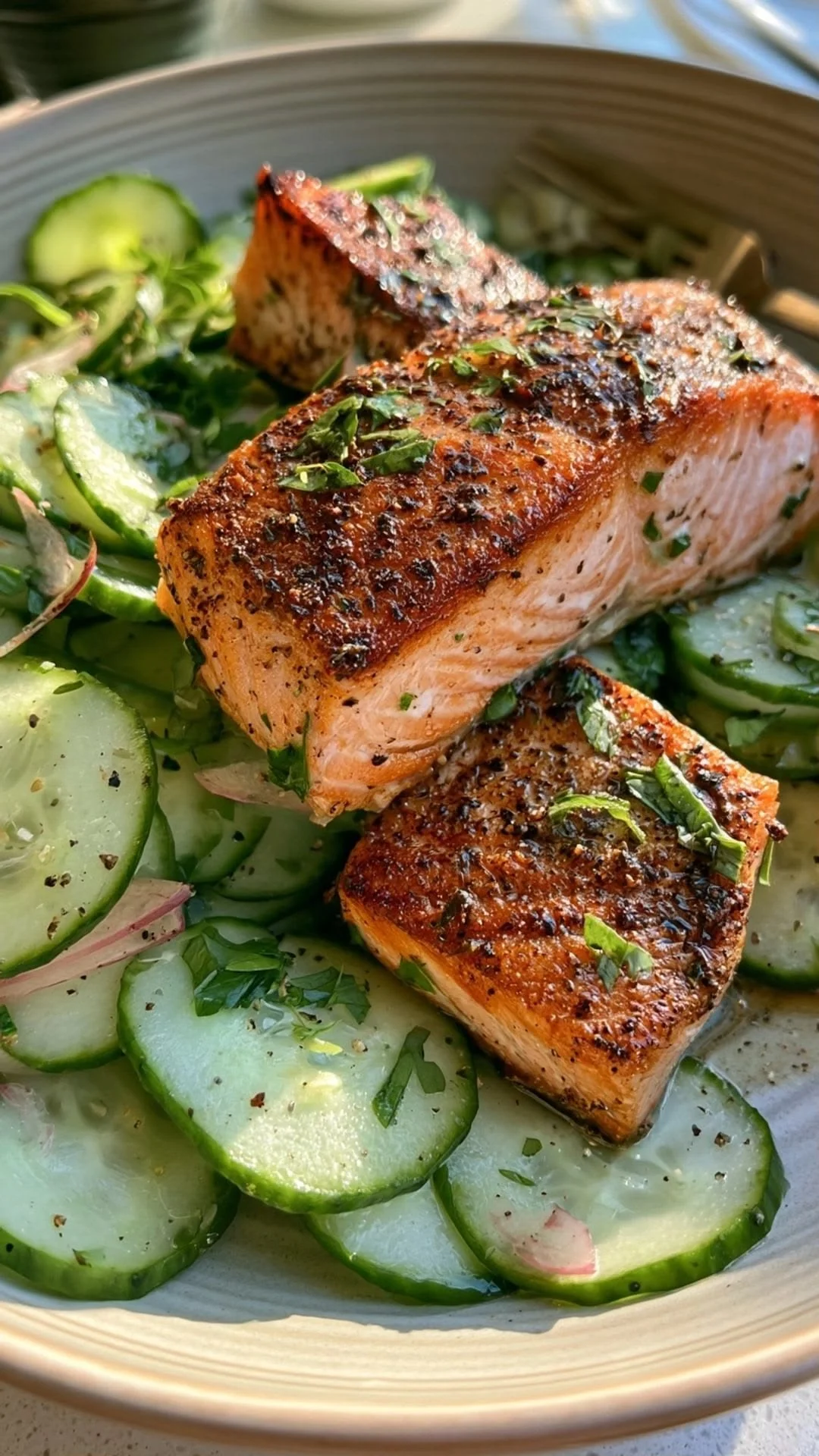
If you are looking for a fast, flavor-packed weeknight dinner that feels gourmet without the effort, this spiced za’atar salmon with cucumber salad is exactly what you need. It comes together in just 20 minutes, uses pantry-friendly Mediterranean spices, and delivers a meal that is as nourishing as it is delicious.
This post covers everything you need to know, from the ancient roots of za’atar spice blends to step-by-step cooking instructions, batch prep tips, and smart storage strategies. Whether you are a seasoned meal prepper or cooking salmon for the first time, this guide has you covered.
You will also find health benefits for every key ingredient, expert cooking tips, and common mistakes to avoid. By the end, you will have a reliable go-to recipe that fits perfectly into a Mediterranean lifestyle.
Table of Contents
Personal Note
I first tasted za’atar rubbed fish at a small family-run restaurant near the coast of Lebanon, and it completely changed how I thought about seasoning seafood. The combination of earthy herbs, tangy sumac, and toasted sesame seeds on flaky salmon was something I had never experienced before. I knew immediately that I had to recreate it at home.
Mediterranean cooking has always been about making simple, whole ingredients shine. This recipe is a perfect example of that philosophy. You do not need a long ingredient list or complicated techniques to create something truly memorable.
Every time I make this dish, it reminds me that the best meals are often the most straightforward ones. A good piece of salmon, quality olive oil, and a generous hand with the za’atar is really all you need to bring the Mediterranean table into your kitchen.
Origins of the Dish
Za’atar is one of the oldest spice blends in the world, with roots stretching back thousands of years across the Levantine region. The word “za’atar” refers both to the wild thyme herb and to the spice mixture made from dried thyme, oregano, sumac, sesame seeds, and salt. Ancient texts from Egypt, Palestine, Lebanon, and Syria all reference za’atar as both a food and a medicinal herb.
Historically, za’atar was used to season flatbreads, dipping oils, roasted meats, and vegetables. It was a staple in households across the Eastern Mediterranean, prized for its bold flavor and long shelf life. Families often kept their own proprietary za’atar blend, passed down through generations with slight regional variations in the ratio of herbs to sumac to sesame.
Fish has been central to Mediterranean cuisine for just as long. Coastal communities from Greece to Morocco built their diets around fresh-caught seafood, olive oil, lemon, and wild herbs. Rubbing fish with spiced herb blends before grilling or roasting over open flames was a common cooking technique throughout the ancient Mediterranean world. The marriage of za’atar and fish is, in many ways, a return to those foundational cooking traditions.
Today, spiced za’atar salmon with cucumber salad reflects the modern Mediterranean approach to eating, which honors traditional flavors while adapting them to contemporary, time-conscious lifestyles. The cucumber salad component itself draws from the refreshing mezze salads served across Turkey, Greece, Israel, and Lebanon, where crisp raw vegetables, fresh herbs, and light dressings are a meal-time staple. This recipe is not a reinvention, it is a celebration of a culinary heritage that has nourished people for millennia.
Why You’ll Love This Recipe
This recipe checks every box for a satisfying, health-forward Mediterranean meal. Here is why it deserves a permanent spot in your weekly rotation.
- Ready in 20 minutes: From start to finish, this is a genuinely fast recipe that does not cut corners on flavor.
- Minimal cleanup: One pan for the salmon, one bowl for the salad. That is it.
- Packed with nutrients: Omega-3 fatty acids, antioxidants, vitamins, and minerals in every bite.
- Bold Mediterranean flavor: Za’atar brings a complex, herby, slightly tangy taste that elevates simple salmon instantly.
- Meal prep friendly: The salmon and salad both store well and can be prepped ahead for multiple meals.
- Beginner friendly: Clear, simple steps make this recipe approachable even if you have never cooked fish before.
- Naturally gluten-free and dairy-free: Works for a wide range of dietary needs without any special substitutions.
- Crowd pleaser: The flavor profile is bold enough for food lovers but familiar enough for picky eaters.
- Easily scalable: Double or triple the recipe for family dinners or weekly batch prep without any extra complexity.
- Supports a Mediterranean lifestyle: Every ingredient aligns with the core principles of Mediterranean eating, whole foods, healthy fats, fresh produce, and lean protein.
Health Benefits and Ingredient Highlights
The Mediterranean diet is consistently ranked as one of the healthiest eating patterns in the world, and this recipe is a textbook example of why. Every ingredient brings something valuable to your plate.
Salmon
Salmon is one of the richest sources of omega-3 fatty acids, specifically EPA and DHA, which are essential for heart health, brain function, and reducing inflammation throughout the body. Regular consumption of fatty fish like salmon is a cornerstone of the Mediterranean diet and has been linked to reduced risk of cardiovascular disease.
Salmon is also an excellent source of high-quality protein, providing roughly 34 grams per 4-ounce serving. Protein supports muscle maintenance, keeps you feeling full longer, and plays a key role in dozens of metabolic processes.
Beyond omega-3s and protein, salmon is rich in B vitamins, particularly B12 and B6, as well as selenium, potassium, and astaxanthin, a powerful antioxidant that gives salmon its distinctive pink color and contributes to reduced oxidative stress.
Za’atar Spice Blend
Za’atar is far more than a flavor enhancer. The dried thyme and oregano in za’atar are rich in antioxidants, including thymol and carvacrol, which have demonstrated antimicrobial and anti-inflammatory properties in numerous studies. These compounds help protect cells from oxidative damage.
Sumac, another core component of za’atar, is one of the highest-antioxidant spices on the planet. It contains high levels of gallic acid and anthocyanins, compounds associated with heart health, blood sugar regulation, and reduced inflammation.
Sesame seeds in za’atar contribute healthy fats, calcium, magnesium, and lignans, which are plant compounds with antioxidant effects. Even in small amounts, sesame seeds add meaningful nutritional value to any meal.
Extra Virgin Olive Oil
Extra virgin olive oil is the foundation fat of Mediterranean cooking and for very good reason. It is rich in oleocanthal, a natural anti-inflammatory compound that works similarly to ibuprofen in the body. High-quality olive oil also contains oleic acid, a monounsaturated fat that supports healthy cholesterol levels.
The polyphenols in extra virgin olive oil act as powerful antioxidants, protecting your cells from damage and reducing the risk of chronic disease. Studies consistently show that populations with high olive oil consumption have lower rates of heart disease, cognitive decline, and certain cancers.
For this recipe, olive oil serves two purposes. It helps the za’atar adhere to the salmon during cooking, and it creates a light, flavorful base for the cucumber salad dressing. Use the best quality olive oil you can find for maximum flavor and nutritional benefit.
Cucumber
Cucumber is about 96% water, making it one of the most hydrating vegetables you can eat. It is low in calories but high in volume, which means it adds satisfying bulk to your plate without adding significant energy. It is a smart, filling choice for anyone eating mindfully.
Cucumbers contain vitamin K, which plays a critical role in blood clotting and bone health. They also provide small amounts of vitamin C, potassium, and magnesium. The skin of the cucumber is particularly nutrient-dense, so leave it on whenever possible.
In Mediterranean cuisine, cucumber appears constantly in mezze spreads, salads, and dips, precisely because it provides a cooling, refreshing counterpoint to bold spiced dishes. Here, it perfectly balances the earthy heat of the za’atar-crusted salmon.
Lemon
Lemon is used in virtually every Mediterranean dish, and its role goes beyond just flavor. The citric acid in lemon juice helps balance richness, brighten flavors, and make savory dishes taste cleaner and more vibrant. A squeeze of fresh lemon over cooked fish is one of the simplest and most effective finishing moves in the Mediterranean kitchen.
Lemon is an excellent source of vitamin C, a potent antioxidant that supports immune function, skin health, and iron absorption. The zest of the lemon contains flavonoids and limonene, compounds with anti-inflammatory and potentially cancer-protective properties.
Fresh Herbs (Mint and Parsley)
Fresh mint and parsley are not just garnishes in Mediterranean cooking, they are functional ingredients with real nutritional value. Both herbs are rich in vitamin K, folate, and antioxidants. Parsley is particularly high in vitamin C and contains apigenin, a flavonoid with anti-inflammatory and potentially neuroprotective effects.
Mint adds a cooling, refreshing quality to the cucumber salad that complements the warm, spiced salmon beautifully. It also contains menthol and rosmarinic acid, compounds that support digestion and reduce bloating. Adding fresh herbs to your meals is one of the easiest ways to boost nutritional density without adding calories.
Ingredients
These quantities serve 2 people. Scale up proportionally for batch prep or larger families.
For the Za’atar Salmon:
- 2 salmon fillets, about 6 oz each (skin-on or skinless, your preference; wild-caught recommended)
- 2 tablespoons za’atar spice blend (store-bought or homemade)
- 1.5 tablespoons extra virgin olive oil (divided)
- 1 teaspoon garlic powder (or 1 fresh garlic clove, minced)
- 0.5 teaspoon smoked paprika (optional but recommended for depth)
- 0.5 teaspoon fine sea salt
- 0.25 teaspoon black pepper, freshly ground
- 1 lemon, half juiced over the fish, half cut into wedges for serving
For the Cucumber Salad:
- 2 Persian cucumbers, thinly sliced (or 1 English cucumber; avoid watery hothouse cucumbers)
- 0.5 cup cherry tomatoes, halved (substitute with diced roma tomatoes if needed)
- 0.25 red onion, very thinly sliced (soak in cold water 5 minutes to mellow the bite)
- 2 tablespoons fresh parsley, roughly chopped
- 1 tablespoon fresh mint leaves, torn (substitute with fresh dill if mint is unavailable)
- 1.5 tablespoons extra virgin olive oil
- 1 tablespoon fresh lemon juice
- 0.5 teaspoon sumac (adds beautiful tang; substitute with a pinch of lemon zest if unavailable)
- Salt and pepper to taste
Optional for Serving:
- Warm pita bread or flatbread
- 2 tablespoons plain Greek yogurt or labneh (for a creamy element)
- A drizzle of tahini sauce
Step-by-Step Instructions
Follow these steps in order for perfect results every time. This recipe moves quickly, so have all your ingredients ready before you start cooking.
- Prep the cucumber salad first. Combine sliced cucumbers, cherry tomatoes, red onion, parsley, and mint in a medium bowl. Drizzle with olive oil, lemon juice, and sumac, then season with salt and pepper. Toss gently, taste, and adjust seasoning as needed. Set aside to let the flavors meld while you cook the salmon.
- Pat the salmon dry. Use paper towels to thoroughly pat both sides of each salmon fillet dry. This is the most important step for achieving a good sear, as moisture is the enemy of a golden crust.
- Make the za’atar rub. In a small bowl, mix the za’atar, garlic powder, smoked paprika, salt, and black pepper together. Add 1 tablespoon of olive oil and stir into a loose paste. This ensures even coating on the fish.
- Coat the salmon. Press the za’atar paste firmly onto the top and sides of each salmon fillet, making sure you get an even, generous coating. If using skin-on salmon, leave the skin side mostly bare and season it lightly with just salt.
- Heat your pan. Heat a heavy-bottomed skillet (cast iron or stainless steel works best) over medium-high heat. Add the remaining 0.5 tablespoon of olive oil and let it heat until shimmering but not smoking. A properly heated pan prevents sticking and ensures a beautiful crust.
- Cook the salmon. Place the salmon fillets in the pan, za’atar side down if skinless, or skin side down if skin-on. Cook for 3 to 4 minutes without moving the fish. You will see the flesh turn opaque from the bottom up as it cooks through.
- Flip carefully and finish cooking. Gently flip the salmon using a thin spatula. Cook for another 2 to 3 minutes for medium doneness (slightly translucent in the center) or 3 to 4 minutes for fully cooked through. The internal temperature should reach 125 to 130 degrees Fahrenheit for medium, or 145 degrees for well done.
- Rest the salmon briefly. Remove the salmon from the pan and let it rest on a plate for 1 to 2 minutes. Squeeze a little fresh lemon juice over the top immediately after removing from the heat.
- Assemble and serve. Plate each salmon fillet alongside a generous portion of cucumber salad. Add lemon wedges on the side. Drizzle any resting juices from the salmon pan over the salad for extra flavor. Serve immediately for the best texture.
Make It Ahead and Batch Prep Guide
This spiced za’atar salmon with cucumber salad is one of the most batch-prep-friendly Mediterranean recipes you can make. With a little planning, you can have meals ready for three to four days with minimal effort on the day you want to eat.
For the salmon, cook two to four fillets at once during your weekly prep session. The za’atar crust stays intact and the salmon reheats beautifully when done correctly. Store the cooked fillets in an airtight container in the refrigerator, and they will be ready to reheat and serve in minutes throughout the week. You can also prepare the za’atar spice rub in a larger batch and keep it in a jar in your pantry for up to three months, making future prep even faster.
The cucumber salad is best made fresh each day, but you can prepare all the components ahead of time to save effort. Slice the cucumbers and tomatoes, chop the herbs, and mix the dressing separately. Store each component in its own container in the refrigerator. When you are ready to eat, simply toss everything together. Dressed cucumber salad does not store well beyond a few hours, as the salt draws out water and makes everything soggy.
For maximum efficiency during batch prep, consider pairing this salmon with other Mediterranean staples that store well, such as cooked farro, quinoa, roasted chickpeas, or steamed vegetables. Build a Mediterranean grain bowl with your prepped salmon and salad on top of a base of grains for a complete, balanced meal. Mediterranean grain bowl recipe This approach means you can have four or five completely different-feeling lunches or dinners from one prep session.
Common Mistakes to Avoid
- Not patting the salmon dry: Skipping this step traps steam against the fish, which prevents a crust from forming and leads to pale, soft salmon instead of the golden sear you want. Always dry your fillets thoroughly with paper towels before seasoning.
- Using a cold pan: Adding salmon to an underheated pan causes sticking and uneven cooking. Give your skillet a full minute to preheat before adding oil, and wait until the oil shimmers before placing the fish in the pan.
- Moving the fish too early: It is tempting to check underneath the salmon, but resist the urge. The fish will naturally release from the pan when the crust has properly formed. Moving it too early tears the crust and causes sticking.
- Overcooking the salmon: Overcooked salmon is dry, chalky, and far less flavorful. Pull the salmon off the heat when it is still slightly translucent in the thickest part of the center. Residual heat will finish the cooking as it rests.
- Dressing the cucumber salad too far in advance: Salt draws moisture out of cucumbers quickly, turning your crisp, refreshing salad into a watery mess. Dress the salad no more than 15 to 20 minutes before you plan to eat it.
- Using dried herbs instead of fresh for the salad: Dried parsley and dried mint do not have the same brightness and aromatic intensity as fresh herbs. For the cucumber salad specifically, fresh herbs are non-negotiable for the best flavor and texture.
Notes, Tips and Variations
Substitutions
If you cannot find za’atar at your local store, you can make a quick homemade version by combining 2 teaspoons of dried thyme, 1 teaspoon of dried oregano, 1 teaspoon of sesame seeds, 0.5 teaspoon of sumac, and a pinch of salt. It will not be identical to a traditional blend, but it captures the essential flavor profile well.
If salmon is not available or outside your budget, this za’atar rub works beautifully on other fish as well. Try it on sea bass, cod, halibut, or even trout. The cooking times will vary slightly depending on the thickness of the fillet, so use a thermometer to check doneness rather than relying on time alone.
For the cucumber salad, kalamata olives, diced avocado, or crumbled feta cheese are all excellent additions that keep the dish firmly in Mediterranean territory. If you cannot find Persian cucumbers, English cucumbers work very well. Avoid regular supermarket cucumbers if possible, as their thick skin and watery flesh are less desirable in a raw salad.
Dietary Variations
This recipe is naturally gluten-free and dairy-free as written, making it suitable for people with those dietary restrictions without any modification needed. Always check the label on your za’atar blend to confirm there are no added gluten-containing ingredients, as some commercial spice blends may include fillers.
For a lower-fat version, reduce the olive oil slightly in both the rub and the salad dressing. You can also bake the salmon at 400 degrees Fahrenheit for 12 to 15 minutes instead of pan-searing it, which requires less added fat. The za’atar crust will still be flavorful, though it will be less crispy than the pan-seared version.
If you are following a Mediterranean diet for heart health specifically, consider serving this dish with a side of steamed greens such as spinach or Swiss chard dressed with lemon and olive oil. Adding a handful of cooked lentils alongside the salad also boosts the fiber and plant protein content significantly.
Cooking Tips
Cast iron is the best pan choice for this recipe because it retains heat evenly and creates the best sear on the za’atar crust. If you do not have cast iron, a heavy stainless steel skillet is your next best option. Avoid non-stick pans for this recipe if possible, as they do not reach the high temperatures needed for a proper crust.
If your salmon fillets have an uneven thickness, you can fold the thinner tail end underneath itself to create a more uniform thickness. This ensures the whole fillet cooks at the same rate and you do not end up with one end overcooked while the other is still raw.
Room temperature salmon cooks more evenly than cold-from-the-fridge salmon. Take your fillets out of the refrigerator about 10 to 15 minutes before cooking. This small step makes a noticeable difference in the final result, especially for thicker fillets.
Topping Ideas and Flavor Boosters
Take your spiced za’atar salmon with cucumber salad to the next level with these flavor-boosting additions. Mix and match based on what you have on hand.
- Tahini drizzle: Whisk together tahini, lemon juice, garlic, and water for a creamy, nutty sauce that pairs perfectly with the za’atar spices.
- Pomegranate seeds: Add jewel-like bursts of sweetness and color to the cucumber salad. They complement the sumac tang beautifully.
- Crumbled feta cheese: A generous sprinkle of salty, tangy feta over the salad adds richness and a classic Mediterranean touch.
- Kalamata olives: Salty, briny olives deepen the Mediterranean character of the dish and add healthy fats.
- Toasted pine nuts: A small handful scattered over the plate adds crunch and a subtle buttery nuttiness.
- Harissa paste: Stir a small amount into the za’atar rub or serve as a spicy condiment on the side for those who like heat.
- Za’atar oil: Mix extra za’atar with olive oil and drizzle generously over the plated salmon for an extra punch of flavor.
- Labneh or Greek yogurt: A dollop of thick, creamy labneh adds a cooling, tangy contrast to the spiced fish. Think of it as a Mediterranean version of sour cream.
- Fresh dill: Add a few fronds of dill to the cucumber salad or as a garnish on the salmon for a bright, Scandinavian-Mediterranean fusion touch.
- Sliced radishes: Thin radish slices add peppery crunch and a beautiful pop of color to the cucumber salad.
- Fried capers: Drain capers, pat dry, and fry in a little olive oil until crispy. Scatter over the salmon for a salty, addictive texture element.
- Pickled red onions: Quick-pickled red onions add bright acidity and a vivid color contrast to the finished plate.
Who This Recipe Is For
This recipe was designed with a wide range of people in mind. Here is a quick look at who will benefit most from adding this dish to their regular rotation.
- Busy weeknight cooks who need a fast, healthy dinner that does not feel like a compromise.
- Mediterranean diet followers looking for new ways to incorporate more fish and fresh vegetables into their week.
- Meal preppers who want a protein that stores and reheats well for grab-and-go lunches.
- Health-conscious eaters focused on anti-inflammatory foods, omega-3s, and whole, minimally processed ingredients.
- Beginner home cooks who want to build confidence cooking fish with a straightforward, foolproof method.
- Gluten-free and dairy-free eaters who want a naturally compliant meal without complicated substitutions.
- Fitness enthusiasts who prioritize high-protein, nutrient-dense meals to support active lifestyles and recovery.
- Adventurous food lovers who want to explore the bold, layered flavors of Levantine and Eastern Mediterranean cooking.
- Parents looking for a family-friendly fish recipe that is flavorful enough for adults but simple enough for children to enjoy.
Storage and Meal Prep Tips
Refrigerator
Store cooked salmon fillets in an airtight container in the refrigerator for up to 3 days. Keep the fillets separated from the cucumber salad, as storing them together will make the salad soggy and the moisture will affect the texture of the fish crust.
The undressed cucumber salad components, meaning sliced cucumbers, tomatoes, onions, and herbs stored separately from the dressing, will last in the refrigerator for up to 2 days. Mix the dressing and toss the salad only when you are ready to eat for the best texture and flavor.
Freezer
Cooked salmon can be frozen, though the texture will soften slightly upon thawing. Wrap individual fillets tightly in plastic wrap, then place them in a freezer-safe zip-lock bag with the air pressed out. Frozen cooked salmon keeps well for up to 2 months.
Thaw frozen salmon overnight in the refrigerator for the best results. Do not thaw at room temperature, as this creates an unsafe temperature zone for fish. The cucumber salad is not suitable for freezing, as raw cucumbers and fresh herbs do not hold up to freezing and thawing.
Reheating
The best way to reheat salmon is in a skillet over low to medium heat with a small splash of water or olive oil, covered with a lid. Heat for 2 to 3 minutes until warmed through. This method preserves moisture and prevents the fish from drying out or overcooking.
You can also reheat salmon in the oven at 275 degrees Fahrenheit for about 10 to 15 minutes, covered loosely with foil. Avoid the microwave if possible, as it can make the texture rubbery and intensify the fish smell. If you must use the microwave, heat at 50% power in short 30-second bursts until just warmed through. how to reheat fish without drying it out
Nutrition Facts
Estimated per serving (1 salmon fillet with cucumber salad). Values are approximate and will vary based on exact ingredients and portion sizes used.
| Nutrient | Per Serving |
|---|---|
| Calories | 420 kcal |
| Protein | 36 g |
| Total Carbohydrates | 8 g |
| Dietary Fiber | 2.5 g |
| Total Fat | 27 g |
| Saturated Fat | 4.5 g |
| Sugars | 4 g |
| Sodium | 480 mg |
| Omega-3 Fatty Acids | 2,200 mg |
| Vitamin C | 22 mg (24% DV) |
This recipe is a nutritional powerhouse by any standard. The high protein content supports satiety and muscle maintenance, while the healthy fats from olive oil and salmon support cardiovascular health. The low carbohydrate content makes it a great fit for low-carb Mediterranean meal plans as well.
FAQs
Can I use frozen salmon for this recipe?
Yes, you can absolutely use frozen salmon. Thaw it completely in the refrigerator overnight, then pat it very dry before applying the za’atar rub. Properly thawed and dried frozen salmon cooks just as well as fresh for this recipe. Look for wild-caught frozen salmon for the best flavor and nutritional profile.
What is the best way to tell when salmon is cooked through?
The most reliable method is using an instant-read thermometer. Insert it into the thickest part of the fillet. For medium doneness with a slightly translucent center, aim for 125 to 130 degrees Fahrenheit. For fully cooked salmon, the FDA recommends 145 degrees Fahrenheit. You can also test by pressing the top of the fillet gently, cooked salmon will flake easily under light pressure while still holding its shape.
Can I bake the salmon instead of pan-searing it?
Yes, baking is a great alternative, especially if you are cooking a larger batch. Preheat your oven to 400 degrees Fahrenheit, place the za’atar-coated salmon on a parchment-lined baking sheet, and bake for 12 to 15 minutes depending on the thickness of the fillets. You will not get the same crispy sear as pan-cooking, but the flavor will still be excellent. For a bit of color, broil for the last 2 to 3 minutes of cooking time.
Where can I buy za’atar spice blend?
Za’atar is increasingly available in mainstream grocery stores, usually in the spice aisle or the international foods section. Middle Eastern grocery stores and specialty food shops will carry a wider selection of za’atar blends, often at a better price. Online retailers also stock excellent options. Look for blends where thyme and sumac are among the first ingredients listed, which indicates a higher quality product with better flavor. how to make homemade za’atar
How long does the za’atar spice rub keep if I make a big batch?
A dry za’atar spice rub without the olive oil will keep in an airtight jar at room temperature for up to 3 months. Store it in a cool, dark pantry away from heat and direct sunlight. If you have already mixed the rub with olive oil to create the paste, use it within 24 hours and store it covered in the refrigerator. Making a larger batch of the dry rub is a great time-saving strategy for meal prep, as it means the seasoning step on future cooking days takes less than 30 seconds.
Conclusion
This spiced za’atar salmon with cucumber salad is the kind of recipe that makes healthy eating genuinely exciting. It delivers bold, layered Mediterranean flavors in just 20 minutes, using simple whole ingredients that nourish your body from the inside out. Whether you are cooking for yourself on a busy Tuesday evening or prepping a week’s worth of lunches on a Sunday afternoon, this dish fits seamlessly into a modern Mediterranean lifestyle.
The beauty of this recipe is in its simplicity and its depth. The za’atar creates a complex, herby crust on flaky salmon, the cucumber salad provides a cool, refreshing contrast, and every bite reminds you that eating well does not have to be complicated or time-consuming. These are the principles that have defined Mediterranean cooking for centuries, and they are just as relevant and powerful today.
Give this recipe a try this week, and do not be surprised when it becomes a permanent fixture in your meal rotation. Share it with someone who could use a little more Mediterranean inspiration in their kitchen, and leave a comment below to let us know how it turned out for you. We love hearing from our community and reading about your creative variations.