THE BEST N°1 Greek Galaktoboureko Custard Pie – Easy Dessert Recipe That Melts in Your Mouth
If you have never tried Greek Galaktoboureko custard pie, you are about to fall in love with one of the most iconic and soul-satisfying desserts in all of Mediterranean cooking. This golden, syrup-soaked phyllo pastry filled with a silky semolina custard is the kind of dessert that stops conversations at the table and has everyone asking for the recipe before they even finish their slice.
In this post, you will get everything you need to make a show-stopping Greek Galaktoboureko custard pie from scratch, even if you have never worked with phyllo dough before. From the full ingredient list to step-by-step instructions, batch prep tips, storage advice, and even a deep dive into the rich history behind this classic Greek dessert, this guide has it all.
Whether you are preparing this for a special occasion, a family gathering, or simply treating yourself to something extraordinary on a quiet weekend, this recipe will deliver every single time. Let’s get into it.
Table of Contents
Personal Note
The first time I tasted Galaktoboureko, I was standing in a small bakery in Athens, jet-lagged and hungry, with absolutely no idea what I had just ordered. The woman behind the counter handed me a warm square dripping with fragrant syrup, and one bite later, I completely understood why Greeks have been making this dessert for centuries.
I spent years trying to recreate that exact experience at home. The custard had to be creamy but not runny. The phyllo had to be crisp but not dry. And the syrup had to be fragrant with citrus and just sweet enough to pull everything together without being overwhelming. It took a lot of trial and error, but this recipe is the one I keep coming back to.
What I love most about making Greek Galaktoboureko custard pie at home is that it is genuinely approachable once you understand the technique. I am sharing every tip and trick I have learned so you can skip the trial and error and go straight to a perfect result on your very first try.
Origins of the Dish
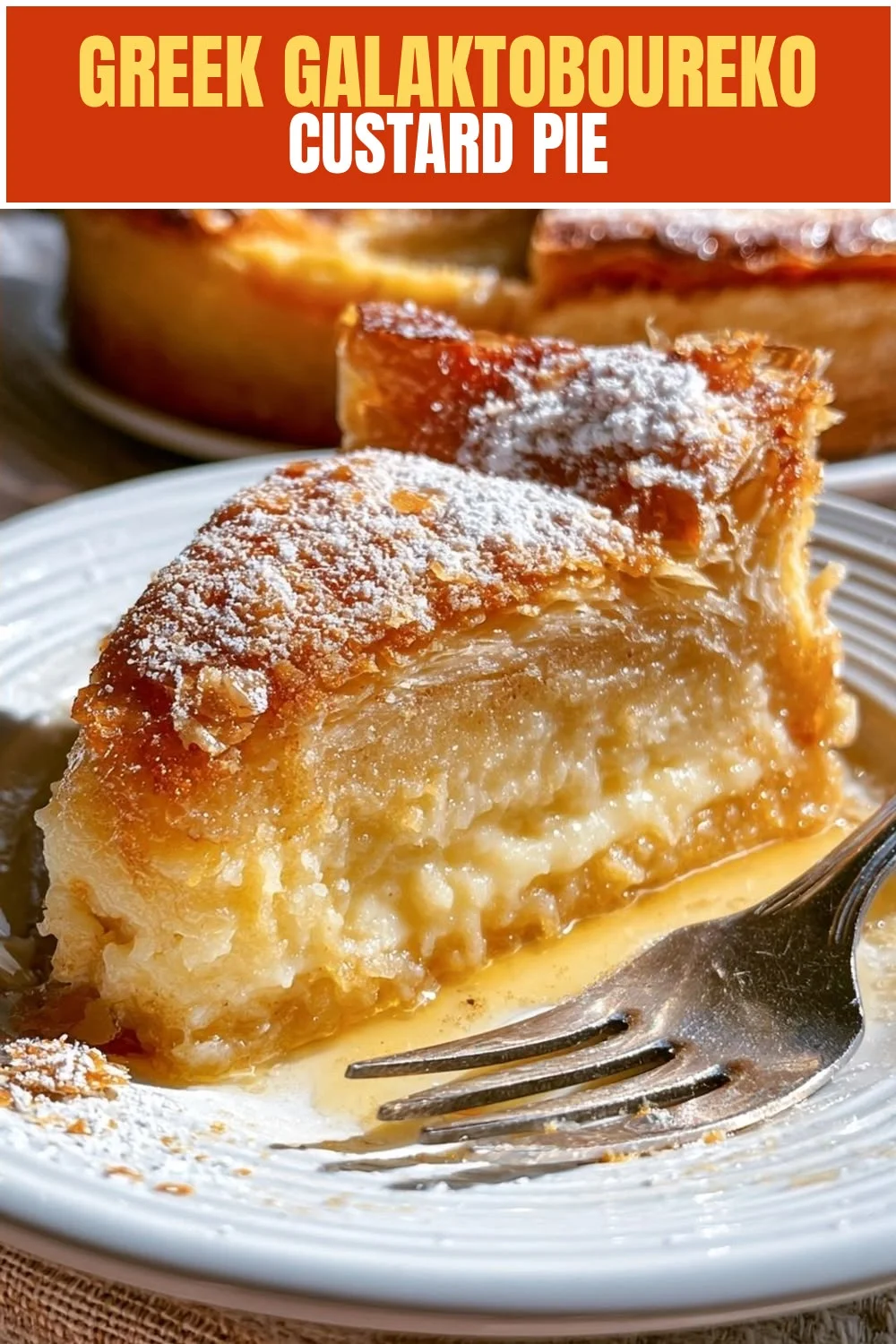
Galaktoboureko is one of the oldest and most beloved desserts in Greek culinary tradition. The name itself gives you a clue about what is inside – “gala” comes from the Greek word for milk, and “boureki” is a Turkish-influenced term referring to a filled pastry. Together, the name essentially translates to “milk pastry,” which is a beautifully simple description of something that is anything but simple in terms of flavor and texture.
The roots of this dessert trace back to the Ottoman Empire, which had enormous culinary influence across Greece, Turkey, and the broader Eastern Mediterranean region for centuries. Phyllo-based pastries filled with custard, nuts, and sweet syrups were a staple of Ottoman palace kitchens, and over time these techniques and recipes filtered into Greek home cooking and bakery culture. Greek bakers took the concept and made it distinctly their own, emphasizing the use of semolina in the custard, a technique that gives Galaktoboureko its characteristic thick, sliceable texture.
By the 19th and early 20th centuries, Galaktoboureko had become a fixture in Greek pastry shops, known as “zacharoplasteion,” which translates roughly to “sugar sculptor shops.” These beloved neighborhood bakeries were and still are gathering places in Greek communities, and Galaktoboureko was always featured prominently alongside baklava, kataifi, and other syrup-soaked phyllo creations. You can still walk into a zacharoplasteion anywhere in Greece today and find a fresh tray of Galaktoboureko behind the glass.
What makes this dessert so enduring is not just its taste but its cultural significance. In Greece, Galaktoboureko is often made for celebrations, religious holidays like Easter, and family gatherings. It is a dessert that communicates love, effort, and tradition. Making it at home connects you to that long lineage of Greek home cooks and bakers who have passed this recipe down through generations, adapting it slightly but always keeping the core magic intact.
Why You’ll Love This Recipe
There are so many reasons why Greek Galaktoboureko custard pie deserves a permanent spot in your dessert rotation. Once you make it the first time, you will completely understand why this recipe has survived for centuries.
- Stunning presentation with minimal effort – The golden phyllo top and glossy syrup make this look like it came from a professional bakery, but the steps are totally manageable at home.
- Perfect contrast of textures – You get crispy phyllo on the outside and smooth, creamy custard on the inside in every single bite.
- Naturally balanced sweetness – The syrup adds sweetness without overpowering the delicate flavor of the vanilla-scented custard.
- Great for making ahead – Galaktoboureko actually tastes better the next day after the syrup has fully soaked in, making it ideal for batch prep and entertaining.
- Uses simple pantry ingredients – Milk, eggs, semolina, sugar, butter, and phyllo are the stars here, nothing exotic or hard to find.
- Feeds a crowd beautifully – A standard 9×13 baking pan yields 12 to 16 generous pieces, making it perfect for parties and potlucks.
- Impressive enough for special occasions – This is the kind of dessert that earns you genuine compliments and recipe requests.
- Customizable flavors – You can infuse the syrup or custard with different aromatics like rose water, orange blossom water, cinnamon, or cardamom to make it your own.
- Beginner-friendly phyllo technique – This recipe walks you through working with phyllo dough in a way that takes all the intimidation out of the process.
- Stores well – Leftovers keep beautifully in the refrigerator for up to five days, and the flavor only deepens over time.
Health Benefits and Ingredient Highlights
While Galaktoboureko is absolutely a dessert meant to be enjoyed and savored, its core ingredients do bring some genuine nutritional value to the table. Understanding what goes into this dish helps you make smart choices and appreciate the wholesome tradition behind it.
Semolina
Semolina is the unsung hero of this recipe, and it is what gives the custard its wonderfully thick, sliceable texture. Made from durum wheat, semolina has a slightly lower glycemic index than refined white flour and contains a good amount of protein and iron, making it a more nutritious thickening option than cornstarch alone.
Semolina also provides B vitamins including folate and thiamine, which are important for energy metabolism and brain function. In traditional Mediterranean baking, semolina has been used for thousands of years, and its use in custard-based desserts like Galaktoboureko is a beautiful example of functional, flavorful baking.
Whole Milk
Full-fat whole milk is the base of the custard and it contributes richness, creaminess, and a significant amount of calcium. Calcium is essential for bone health, muscle function, and nerve signaling, and a single serving of this dessert delivers a meaningful amount thanks to the generous quantity of milk used in the recipe.
Whole milk also contains fat-soluble vitamins like A, D, E, and K, which your body can only absorb when fat is present. Using full-fat milk is not just about taste – it is about getting the full nutritional value that milk has to offer and creating the most luxurious custard texture possible.
Eggs
Eggs are what bind the custard and give it structure. They are one of the most nutrient-dense foods you can eat, providing high-quality complete protein, choline for brain health, lutein and zeaxanthin for eye health, and a range of vitamins and minerals including B12, selenium, and riboflavin.
In this recipe, eggs also contribute to the beautiful golden color of the custard filling. Using fresh, good-quality eggs makes a noticeable difference in both flavor and appearance, so if you can source them from a farmers market or trusted local supplier, it is worth the small effort.
Butter
Clarified butter or standard unsalted butter is brushed between each layer of phyllo, creating the signature crispiness of the pastry. Butter provides fat-soluble vitamins and contributes to satiety, helping you feel satisfied with a reasonable portion rather than craving more.
When used in moderation as part of a dessert like this, butter is a time-honored ingredient that adds irreplaceable flavor and texture. The quality of your butter will directly impact the final flavor of your Galaktoboureko, so opt for a good European-style cultured butter if it is available to you.
Lemon and Orange Zest
The syrup in this recipe is infused with citrus zest, typically lemon and sometimes orange, which does far more than add flavor. Citrus zest is packed with flavonoids and antioxidants that support immune function and have anti-inflammatory properties. The aromatic compounds in citrus peel are also uplifting and contribute to the signature fragrance that makes Galaktoboureko so irresistible when it comes out of the oven.
A small amount of lemon juice in the syrup also helps prevent crystallization and adds a subtle tang that balances the sweetness beautifully. It is a small detail that makes a big difference in the final flavor profile of your Greek Galaktoboureko custard pie.
Vanilla
Pure vanilla extract or a whole vanilla bean pod infuses the custard with a warm, aromatic depth that ties all the other flavors together. Vanilla contains small amounts of vanillin, a natural compound with antioxidant properties, and has been used in traditional baking across the Mediterranean and beyond for its deeply comforting aroma.
Using real vanilla rather than artificial flavoring makes a noticeable difference in a recipe where the custard is the star. The quality of your vanilla will be apparent in every bite, so it is worth investing in the real thing.
Ingredients
Here is everything you need to make a full 9×13 pan of Greek Galaktoboureko custard pie, which serves approximately 12 to 16 people.
For the Custard Filling:
- 6 cups (1.4 liters) whole milk (substitute: 2% milk works but the custard will be slightly less rich)
- 1 cup (200g) granulated white sugar
- 3/4 cup (130g) fine semolina (use fine, not coarse, for the smoothest texture)
- 4 large eggs, at room temperature
- 4 tablespoons (55g) unsalted butter
- 1 teaspoon pure vanilla extract (or seeds from 1 vanilla bean pod)
- Zest of 1 lemon
For the Phyllo Layers:
- 1 package (450g / 16oz) phyllo dough, thawed overnight in the refrigerator (substitute: homemade phyllo if you are feeling ambitious, but store-bought works perfectly)
- 1 cup (225g) unsalted butter, melted and kept warm (substitute: clarified butter or ghee for a richer, nuttier flavor)
For the Syrup:
- 2 cups (400g) granulated white sugar
- 1 cup (240ml) water
- 1 tablespoon fresh lemon juice
- Peel of 1 lemon (just the yellow part, avoid the white pith)
- 1 cinnamon stick (optional but highly recommended)
- 1 tablespoon honey (optional, for added depth and floral sweetness)
Step-by-Step Instructions
Follow these steps carefully and you will end up with a picture-perfect Greek Galaktoboureko custard pie every time. Read through all the steps before you begin so you have a clear picture of the full process.
- Thaw your phyllo dough properly. Remove the phyllo from the freezer and place it in the refrigerator the night before you plan to bake. On the day of baking, take it out of the refrigerator about one hour before you need it so it comes to room temperature gradually. This prevents cracking and tearing.
- Make the syrup first. Combine the sugar, water, lemon juice, lemon peel, and cinnamon stick in a medium saucepan. Bring to a boil over medium-high heat, stirring until the sugar dissolves, then reduce heat and simmer for 8 to 10 minutes until slightly thickened. Remove from heat, stir in honey if using, and let the syrup cool completely before using. The syrup must be cool when it hits the hot pie, or vice versa.
- Preheat your oven to 350°F (175°C). Grease a 9×13 inch (23x33cm) baking pan with a little of your melted butter. Set it aside while you prepare the custard.
- Heat the milk for the custard. Pour the milk into a large, heavy-bottomed saucepan and add the sugar and lemon zest. Heat over medium heat, stirring frequently, until the sugar is dissolved and the milk is steaming but not boiling. You are just warming it and infusing flavor at this stage.
- Add the semolina to the warm milk. Slowly pour the fine semolina into the warm milk mixture in a thin, steady stream while whisking constantly. This is the critical step – adding it slowly and whisking continuously prevents lumps from forming. Continue cooking over medium heat, stirring constantly, for about 5 to 7 minutes until the mixture thickens to a soft pudding consistency.
- Remove from heat and add butter and vanilla. Take the saucepan off the heat and stir in the butter and vanilla extract until the butter is fully melted and incorporated. Let the mixture cool slightly for about 10 minutes, stirring occasionally to prevent a skin from forming on top.
- Temper the eggs. In a separate bowl, whisk the 4 eggs until they are light and slightly foamy. While whisking the eggs constantly, ladle in a small amount of the warm semolina mixture to temper them. This raises the temperature of the eggs gradually without scrambling them. Then pour the tempered egg mixture back into the saucepan with the rest of the semolina custard and stir to combine fully.
- Prepare your phyllo station. Unroll the phyllo dough and lay it flat on a clean surface. Cover it with a slightly damp kitchen towel to prevent it from drying out. Have your melted butter and a pastry brush ready. Work quickly but calmly – phyllo dough is more forgiving than its reputation suggests.
- Layer the bottom phyllo sheets. Place one sheet of phyllo into the buttered baking pan, letting the edges hang over the sides if needed. Brush generously with melted butter. Repeat this process with 8 to 10 sheets of phyllo, brushing each one with butter as you go. This forms the sturdy base that will hold the custard.
- Pour in the custard filling. Carefully pour all of the semolina custard over the phyllo base. Use a spatula to spread it into an even layer all the way to the edges of the pan. The custard should be warm but not hot at this point – slightly above room temperature is ideal.
- Layer the top phyllo sheets. Lay another sheet of phyllo over the custard and brush it with butter. Continue with the remaining phyllo sheets, buttering each one, until you have used all the dough. Fold in or tuck any overhanging edges around the sides to create a neat border. Brush the top layer very generously with butter to ensure maximum crispiness.
- Score the top and bake. Using a sharp knife, score the top few layers of phyllo into the serving pieces you intend to cut later – squares, rectangles, or diamonds. This scoring prevents the phyllo from shattering when you cut it after baking. Bake in the preheated oven for 45 to 55 minutes, until the top is deeply golden and crispy.
- Apply the syrup immediately. As soon as the Galaktoboureko comes out of the oven, ladle the cool syrup slowly and evenly over the entire hot surface. You will hear a magnificent sizzling sound – that is the syrup being absorbed into the phyllo layers. Use all of the syrup. Let the pie rest for at least 30 minutes before slicing and serving.
- Cut and serve. Follow the score lines you made before baking to cut clean pieces. Use a sharp knife and a gentle sawing motion to get through the phyllo without crushing the custard beneath. Serve at room temperature or slightly warm for the best experience.
Make It Ahead and Batch Prep Guide
One of the best things about Greek Galaktoboureko custard pie is that it is genuinely better when made ahead. The syrup needs time to soak through all the phyllo layers and into the custard, which means a pie made the day before serving will have more even sweetness, a more cohesive texture, and much easier slicing than one served immediately after baking.
For a batch prep strategy, you can make the syrup up to three days in advance and store it covered in the refrigerator. The custard can be made a day ahead and kept covered with plastic wrap pressed directly onto the surface to prevent a skin from forming. When you are ready to assemble and bake, simply reheat the custard gently on the stove with a whisk until it is pourable, then proceed with the phyllo layering as directed.
If you are baking for a crowd or want to have dessert ready well in advance, you can bake the full Galaktoboureko up to two days ahead and store it covered at room temperature for the first day, then refrigerate it on day two. Just bring slices back to room temperature before serving, or give them a brief warm in a low oven. This makes it one of the most practical and stress-free desserts you can offer at a dinner party or celebration.
You can also easily double the recipe by making two pans at once. The custard scales up beautifully in a larger pot, and working with two pans simultaneously in the oven is perfectly efficient. If you are preparing for a very large event, doubling the batch and freezing one fully baked and cooled pan is a fantastic strategy – see the storage section below for detailed freezing instructions.
Common Mistakes to Avoid
Even experienced bakers can run into issues with Galaktoboureko if they are not familiar with the specific techniques involved. Here are the most common pitfalls and exactly how to avoid them.
- Using hot syrup on hot pie (or vice versa) : This is the number one rule in Greek syrup-soaked pastry making. The syrup and the pie must be at opposite temperatures. Hot syrup on a hot pie creates a soggy mess. Cool syrup on a hot pie creates crispy, well-soaked layers. Make your syrup first, let it cool completely, and then apply it the moment the pie comes out of the oven.
- Not stirring the semolina custard constantly : If you walk away from the pot or stop stirring, the semolina will settle to the bottom and scorch, or lumps will form in the custard. Stay at the stove and keep that whisk moving the entire time the custard is cooking.
- Skipping the egg tempering step : If you pour the hot custard directly into cold eggs, you will get scrambled egg bits throughout your filling. Always temper the eggs by adding a small ladle of hot custard to the eggs first before combining everything together.
- Letting phyllo dry out : Phyllo dough dries and becomes brittle in minutes when exposed to air. Keep the stack covered with a slightly damp towel at all times and only uncover it to pull a sheet off. Work at a steady, calm pace and you will have no issues.
- Not scoring before baking : Phyllo shatters into shards when you try to cut it after it has baked and hardened. Score the top layers before baking to create clean cut lines, and use those same lines after baking to slice your pieces without destroying the presentation.
- Under-buttering the phyllo layers : Each layer of phyllo needs a thorough coating of butter to become golden and crispy. Stingy buttering results in pale, papery, tough layers that do not deliver the signature texture of great Galaktoboureko. Be generous – this is a dessert, and the butter is doing important work.
Notes, Tips and Variations
Substitutions
If you cannot find fine semolina at your local grocery store, you can sometimes use cream of wheat as a substitute in a pinch, though the texture will be slightly less firm and the flavor will be milder. Fine semolina is widely available at Middle Eastern, Greek, or Italian grocery stores and is worth seeking out for the most authentic result.
For the butter, you can use ghee or clarified butter in place of regular melted unsalted butter. Ghee has a higher smoke point and a slightly nuttier, richer flavor that complements the custard beautifully. It also extends the shelf life of the phyllo layers slightly when stored. Greek Baklava with Honey and Walnuts is another fantastic recipe that benefits from using ghee instead of regular butter.
If you prefer a less sweet dessert, you can reduce the syrup quantity by about a quarter and the result will still be perfectly satisfying. Some traditional Greek recipes also use a small splash of brandy or Metaxa in the syrup for an adult twist that adds warmth and complexity.
Dietary Variations
To make a dairy-free version of this recipe, you can substitute full-fat coconut milk or unsweetened oat milk for the whole milk in the custard. The texture will be slightly different but still very pleasing. Use a good quality dairy-free butter or coconut oil for brushing the phyllo layers.
For a reduced-sugar option, you can decrease the sugar in the custard to 3/4 cup and reduce the syrup recipe by half. The dessert will be less intensely sweet but still wonderfully flavorful, especially if you increase the citrus zest and vanilla in the custard to compensate for the reduced sugar.
Cooking Tips
Always use a heavy-bottomed saucepan for the custard. Thin pans create hot spots that cause the semolina to stick and burn at the bottom. A Dutch oven or a quality stainless steel saucepan with a thick base gives you much more control over the cooking temperature and prevents scorching.
If your phyllo sheets are larger than your pan, you do not need to trim them before laying them in. Simply fold over the excess or tuck it in around the edges – this actually creates extra layers of crispy pastry around the rim, which many people consider the best part of the whole pie. You can also use any torn or broken sheets layered in the middle where they will not be visible.
For a beautiful presentation, sprinkle a light dusting of ground cinnamon over the top of the pie just before serving. This adds aroma, visual appeal, and a hint of warm spice that complements the lemon-scented syrup perfectly. Greek Rizogalo Rice Pudding is another comforting Greek custard dessert that uses similar spicing techniques if you want to explore more in this flavor direction.
Topping Ideas and Flavor Boosters
While classic Greek Galaktoboureko custard pie is absolutely perfect as is, there are so many ways to personalize it and elevate the presentation. Here are some ideas to inspire you.
- Ground cinnamon dusting – A classic Greek touch that adds warmth and visual appeal with zero effort.
- Chopped pistachios – Sprinkle over the top after adding the syrup for color, crunch, and nutty richness.
- Crushed walnuts – A traditional Mediterranean nut that adds earthiness and satisfying texture contrast.
- Fresh berries – A handful of raspberries or strawberries alongside a slice adds freshness and color that cuts through the sweetness beautifully.
- A dollop of thick Greek yogurt – The tanginess of strained yogurt pairs phenomenally well with the sweet custard and crispy phyllo.
- Drizzle of thyme or wildflower honey – If you want extra floral sweetness and a gorgeous glistening finish, a light drizzle of premium honey at serving time is stunning.
- Orange blossom water in the syrup – Add one tablespoon of orange blossom water to the syrup off the heat for an intensely fragrant and uniquely floral variation.
- Rose water infusion – A teaspoon of rose water in the custard adds a delicate floral note that works beautifully with the vanilla and lemon.
- Cardamom in the custard – Add a quarter teaspoon of ground cardamom to the custard for an aromatic, slightly exotic twist that nods to eastern Mediterranean flavor traditions.
- Sesame seeds on top – Lightly toasted sesame seeds scattered over the buttered top phyllo layer before baking add a subtle nuttiness and beautiful golden speckle.
- Lemon zest garnish – Finely grated fresh lemon zest scattered over each serving plate adds a pop of color and bright citrus aroma that wakes up the whole dessert.
- Vanilla ice cream scoop – Serve a warm piece alongside a scoop of high-quality vanilla ice cream for an indulgent contrast of hot crispy pastry and cold creamy ice cream.
Who This Recipe Is For
Greek Galaktoboureko custard pie is a wonderfully versatile recipe that works for many different types of home cooks and occasions.
- Home bakers who want to impress – This recipe delivers professional-level results without requiring professional skills or equipment.
- Fans of Greek and Mediterranean food culture – If you love exploring the culinary traditions of the Mediterranean world, this recipe is an essential entry point into Greek dessert baking.
- Meal preppers and batch cooks – This recipe makes ahead beautifully and holds well for days, making it ideal for those who like to prep food in advance.
- Holiday and celebration hosts – Whether it is Easter, Christmas, a birthday, or a dinner party, Galaktoboureko is a showstopper that feeds a crowd with ease.
- Parents and families – Kids and adults alike adore the creamy custard filling and crispy phyllo – it is genuinely universally appealing.
- Beginner phyllo bakers – If you have been intimidated by phyllo dough, this recipe is a wonderful starting point because the layering process is forgiving and there is no complicated shaping involved.
- People who love custard-based desserts – If you enjoy creme brulee, flan, or Portuguese custard tarts, you will be completely won over by the unique semolina custard filling in this recipe.
- Adventurous home cooks – If you love trying traditional recipes from around the world and expanding your repertoire, Galaktoboureko is a deeply rewarding recipe to add to your collection.
Storage and Meal Prep Tips
Refrigerator
Once your Greek Galaktoboureko custard pie has been fully soaked with syrup and cooled to room temperature, cover the pan loosely with foil or plastic wrap and store it in the refrigerator. It will keep well for up to 5 days, and the flavor actually improves on days two and three as the syrup fully permeates all the layers.
For the best texture when serving from the refrigerator, remove individual slices and let them sit at room temperature for 15 to 20 minutes before eating. This takes the chill off and allows the custard to soften to its ideal creamy consistency. Alternatively, warm slices in a 300°F (150°C) oven for 8 to 10 minutes to restore some of the phyllo crispiness.
Freezer
You can freeze Galaktoboureko after it has been fully baked, syruped, and cooled completely. Cut it into individual serving pieces and place them in a single layer on a baking sheet lined with parchment paper. Freeze until solid, then transfer the pieces to an airtight freezer-safe container or zip-lock bag with pieces separated by parchment. Frozen Galaktoboureko will keep for up to 2 months.
It is worth noting that freezing does soften the phyllo layers somewhat, so the texture after thawing will not be quite as crispy as fresh. However, the flavor remains excellent and the custard holds up very well through freezing and thawing. To restore some crispiness, reheat thawed pieces in a 325°F (165°C) oven for 15 to 20 minutes.
Reheating
The oven is the best tool for reheating Galaktoboureko because it helps restore the phyllo’s crunch while warming the custard evenly. Place slices on a baking sheet and heat at 300 to 325°F (150 to 165°C) for 8 to 15 minutes depending on whether they are coming from the refrigerator or freezer.
Avoid using the microwave if you want to preserve the texture of the phyllo. The microwave will make the pastry layers soft and slightly rubbery. That said, if you are in a hurry and texture is not your priority, a 30 to 45 second burst in the microwave will warm the custard filling nicely and is still a delicious option for a quick dessert fix.
Nutrition Facts
The following nutrition information is based on one serving, with the recipe cut into 12 equal pieces. Values are approximate and will vary depending on specific ingredients and brands used.
| Nutrient | Per Serving |
|---|---|
| Calories | 420 kcal |
| Total Fat | 18g |
| Saturated Fat | 10g |
| Protein | 9g |
| Total Carbohydrates | 58g |
| Dietary Fiber | 1g |
| Total Sugar | 38g |
| Sodium | 170mg |
| Calcium | 180mg |
| Iron | 1.5mg |
Galaktoboureko is a dessert meant to be enjoyed as a treat, and one generous slice delivers satisfying richness alongside meaningful amounts of calcium and protein from the milk and egg-based custard. Enjoying it as part of a balanced approach to eating is the traditional Greek way – never denied, always savored.
FAQs
Can I use store-bought phyllo dough for Galaktoboureko?
Yes, absolutely. Store-bought phyllo dough from the freezer section of most grocery stores works beautifully for this recipe and is what most home bakers in Greece use as well. The key is to thaw it properly in the refrigerator overnight and then let it come to room temperature for about an hour before you start working with it. Homemade phyllo is an incredible skill to develop, but it is absolutely not necessary for a delicious result.
Why is my custard filling lumpy?
Lumpy custard usually comes from adding the semolina too quickly to the milk, or not whisking constantly while it cooks. To fix lumpy custard before baking, you can press it through a fine mesh sieve to remove the lumps, or use an immersion blender very briefly to smooth it out. Going forward, always add the semolina in a slow, steady stream while whisking vigorously, and keep stirring continuously for the entire cooking time. Prevention is much easier than correction with semolina custard.
How do I know when the Galaktoboureko is fully baked?
The top phyllo layers should be a deep, uniform golden brown all the way to the edges of the pan, not just in the center. If the center is browning much faster than the edges, you can tent the pan loosely with foil during the last 10 to 15 minutes of baking. The custard beneath the phyllo will have set and should not jiggle when you gently shake the pan. The total baking time is typically 45 to 55 minutes at 350°F (175°C), but your oven may run slightly hotter or cooler, so use color and texture as your primary guides.
Can I make Galaktoboureko without semolina?
Semolina is really the defining ingredient in the custard and it is what gives Galaktoboureko its unique, sliceable texture that sets it apart from other custard-filled pastries. If you absolutely cannot find semolina, you can experiment with a mixture of fine cornmeal and a small amount of cornstarch as a substitute, though the texture and flavor will be noticeably different. Fine cream of wheat is the closest widely available substitute and will produce a softer but still pleasant custard. Seek out fine semolina at a specialty grocery store if at all possible for the most authentic result. Greek Semolina Halva Recipe is another great way to get familiar with semolina in dessert cooking.
How long should I wait before cutting the Galaktoboureko?
You should wait at least 30 minutes after adding the syrup before cutting and serving. This gives the syrup time to absorb into the top phyllo layers and allows the custard to settle and firm up slightly after the heat of the oven. For the cleanest, most beautiful slices, waiting one to two hours is even better. If you are making this a day ahead, the overnight rest in the refrigerator produces the most even syrup distribution and the easiest, cleanest cutting experience of all.
Conclusion
Greek Galaktoboureko custard pie is one of those rare recipes that manages to be both deeply impressive and genuinely achievable for any home cook willing to take their time and follow the steps carefully. The combination of crispy butter-soaked phyllo, silky semolina custard, and fragrant citrus syrup creates something truly extraordinary, and making it from scratch in your own kitchen connects you to a centuries-old tradition of Greek dessert craftsmanship.
Whether you are making this for a special occasion, a holiday celebration, or simply because you want to treat yourself and the people you love to something spectacular, this recipe will deliver a result you will be proud of. The make-ahead nature of Galaktoboureko means it actually fits beautifully into a meal prep mindset, and the generous yield from a single pan means there will be plenty to share, and hopefully a piece or two left over for yourself the next morning with a strong cup of coffee.
Go ahead and make it this weekend. Take your time with the custard, be generous with the butter on the phyllo, and do not skip the cooling time before you pour that syrup. The rewards are absolutely worth every careful step, and once you have made your first perfect Galaktoboureko, I promise it will not be your last.