THE BEST N°1 Creamy Chicken Hummus Bowl | Easy Mediterranean Recipe for Quick Lunches
If you’ve been searching for a lunch that feels both satisfying and genuinely good for you, this creamy chicken hummus bowl is exactly what you need. It combines tender, seasoned chicken with velvety hummus, crisp fresh vegetables, and bold Mediterranean-inspired toppings – all in one bowl you can pull together in under 30 minutes.
This post walks you through everything: the full recipe, make-ahead batch prep tips, health benefits of every key ingredient, common mistakes to avoid, and smart storage strategies. Whether you’re new to Mediterranean-style eating or already love it, you’ll find something useful here.
By the end, you’ll have a go-to lunch recipe you’ll actually look forward to making every single week. Let’s get into it.
Table of Contents
Personal Note
I first made this creamy chicken hummus bowl on a Tuesday afternoon when I had leftover rotisserie chicken and a half-used container of store-bought hummus sitting in the fridge. I threw it together without much thought, and it completely surprised me. The combination of textures and flavors was so satisfying that I made it again the very next day.
What started as a lazy fridge clean-out became one of my most-made weekday lunches. I started experimenting with different spice rubs on the chicken, swapping in homemade hummus, and loading the bowl with roasted vegetables, pickled onions, and fresh herbs. Each version was better than the last.
Now I batch prep the components every Sunday so I can grab a bowl throughout the week without any thinking involved. It’s the kind of recipe that makes meal prep feel worth it – quick to assemble, endlessly customizable, and genuinely delicious every single time.
Origins of the Dish
The hummus bowl as we know it today has roots that stretch back thousands of years across the Middle East and Mediterranean regions. Hummus itself, made from chickpeas, tahini, lemon juice, and garlic, has been a dietary staple in countries like Lebanon, Israel, Syria, Greece, and Turkey for centuries. Early versions were simple, rustic preparations eaten with flatbread as a primary source of protein and energy.
The concept of building a full meal around hummus, topped with grilled or stewed meats, vegetables, and fresh herbs, became popular across the Levant long before it reached Western kitchens. In Lebanon and Israel, you’ll find hummus served warm, topped with spiced ground lamb, whole chickpeas, and generous pools of olive oil. These “hummus plates” or “hummusiyot” are eaten morning, noon, and night – not just as a dip, but as the centerpiece of a meal.
Chicken as a topping became a natural evolution as the dish spread and adapted across different culinary traditions. Grilled chicken seasoned with za’atar, sumac, or cumin brings a leaner protein element that pairs beautifully with the richness of the hummus base. This combination became especially popular in the broader Mediterranean food culture, where balance between protein, healthy fat, and plant-based ingredients is a guiding principle of everyday eating.
Today, the chicken hummus bowl has found a global audience, particularly among people who care about eating well without spending hours in the kitchen. It bridges ancient culinary tradition and modern meal prep culture perfectly. When you eat a bowl like this, you’re not just having lunch – you’re connecting with a food tradition that has sustained people for millennia.
Why You’ll Love This Recipe
This creamy chicken hummus bowl checks every box you want a weekday lunch to hit. Here’s exactly why it deserves a permanent spot in your meal prep rotation.
- Ready in under 30 minutes – Even if you’re cooking the chicken fresh, the entire bowl comes together fast enough for a weeknight dinner or a quick lunch prep session.
- High in protein – Between the chicken and the chickpea-based hummus, each bowl delivers a serious protein punch that keeps you full for hours.
- Naturally gluten-free – Every component in this bowl is naturally free of gluten, making it accessible for more people without any special swaps.
- Meal prep friendly – All the components store well separately, so you can batch prep once and enjoy bowls throughout the week without any soggy ingredients.
- Endlessly customizable – Swap the protein, change the toppings, use different spice blends – this recipe adapts to whatever you have on hand or whatever you’re craving.
- Packed with nutrients – You’re getting lean protein, healthy fats, fiber, vitamins, and minerals all in one bowl. It’s genuinely well-rounded.
- No cooking skills required – If you can season and cook chicken, slice vegetables, and scoop hummus, you can make this. It’s truly beginner-friendly.
- Works for multiple eating styles – Whether you’re eating balanced, low-carb, dairy-free, or just trying to eat more whole foods, this bowl fits the bill.
- Beautiful presentation – A well-assembled hummus bowl looks impressive enough for guests but requires almost no effort. It photographs beautifully too, if that matters to you.
- Budget-friendly – Chicken thighs, canned chickpeas, and simple vegetables are affordable staples. This bowl is a high-value meal at a low cost per serving.
Health Benefits and Ingredient Highlights
Every ingredient in this creamy chicken hummus bowl earns its place. Here’s a closer look at what each key component brings to your body, not just your taste buds.
Chicken Breast or Thighs
Chicken is one of the most efficient sources of lean protein you can eat. A single 4-ounce serving of cooked chicken breast delivers around 35 grams of protein with minimal saturated fat, making it ideal for maintaining muscle mass, managing hunger, and supporting metabolic health.
If you prefer chicken thighs, you’ll get slightly more fat – but it’s largely unsaturated, and the extra richness means more flavor without much effort. Thighs also stay juicier during cooking, which makes them an excellent choice for meal prep because they don’t dry out as quickly when reheated.
Chicken is also a good source of B vitamins, especially niacin and B6, which support energy metabolism and brain function. Including it in your lunches helps keep your energy stable and your mind sharp through the afternoon slump.
Hummus (Chickpeas and Tahini)
Hummus is the nutritional backbone of this bowl. Chickpeas, the primary ingredient, are loaded with plant-based protein, dietary fiber, iron, folate, and manganese. That fiber content is particularly valuable – it feeds beneficial gut bacteria, supports digestive health, and helps stabilize blood sugar levels after eating.
Tahini, made from ground sesame seeds, adds a rich, slightly nutty flavor and contributes healthy fats, calcium, and additional protein. Sesame seeds contain lignans and other antioxidants that have been associated with anti-inflammatory effects in research settings.
Together, hummus delivers a rare combination of protein, complex carbohydrates, and healthy fat in a single ingredient. It’s one of the most nutritionally complete dips and bases you can build a meal around – which is exactly why it’s been a dietary staple for so long.
Olive Oil
A drizzle of good extra virgin olive oil over your bowl is not just about flavor – it’s a genuine health investment. Olive oil is rich in oleocanthal, a compound with anti-inflammatory properties comparable to low doses of ibuprofen in some studies. It’s also high in oleic acid, a monounsaturated fat associated with improved cardiovascular health.
Extra virgin olive oil also contains polyphenols, which act as antioxidants in the body. Using a high-quality, cold-pressed olive oil over your bowl maximizes these benefits while adding a beautiful, slightly peppery finish that elevates the entire dish.
Cucumber
Cucumber is about 95% water, which makes it an excellent hydrating addition to your bowl. It also contains vitamin K, potassium, and small amounts of magnesium – nutrients that support bone health, blood pressure regulation, and muscle function.
Beyond the numbers, cucumber adds a crisp, refreshing contrast to the creamy hummus and savory chicken. That textural variety makes eating the bowl much more satisfying, which means you’re less likely to reach for something else an hour later.
Cherry Tomatoes
Cherry tomatoes bring lycopene, a powerful antioxidant that has been studied extensively for its potential role in reducing the risk of certain chronic diseases. They’re also a good source of vitamin C, which supports immune function and helps your body absorb non-heme iron from plant foods like chickpeas.
Their natural sweetness balances the savory, earthy hummus beautifully. You don’t need to do anything to them – just halve them and scatter them over the bowl for instant color, flavor, and nutrition.
Lemon Juice
Fresh lemon juice brightens every component in the bowl. It cuts through the richness of the hummus and adds acidity that makes the entire dish feel lighter and more vibrant. Nutritionally, lemon juice is a good source of vitamin C and citric acid, which supports kidney health and may aid in mineral absorption.
A squeeze of fresh lemon at the end of assembly is a small step that makes a dramatic difference in flavor. Never skip it.
Garlic
Garlic is one of the most studied functional foods in the world. It contains allicin, a sulfur compound formed when garlic is chopped or crushed, which has demonstrated antimicrobial, antiviral, and anti-inflammatory effects in research. It may also support heart health by helping to manage blood pressure and cholesterol levels.
In this recipe, garlic appears in both the chicken marinade and the hummus base, giving the bowl a consistent, savory depth that runs through every bite. It’s a small ingredient with an outsized impact on both flavor and function.
Ingredients
These quantities make 4 servings – perfect for a week of lunches for one or a quick family meal. Everything scales easily if you need more.
- 1.5 lbs chicken breast or thighs (boneless, skinless – thighs stay juicier for meal prep)
- 2 cups hummus (store-bought or homemade – see substitution note below)
- 1 English cucumber, diced into half-moons (or 2 Persian cucumbers)
- 1 cup cherry tomatoes, halved (sub: 1 large vine tomato, diced)
- 1/2 red onion, thinly sliced (sub: pickled shallots for milder flavor)
- 1/4 cup Kalamata olives, pitted and halved (optional but recommended)
- 1/4 cup fresh parsley, roughly chopped (sub: fresh mint or cilantro)
- 3 tablespoons extra virgin olive oil, divided
- 2 tablespoons fresh lemon juice (about 1 large lemon – bottled works in a pinch)
- 3 garlic cloves, minced (or 1 teaspoon garlic powder for the marinade)
- 1 teaspoon ground cumin
- 1 teaspoon smoked paprika (sub: sweet paprika)
- 1/2 teaspoon dried oregano
- 1/2 teaspoon ground coriander
- 1/2 teaspoon salt, plus more to taste
- 1/4 teaspoon black pepper
- Pinch of cayenne pepper (optional, for heat)
- 2 tablespoons crumbled feta cheese, per bowl (optional – omit for dairy-free)
- 1 tablespoon pine nuts or toasted sesame seeds, for garnish (optional)
Substitution Note: For homemade hummus, blend one 15-oz can of drained chickpeas with 3 tablespoons tahini, 2 tablespoons lemon juice, 1 garlic clove, 2-3 tablespoons ice water, and salt to taste. It takes about 5 minutes and tastes significantly better than most store-bought options.
Step-by-Step Instructions
Follow these steps in order and you’ll have a perfect creamy chicken hummus bowl every time. Even if you’re a beginner, you’ve got this.
- Make the chicken marinade. In a medium bowl, combine 2 tablespoons of olive oil, the minced garlic, lemon juice, cumin, smoked paprika, oregano, coriander, salt, pepper, and cayenne if using. Stir everything together until it forms a uniform paste-like marinade.
- Coat the chicken. Add your chicken breast or thighs to the bowl and toss to coat every surface thoroughly. If you have time, let it marinate for at least 15-20 minutes at room temperature, or refrigerate it for up to 24 hours for deeper flavor.
- Cook the chicken. Heat a large skillet or grill pan over medium-high heat. Add the remaining 1 tablespoon of olive oil. Cook the chicken for 5-7 minutes per side (for breasts) or 6-8 minutes per side (for thighs), until golden brown on the outside and the internal temperature reaches 165°F. Do not press the chicken down while it cooks – this squeezes out moisture.
- Rest the chicken. Transfer the cooked chicken to a cutting board and let it rest for 5 minutes before slicing. This allows the juices to redistribute throughout the meat so your slices stay moist rather than dry.
- Slice the chicken. Cut the chicken against the grain into thin strips or bite-sized chunks, depending on your preference. Cutting against the grain shortens the muscle fibers and makes every bite noticeably more tender.
- Prep your vegetables. While the chicken rests, dice your cucumber, halve your cherry tomatoes, slice the red onion thinly, and roughly chop the parsley. Keep everything separate so you can assemble bowls individually if needed.
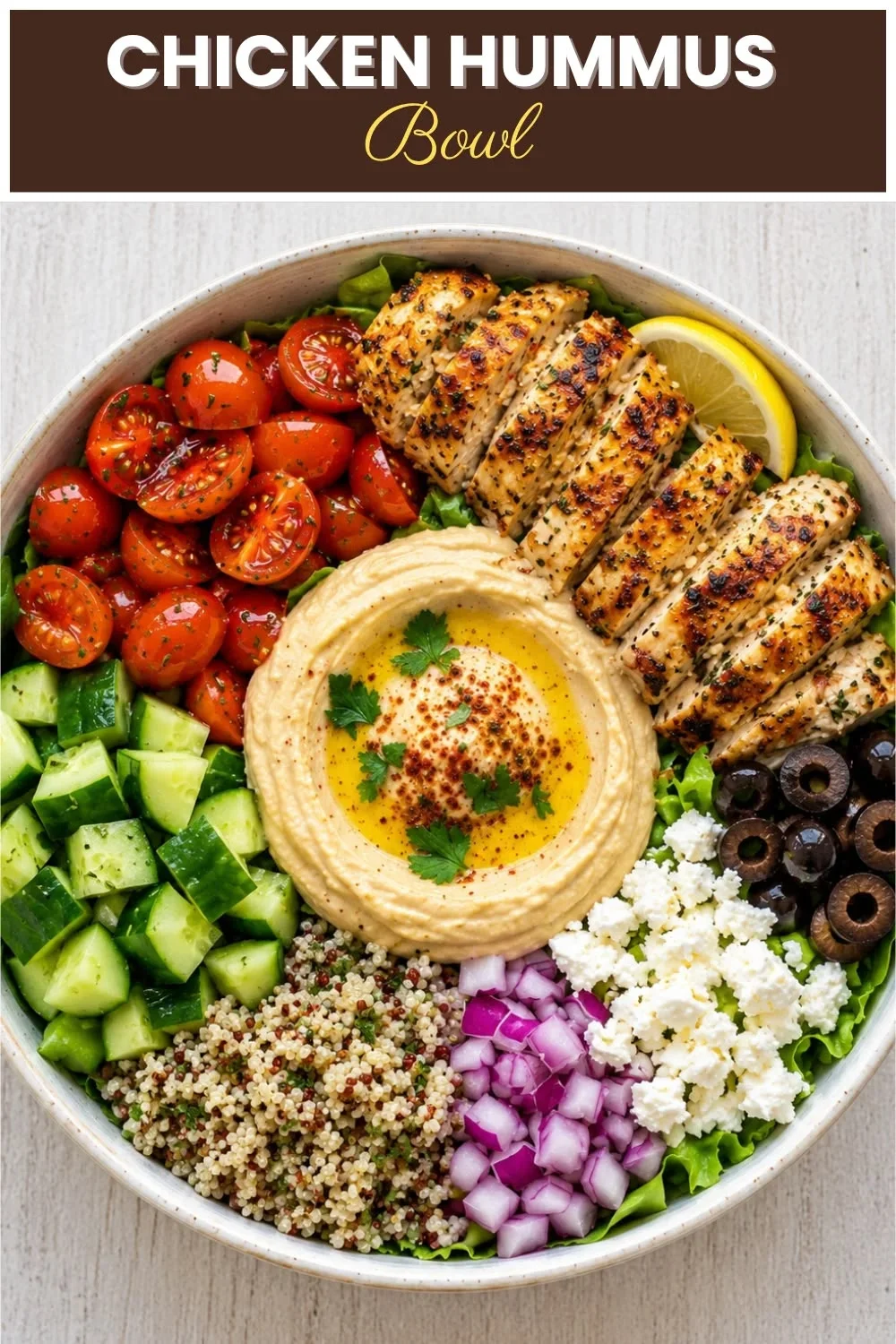
- Spread the hummus. Spoon a generous half cup of hummus into the bottom of each serving bowl. Use the back of a spoon to spread it toward the edges, creating a wide, shallow well in the center. This is your base and it should be generous.
- Add the chicken. Place a portion of the sliced chicken directly onto the hummus, slightly off-center toward one side of the bowl. You want the colors and components to show individually for visual appeal and ease of eating.
- Add the vegetables. Arrange the cucumber, tomatoes, red onion, and olives in separate sections around the chicken. Don’t pile everything in the center – spread the toppings so each spoonful gets a mix of textures and flavors.
- Finish and garnish. Scatter the fresh parsley over the bowl, then crumble feta on top if using. Add pine nuts or sesame seeds for crunch. Finish with a drizzle of olive oil and an extra squeeze of fresh lemon juice. Serve immediately or store components separately for meal prep.
Make It Ahead and Batch Prep Guide
This creamy chicken hummus bowl is one of the best recipes you can batch prep because every component stores well on its own. The key is keeping things separate until you’re ready to eat. Assembled bowls get soggy and the hummus absorbs moisture from the vegetables quickly, so resist the urge to build your bowls in advance.
Cook a full batch of chicken on Sunday – double or triple the recipe if you want enough for the whole week. Once cooked and sliced, the chicken stores beautifully in an airtight container in the refrigerator for up to 4 days. You can also freeze pre-cooked, sliced chicken for up to 3 months, which makes last-minute bowl assembly even faster. Mediterranean Chicken Meal Prep Guide
Prep your vegetables at the same time and store them in separate containers or divided meal prep boxes. Cucumbers and tomatoes hold up well for 3-4 days when refrigerated. Red onion can be sliced ahead and kept in a small jar with a splash of lemon juice to mellow its sharpness – this essentially quick-pickles it, which actually improves the flavor. Fresh parsley keeps well wrapped in a damp paper towel inside a bag for up to a week.
Hummus stores covered in the fridge for up to a week, so you can portion it into small containers ready to scoop into bowls. When you’re ready to eat, the entire assembly takes less than 2 minutes. You’ll spend more time finding a fork than actually building the bowl, which is exactly what good meal prep should feel like. Beginner Mediterranean Meal Prep Tips
Common Mistakes to Avoid
- Skipping the resting step after cooking chicken. Cutting into chicken immediately after it comes off the heat forces all the juices to run out, leaving you with dry, tough meat. Even 5 minutes of resting makes a dramatic difference in texture.
- Using cold hummus straight from the fridge. Cold hummus is thick, stiff, and harder to spread. Let it sit at room temperature for 10-15 minutes before serving, or warm it slightly in the microwave for 20-30 seconds and stir. Warm hummus has a creamier texture and much better flavor.
- Assembling bowls too far in advance. Pre-built bowls with all components mixed together get watery and unappetizing fast. The tomatoes and cucumber release liquid that dilutes the hummus. Always store components separately and assemble just before eating.
- Under-seasoning the chicken. Hummus has a rich, strong flavor profile, so bland chicken will get completely lost in the bowl. Be generous with your spice rub and don’t forget salt. Properly seasoned chicken should taste good on its own before it even goes near the hummus.
- Using too little hummus as the base. The hummus isn’t just a topping – it’s the creamy foundation that ties everything together. Use a full half cup per bowl minimum. A thin smear of hummus will leave you with a dry, unsatisfying bowl that doesn’t deliver the experience you’re going for.
- Forgetting the acid finish. A squeeze of fresh lemon juice at the end is not optional. Without it, the bowl can taste heavy and one-dimensional. Acid brightens every other flavor in the bowl and makes the whole thing taste more alive. Add it right before serving for best results.
Notes, Tips and Variations
Substitutions
If you don’t eat chicken, this bowl works beautifully with grilled lamb kofta, pan-seared salmon, shrimp sautéed in garlic and olive oil, or even crispy roasted chickpeas for a fully plant-based version. The hummus base pairs well with almost any protein you enjoy.
No tahini on hand for homemade hummus? You can substitute with sunflower seed butter for a nut-free version, or simply use a splash of extra olive oil to compensate for the fat and richness. The flavor will be slightly different but still delicious. Store-bought hummus is always a perfectly acceptable shortcut – look for brands with simple, recognizable ingredients.
Dietary Variations
To make this bowl completely dairy-free, simply skip the feta cheese. The bowl doesn’t need it – the other flavors are strong enough to carry everything. For a vegan version, replace the chicken with crispy roasted chickpeas, herbed tofu, or grilled eggplant slices seasoned with the same spice blend.
If you’re eating lower carb, the bowl is already relatively low in carbohydrates. You can reduce the hummus portion slightly and load up on extra vegetables and protein to shift the macros in that direction. For more substance, add a side of whole grain pita, brown rice, or quinoa to make it a more calorie-dense meal.
Cooking Tips
For the most flavorful chicken, marinate it overnight in the refrigerator. The extended marinating time allows the spices and acid to penetrate deeper into the meat, resulting in chicken that’s flavorful all the way through rather than just on the surface. This is especially impactful with thicker chicken breasts.
If you’re cooking chicken on a grill pan or outdoor grill, resist moving it too early. Let it sit undisturbed for the first 4-5 minutes so it develops a proper sear and releases naturally from the cooking surface. Forcing it off the grill before it’s ready will tear the exterior and cause sticking. Good sear marks also add a subtle smokiness that makes the bowl taste like restaurant quality.
Topping Ideas and Flavor Boosters
One of the best things about a chicken hummus bowl is how customizable it is. Here are more than ten ways to level up your bowl beyond the base recipe.
- Za’atar spice blend – Sprinkle it over the hummus before adding toppings for a herby, slightly tangy flavor that’s deeply traditional in the region.
- Sumac – A tart, citrusy ground spice that adds beautiful color and bright flavor. Use it in place of or alongside lemon juice.
- Pickled red onions – More complex and milder than raw red onion, with a gorgeous pink color. Quick-pickle them with red wine vinegar, a pinch of sugar, and salt for 20 minutes.
- Roasted red peppers – Add sweetness and a smoky depth. Use jarred for convenience or roast your own.
- Toasted pine nuts – Add richness and a buttery crunch. Toast them in a dry pan over low heat for about 2 minutes, watching carefully so they don’t burn.
- Fresh mint leaves – A handful of torn mint adds a cooling, aromatic contrast that elevates the whole bowl instantly.
- Harissa paste – A North African chili paste with deep, smoky heat. Swirl a small dollop into the hummus or drizzle it over the top for a spicy kick.
- Marinated artichoke hearts – Tangy, tender, and incredibly flavorful. They pair especially well with the chicken and olives in the bowl.
- Toasted sesame seeds – Add visual appeal and a nutty flavor that complements the tahini in the hummus beautifully.
- Microgreens or baby arugula – Add a fresh, slightly peppery note and boost the nutritional profile even further.
- Drizzle of hot honey – If you enjoy sweet-savory combinations, a light drizzle of hot honey over the chicken adds a surprising and delicious contrast to the tangy, creamy hummus.
- Everything bagel seasoning – A surprisingly excellent topper that adds garlic, onion, sesame, and poppy seed flavor all at once with zero effort.
Who This Recipe Is For
This creamy chicken hummus bowl was designed to work for a wide range of people and lifestyles. If any of the following sound like you, this recipe belongs in your weekly rotation.
- Busy professionals who need a healthy, satisfying lunch that doesn’t require cooking from scratch every day.
- Meal preppers who want to batch cook components on the weekend and assemble fresh bowls throughout the week in under 2 minutes.
- Fitness-focused eaters who need a high-protein, nutrient-dense meal that supports recovery and energy without feeling heavy.
- Gluten-free eaters who are tired of sacrificing flavor for dietary restrictions and want something that’s naturally compliant without substitutions.
- Beginner home cooks who want a recipe they can actually nail on the first try without advanced techniques or hard-to-find ingredients.
- Parents feeding a family who need something customizable enough that picky eaters and adventurous eaters can both enjoy it at the same table.
- Anyone eating Mediterranean-inspired food who wants to explore bold, wholesome flavors without spending hours in the kitchen every day.
- Budget-conscious cooks who want to maximize flavor and nutrition without spending a lot of money on each meal.
Storage and Meal Prep Tips
Refrigerator
Store each component separately in airtight containers for the best results. Cooked sliced chicken keeps well for up to 4 days. Prepped vegetables like cucumber and tomatoes stay fresh for 3-4 days, though they’re best within the first 2-3 days before they start releasing too much liquid. Hummus can be stored in its original container or a separate airtight container for up to 7 days.
Label each container with the date so you can track freshness at a glance. If you notice any containers building up condensation inside, give them a quick drain and pat dry before using. This keeps your ingredients crisp and prevents premature spoiling.
Freezer
Cooked chicken freezes exceptionally well and is the main component worth freezing in larger batches. Portion it into individual serving-size bags or containers before freezing so you can pull out exactly what you need without thawing the whole batch. Frozen cooked chicken keeps its quality for up to 3 months.
Hummus can technically be frozen, though the texture changes slightly upon thawing – it can become a bit grainy or watery. If you do freeze it, stir vigorously after thawing and add a fresh drizzle of olive oil to bring it back to a creamy consistency. Fresh vegetables don’t freeze well and should always be prepped fresh for best results.
Reheating
To reheat the chicken, place it in a microwave-safe container with a splash of water or chicken broth, then cover loosely and microwave in 30-second intervals until warmed through. The added moisture prevents the chicken from drying out during reheating. Alternatively, reheat it in a skillet over medium heat with a small drizzle of olive oil for about 2-3 minutes.
The vegetables and hummus don’t need reheating – they’re best served at room temperature or slightly chilled. Let the hummus sit out for 10-15 minutes before assembling your bowl so it softens and spreads easily. Never microwave assembled bowls with vegetables, as this will cook the cucumber and tomatoes into a soggy, unpleasant mess.
Nutrition Facts
The following values are per serving, based on 4 servings from this recipe. Exact values may vary depending on your specific ingredients and brands used. These numbers include the chicken, hummus, vegetables, olive oil, and feta cheese as listed.
| Nutrient | Per Serving |
|---|---|
| Calories | 420 kcal |
| Protein | 38g |
| Total Carbohydrates | 22g |
| Dietary Fiber | 6g |
| Total Fat | 20g |
| Saturated Fat | 4g |
| Sugar | 5g |
| Sodium | 610mg |
Note: To reduce sodium, use low-sodium hummus and reduce or eliminate the added salt in the marinade. To increase calories for a more substantial meal, add a side of whole grain pita or a scoop of cooked quinoa to the bowl.
FAQs
Can I use rotisserie chicken instead of cooking chicken from scratch?
Absolutely, and it’s one of the best shortcuts for this recipe. Rotisserie chicken is already fully cooked, seasoned, and incredibly flavorful. Simply shred or slice it and use it in place of the marinated, pan-cooked chicken. It won’t have the same spiced crust, but you can toss the pulled chicken with a pinch of cumin, paprika, and lemon juice to bring it closer to the flavor profile of this recipe. It cuts your prep time down to under 10 minutes total.
Is store-bought hummus okay to use, or should I make it from scratch?
Store-bought hummus works perfectly well for this recipe, especially on busy weekdays when speed is the priority. Look for brands with short ingredient lists – chickpeas, tahini, lemon juice, garlic, olive oil, and salt are all you need. If you have an extra 5 minutes and a food processor, homemade hummus is noticeably creamier and more flavorful than most commercial options. The choice depends entirely on your available time and personal preference. Easy Homemade Hummus Recipe
How long does the assembled bowl last in the fridge?
An assembled bowl with all toppings mixed in starts to degrade in quality after just a few hours. The tomatoes and cucumbers release water that thins the hummus and makes the bowl soggy. For meal prep, always store components separately and assemble right before eating. If you absolutely need a fully assembled grab-and-go option, use a container with dividers so the components stay separate until you’re ready to eat.
Can I make this bowl vegetarian or vegan?
Yes, very easily. For a vegetarian version, swap the chicken for crispy pan-fried halloumi cheese or a fried egg seasoned with the same spice blend. For a fully vegan bowl, use roasted chickpeas seasoned with cumin and paprika, grilled eggplant or zucchini, or herbed and pan-seared tofu. The hummus base, vegetables, olive oil, and lemon are all already plant-based, so the protein swap is the only real change needed.
What can I serve alongside this bowl to make it a bigger meal?
This bowl is quite filling on its own, but if you want to bulk it up, serve it with warm whole grain pita bread for scooping, a side of tabbouleh salad, or a cup of lentil soup. A simple green salad with lemon vinaigrette also pairs beautifully without competing with the flavors of the bowl. For a heartier version, stir a half cup of cooked quinoa or brown rice directly into the hummus before adding the toppings – it creates a fuller, more substantial base.
Conclusion
This creamy chicken hummus bowl is the kind of recipe that earns its keep. It’s fast, nutritious, endlessly adaptable, and genuinely delicious – which is a rare combination for a weekday lunch. Whether you’re building your first meal prep routine or you’re a seasoned batch cooker looking for a new staple, this bowl delivers every single time.
The beauty of a recipe like this is that it grows with you. Start with the base recipe exactly as written, then start experimenting with the toppings, spice blends, and proteins over time. Every small change teaches you something new about flavor and balance, and before long you’ll be creating your own signature version without even looking at the recipe.
Give it a try this week and see how quickly it becomes a habit. Once you taste a properly built, well-seasoned chicken hummus bowl, the sad desk salad doesn’t stand a chance. Share your version in the comments below – I’d love to hear what toppings you’re working with.