THE BEST N°1 Mediterranean Christmas Salad: Fresh Winter Greens With Honey Mustard Dressing
The holiday season deserves a dish that is as beautiful as it is nourishing, and this Mediterranean Christmas salad delivers exactly that. Packed with vibrant winter greens, festive toppings, and a golden honey mustard dressing, this salad brings the spirit of Mediterranean eating straight to your holiday table. It is colorful, refreshing, and surprisingly filling.
Whether you are hosting a big Christmas dinner or preparing a lighter side dish to balance out richer holiday meals, this recipe fits perfectly. You will find everything you need here, from the full ingredient list and step-by-step instructions to make-ahead tips and storage guidance. This post also covers the health benefits of every key ingredient so you understand exactly why this salad is so good for you.
By the end of this article, you will have a go-to festive salad recipe you can confidently prep in advance, customize for different diets, and serve at any holiday gathering. Let us get into it.
Table of Contents
Personal Note
I have always believed that the Mediterranean way of eating is at its most magical during winter. When the markets fill up with dark leafy greens, pomegranates, citrus fruits, and fresh herbs, it feels like nature is giving you everything you need to eat beautifully and feel great all at once.
The first time I made this Mediterranean Christmas salad was for a family gathering a few years ago. I wanted something festive that did not feel heavy, something that would hold its own next to roasted lamb and warm pita bread. The honey mustard dressing came together on a whim, and everyone at the table asked for the recipe before dessert even arrived.
This salad has since become a December tradition in my kitchen. It is one of those recipes that proves you do not need to overthink holiday cooking. Fresh, seasonal, and rooted in the Mediterranean pantry, it always delivers something that feels both festive and deeply satisfying.
Origins of the Dish
The Mediterranean diet has its roots in the coastal regions of Southern Europe, North Africa, and the Middle East, where fresh vegetables, olive oil, legumes, and whole grains have formed the foundation of daily eating for thousands of years. Salads in this tradition are not afterthoughts. They are central to the meal, often served as part of a mezze spread or alongside a main protein.
Winter salads, in particular, have a long history across Mediterranean countries. In Greece, Italy, Lebanon, and Morocco, cooks have always worked with what the season provides. Dark leafy greens like kale, radicchio, and arugula thrive in colder months. Pomegranate seeds, known as “rubies” in many Mediterranean cultures, have been used in celebration dishes for centuries, symbolizing abundance and good fortune during the holiday season.
Honey and mustard as a dressing pairing also has deep Mediterranean roots. Honey has been harvested and traded across the Mediterranean basin since ancient times, particularly in Greece and Turkey. Mustard seeds were cultivated in the region for thousands of years and appear in both culinary and medicinal records dating back to ancient Rome. Combining them in a dressing is a naturally Mediterranean instinct, balancing sweet and sharp flavors with extra virgin olive oil as the base.
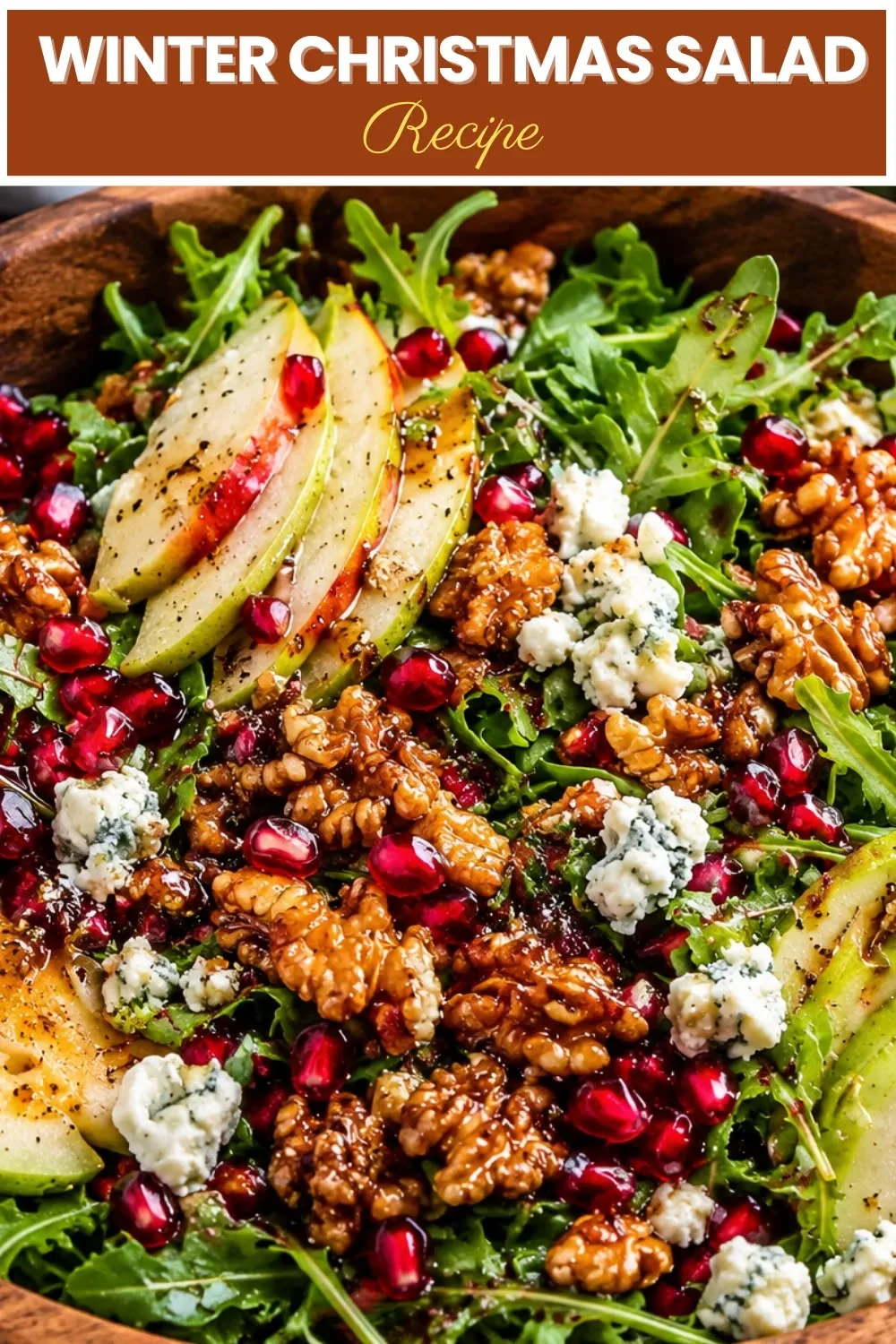
What makes this Mediterranean Christmas salad feel so festive is not any single ingredient but the layering of colors, textures, and flavors that reflect the holiday spirit through a Mediterranean lens. The red of pomegranate, the deep green of kale, the white of feta, and the golden shimmer of the dressing all come together in a dish that looks like it belongs on a holiday table. It is a modern recipe built on ancient, time-tested Mediterranean principles.
Why You’ll Love This Recipe
This salad is not just beautiful to look at. It is genuinely satisfying, quick to prepare, and endlessly flexible. Here is exactly why this recipe earns a permanent spot in your holiday rotation.
- Ready in under 20 minutes – You can have this on the table faster than most holiday side dishes, with minimal cleanup.
- Festive and visually stunning – The red, green, and white color palette makes it look like a Christmas dish without any artificial effort.
- Packed with nutrients – Every ingredient brings something meaningful to the table, from antioxidants to healthy fats and fiber.
- Meal prep friendly – Most components can be prepped days ahead, making it ideal for busy holiday schedules.
- Easily customizable – You can swap greens, add proteins, or adjust the dressing to fit your preferences or dietary needs.
- Vegetarian and gluten-free – It suits a wide range of dietary preferences right out of the box, with easy vegan modifications too.
- Balances heavier holiday dishes – The bright acidity of the dressing cuts through rich mains and cleanses the palate between courses.
- Uses seasonal Mediterranean ingredients – You are working with produce at its peak in winter, so flavors are bold and naturally sweet.
- Crowd pleaser for all ages – Even people who claim they do not like salad tend to go back for seconds with this one.
- No cooking required for the base – The greens, pomegranate, and toppings are all raw, keeping prep simple and stress-free.
Health Benefits and Ingredient Highlights
The Mediterranean diet is consistently ranked among the world’s healthiest eating patterns, and this salad is a perfect example of why. Every ingredient here was chosen with both flavor and function in mind. Here is a breakdown of what each key component brings to your health.
Baby Kale and Mixed Winter Greens
Baby kale is one of the most nutrient-dense leafy greens available in winter. It is rich in vitamins K, C, and A, as well as calcium, iron, and powerful antioxidants called glucosinolates that support liver function and reduce inflammation. Because it is in its baby form, it is more tender and less bitter than mature kale, making it much more palatable in a raw salad.
When you combine baby kale with other winter greens like arugula, spinach, or radicchio, you amplify the nutritional profile significantly. Each green brings a slightly different set of phytonutrients, minerals, and vitamins, giving your body a broader spectrum of support. The Mediterranean approach has always embraced variety over uniformity, and this mix of greens embodies that principle beautifully.
Pomegranate Seeds
Pomegranate seeds are a true superfood with a long history in Mediterranean cooking and traditional medicine. They are loaded with punicalagins and punicic acid, compounds that have been shown in research to reduce oxidative stress, lower blood pressure, and support heart health. For a population that already benefits from the heart-protective Mediterranean diet, adding pomegranate is a powerful amplifier.
Beyond their health benefits, pomegranate seeds add a natural sweetness and a satisfying burst of juice with every bite. They also bring a vivid red color that makes this Mediterranean Christmas salad look genuinely festive. In many Mediterranean households, pomegranate is served at New Year and Christmas as a symbol of prosperity and good luck, so using it here honors a beautiful cultural tradition.
Extra Virgin Olive Oil
Extra virgin olive oil is the cornerstone of Mediterranean cooking and one of the most studied foods in nutritional science. It is rich in monounsaturated fats, particularly oleic acid, which supports cardiovascular health and helps reduce LDL cholesterol levels. It also contains oleocanthal, a natural anti-inflammatory compound that behaves similarly to ibuprofen in the body.
Using extra virgin olive oil as the base of your honey mustard dressing means you are building a dressing that is genuinely good for you. Fat-soluble vitamins like K and A, found in abundance in the winter greens, are better absorbed by the body when consumed with healthy fats. So the olive oil in this dressing is not just flavor, it is actually helping your body absorb more nutrition from the salad itself.
Raw Honey
Raw honey is a staple of the Mediterranean pantry that goes far beyond sweetness. It contains trace enzymes, minerals, and antioxidants that are stripped away in processed commercial honey. In countries like Greece, Turkey, and Morocco, raw local honey has been used for centuries as both a food and a natural remedy for everything from sore throats to wound healing.
In the context of this dressing, raw honey serves as a natural sweetener that balances the sharpness of the mustard and the acidity of the lemon juice. It also helps emulsify the dressing, giving it a smooth, slightly thick consistency that clings beautifully to leafy greens. The key is to use good quality raw honey, which you can find at any farmers market or Mediterranean grocery store.
Dijon Mustard
Dijon mustard brings more than just flavor to this dressing. It contains glucosinolates and selenium, compounds associated with antioxidant activity and thyroid health. It is also a natural emulsifier, meaning it helps the olive oil and lemon juice blend smoothly rather than separating in the jar.
The sharpness of Dijon creates a beautiful contrast with the sweet honey, and that tension is exactly what makes this dressing so addictive. Mediterranean dressings often walk this line between bright and savory, and Dijon is the perfect tool for achieving it. A small spoonful goes a long way, so you get a lot of flavor without adding a heavy caloric load to the dish.
Feta Cheese
Feta is one of the oldest cheeses in the world and an icon of Mediterranean cuisine. Made from sheep’s milk or a blend of sheep and goat’s milk, it is naturally lower in fat than many other cheeses while still delivering a rich, tangy flavor that transforms any salad it touches. It is also a good source of calcium, phosphorus, and B vitamins.
What makes feta particularly valuable in a salad like this is its salty, creamy contrast to the sweet pomegranate and tangy dressing. It crumbles beautifully over the greens and distributes its flavor throughout the dish with every forkful. Look for authentic Greek feta packed in brine for the best flavor and texture. Greek Feta and Spinach Salad Recipe
Toasted Walnuts or Pecans
Nuts are a beloved component of Mediterranean eating, and walnuts in particular are prized for their omega-3 fatty acid content. These plant-based omega-3s, known as ALA, support brain health, reduce inflammation, and promote heart health. Walnuts are also rich in magnesium, zinc, and vitamin E, making them a genuinely powerful food to include regularly in your diet.
Toasting the walnuts before adding them to the salad takes only five minutes and makes a dramatic difference in flavor. The heat brings out their natural oils and deepens their nutty, slightly bitter taste, which pairs perfectly with the sweet dressing. If you prefer a milder nut, pecans work beautifully here and lean slightly sweeter, which complements the holiday flavor profile even more.
Fresh Lemon Juice
Lemon is one of the most used ingredients across the entire Mediterranean region. It is high in vitamin C, which supports immune function, an especially important consideration during the winter months when colds and flu are common. Lemon juice also aids in iron absorption, making it a smart pairing with the iron-rich leafy greens in this salad.
In the dressing, fresh lemon juice adds brightness and acidity that lifts the entire dish. It is sharp enough to cut through the richness of the olive oil and feta, creating a dressing that feels light even though it is generously flavored. Always use freshly squeezed lemon juice rather than bottled, the difference in flavor is significant and completely worth the extra 30 seconds it takes.
Ingredients
This recipe serves 4 to 6 people as a side salad. Scale it up easily for larger gatherings.
For the Salad Base:
- 5 oz (140g) baby kale (or use a mix of baby kale, spinach, and arugula)
- 1 cup radicchio, thinly sliced (substitute: red cabbage for a milder flavor)
- 1 cup pomegranate seeds (from about 1 large pomegranate, or use store-bought ready seeds)
- 1/2 cup crumbled feta cheese (use vegan feta for a dairy-free version)
- 1/3 cup toasted walnuts, roughly chopped (substitute: toasted pecans or almonds)
- 1 small red onion, very thinly sliced (substitute: 2 shallots for a milder bite)
- 1/2 cup cucumber, thinly sliced into half moons (Persian or English cucumber work best)
- 1/4 cup fresh mint leaves, torn (substitute: fresh parsley or basil)
- 1/4 cup dried cranberries (optional, adds extra festive sweetness – use unsweetened for lower sugar)
For the Honey Mustard Dressing:
- 3 tablespoons extra virgin olive oil
- 1 tablespoon raw honey (substitute: maple syrup for vegan version)
- 1.5 teaspoons Dijon mustard (substitute: whole grain mustard for a chunkier texture)
- 2 tablespoons fresh lemon juice (about 1 small lemon)
- 1 small garlic clove, finely minced or grated
- 1/4 teaspoon sea salt
- 1/8 teaspoon black pepper, freshly ground
- 1 teaspoon apple cider vinegar (optional, for extra tang)
Step-by-Step Instructions
Follow these steps for a perfectly assembled Mediterranean Christmas salad every time. The whole process takes about 15 to 20 minutes from start to finish.
- Toast the walnuts. Place the walnuts in a dry skillet over medium heat. Toast for 4 to 5 minutes, stirring frequently, until they are fragrant and lightly browned. Remove from heat immediately and let them cool on a plate. Do not walk away from them, they go from toasted to burned very quickly.
- Make the honey mustard dressing. In a small bowl or glass jar, combine the extra virgin olive oil, raw honey, Dijon mustard, lemon juice, minced garlic, sea salt, black pepper, and apple cider vinegar if using. Whisk vigorously or seal the jar and shake well until the dressing is smooth and fully emulsified. Taste and adjust the seasoning if needed.
- Prep the red onion. Slice the red onion very thinly using a sharp knife or mandoline. If you find raw red onion too sharp, soak the slices in cold water for 10 minutes, then drain well. This softens the flavor significantly without losing the crunch.
- Prep the remaining vegetables. Slice the cucumber into thin half moons. If using radicchio, stack the leaves and slice them into thin ribbons. Rinse the baby kale under cold water if it was not pre-washed, and dry it thoroughly using a salad spinner or paper towels. Wet greens will dilute the dressing.
- Deseed the pomegranate (if using whole). Cut the pomegranate in half crosswise. Hold it cut side down over a large bowl and firmly tap the back with a wooden spoon. The seeds will fall out quickly and cleanly. Remove any white pith pieces that fall into the bowl.
- Assemble the salad base. Add the baby kale and mixed greens to a large salad bowl. Scatter the radicchio ribbons over the top. Add the cucumber slices and thinly sliced red onion. Distribute evenly so every serving gets a mix of everything.
- Add the festive toppings. Scatter the pomegranate seeds evenly across the salad. Add the crumbled feta cheese, toasted walnuts, and dried cranberries if using. Tear the fresh mint leaves and scatter them on top for a burst of freshness and aroma.
- Dress and toss. Drizzle the honey mustard dressing over the salad just before serving. Start with about two-thirds of the dressing, toss gently to coat, then taste and add more if desired. Use tongs or clean hands to toss, being careful not to crush the pomegranate seeds or break the feta into dust.
- Serve immediately. Transfer to a serving platter or serve directly from the bowl. For the best presentation, arrange the salad on a wide, shallow platter so all the colors and textures are visible. Serve right away for maximum freshness and crunch.
Make It Ahead and Batch Prep Guide
One of the greatest advantages of this Mediterranean Christmas salad is how well it lends itself to advance preparation. During the busy holiday season, being able to knock out prep steps a day or two ahead makes a huge difference in your overall stress level in the kitchen.
The honey mustard dressing can be made up to 5 days in advance and stored in a sealed jar in the refrigerator. Because the garlic will mellow and the flavors will meld together over time, the dressing is actually better on day two than it is on day one. Give it a good shake or whisk before using it, as the olive oil will solidify slightly in the fridge. Let it sit at room temperature for 10 minutes before dressing the salad.
The salad components can be prepped separately up to two days ahead. Wash and dry the greens and store them in an airtight container lined with paper towels to absorb excess moisture. Toast the walnuts and store them in a small jar at room temperature. Deseed the pomegranate and refrigerate the seeds in a covered bowl. Slice the red onion and cucumber and store them in separate airtight containers in the fridge.
When you are ready to serve, assembling the salad takes less than five minutes. Combine everything in a large bowl, drizzle with the pre-made dressing, toss gently, and serve. This system is particularly effective if you are cooking for a large Christmas dinner and need to manage your time wisely across multiple dishes. For more batch prep inspiration, check out Mediterranean Meal Prep Sunday Guide.
Common Mistakes to Avoid
Even a simple salad can go wrong if you skip a few key details. Here are the most common pitfalls and how to sidestep them every time.
- Dressing a wet salad. If your greens are still damp from washing, the dressing will not cling properly and the salad will taste watery. Always dry your greens thoroughly in a salad spinner or pat them dry with clean kitchen towels before assembling.
- Dressing too early. Adding the dressing more than a few minutes before serving causes the greens to wilt and the salad loses its fresh, vibrant appearance. Dress it right before the meal, not before.
- Using bottled lemon juice. Bottled lemon juice has a flat, slightly metallic taste that affects the entire dressing. Fresh lemon juice is brighter, more complex, and makes a noticeable difference. It takes 30 seconds to squeeze and is always worth it.
- Skipping the walnut toasting step. Raw walnuts have a slightly bitter, bland flavor compared to toasted ones. Toasting takes five minutes and transforms their depth of flavor dramatically. Do not skip this step.
- Using low-quality olive oil. Since extra virgin olive oil is the base of the dressing, the quality matters enormously. A bitter or rancid olive oil will ruin the entire dressing. Use a good quality, fresh extra virgin olive oil with a harvest date on the label.
- Overdressing the salad. More dressing does not always mean more flavor, and too much will make the salad soggy and heavy. Start with about two-thirds of the dressing, toss, taste, and only add more if truly needed.
Notes, Tips and Variations
Substitutions
If you cannot find baby kale, any tender winter green works well in its place. Try a mixture of baby spinach and arugula, which gives you that same peppery bite with a softer texture. Watercress is another excellent option that is very common in Mediterranean winter cooking and adds a lovely, slightly bitter edge.
For the nuts, pecans are a wonderful substitute for walnuts if you prefer a sweeter, less bitter nut. Pistachios are another beautiful Mediterranean option that adds a pop of green color and a delicate, slightly sweet flavor that pairs very well with pomegranate. Toasted pine nuts are also a classic Mediterranean choice that works here.
If feta is not available or not to your taste, fresh goat cheese crumbles or ricotta salata make excellent alternatives. Both have that same salty, creamy quality that balances the acidity of the dressing. For a vegan option, look for a good quality cashew-based feta, which has become widely available in most health food stores.
Dietary Variations
To make this salad fully vegan, swap the raw honey for pure maple syrup and use a plant-based feta alternative. The dressing will still taste beautifully balanced, and maple syrup actually adds a lovely depth of flavor that complements the winter spice profile of the dish.
To add more protein and turn this into a satisfying main course, add grilled chicken breast, baked salmon, or warm lentils tossed with cumin and lemon. All three are staples of Mediterranean cooking and pair naturally with the flavors already present in this salad. For a more substantial vegetarian version, add a cup of cooked chickpeas seasoned with za’atar and a splash of olive oil.
Cooking Tips
When making the dressing, add the olive oil last and whisk it in gradually. This helps the dressing emulsify properly rather than splitting into an oily, separated liquid. If the dressing separates before serving, just give it another vigorous whisk or shake and it will come back together immediately.
If you are serving this salad on a large platter for a Christmas buffet, hold back some pomegranate seeds, feta, and walnuts to scatter on top at the last minute. This keeps the presentation looking fresh and generous rather than muddled. It also signals to guests exactly what they are eating without needing a label or description.
Topping Ideas and Flavor Boosters
Once you have the base salad down, the fun really begins. Here are over ten ways to customize and elevate this Mediterranean Christmas salad for different occasions and tastes.
- Sliced pears or apples – Thin slices of ripe Bosc pear or Honeycrisp apple add a lovely fruity sweetness that plays beautifully against the salty feta.
- Candied walnuts or pecans – If you want to dial up the festive sweetness, candied nuts add a satisfying crunch and a caramel-like flavor.
- Sliced kalamata olives – For a bolder Mediterranean punch, add a handful of pitted and halved kalamata olives, which bring a salty, briny depth to every bite.
- Sun-dried tomatoes – Chopped sun-dried tomatoes add an umami richness and a chewy texture that contrasts nicely with the crisp greens.
- Roasted chickpeas – Toss canned chickpeas with olive oil and za’atar and roast until crispy for a crunchy, protein-rich topping that makes the salad more filling.
- Orange segments – Blood orange or navel orange segments add bright citrus notes and a beautiful pop of orange color that enhances the festive look.
- Za’atar spice blend – A light dusting of za’atar over the finished salad adds an earthy, herby note that is unmistakably Mediterranean.
- Sumac – A pinch of sumac over the top adds a tart, slightly fruity acidity that complements the lemon in the dressing without duplicating it.
- Avocado slices – Creamy avocado adds healthy monounsaturated fats and a buttery texture that makes the salad feel more substantial.
- Pita chips or croutons – For crunch and heartiness, crumble toasted pita chips or add whole grain croutons just before serving.
- Fresh dill or tarragon – These herbs add an elegant, slightly anise-like aroma that feels distinctly festive and pairs beautifully with the honey mustard dressing.
- Balsamic glaze drizzle – A light drizzle of balsamic reduction adds a beautiful visual element and a sweet, complex acidity on top of the honey mustard base.
Who This Recipe Is For
This salad has a genuinely wide appeal. Here is a quick guide to who will love it most and why it fits their lifestyle.
- Mediterranean diet followers – Every ingredient aligns with the Mediterranean dietary principles of whole foods, healthy fats, fresh produce, and minimal processing.
- Holiday hosts and entertainers – It is easy to scale up, stunning on a table, and can be mostly prepped ahead, making it ideal for stress-free holiday hosting.
- Meal preppers – The separate-component prep system means you can build fresh salads throughout the week without any additional effort after Sunday.
- Vegetarians and flexitarians – The recipe is fully vegetarian as written and easily made vegan, making it a reliable dish for mixed dietary households.
- Health-conscious eaters – Packed with antioxidants, fiber, and healthy fats, this salad delivers serious nutritional value without feeling like a diet food.
- Busy parents and families – With a 20-minute prep time and kid-friendly ingredients, this works well as a quick weeknight side or a weekend gathering dish.
- Anyone who loves bold, bright flavors – If you love the combination of sweet, tangy, salty, and fresh all in one bite, this salad was made for you.
Storage and Meal Prep Tips
Refrigerator
If you have leftover assembled salad that has already been dressed, store it in an airtight container in the refrigerator for up to one day. The greens will soften slightly but the flavors will still be good. Add a handful of fresh undressed greens when you serve the leftovers to revive the texture.
For best results with meal prep, store each component separately in the fridge. Washed and dried greens last up to 3 days in an airtight container lined with paper towels. Pomegranate seeds keep for up to 5 days in a covered bowl. The dressing lasts up to 5 days in a sealed jar. The feta, cucumber, and red onion should each be stored separately and stay fresh for up to 3 days.
Freezer
This salad is not suitable for freezing. Raw leafy greens become mushy and unpleasant when thawed, and the texture of the entire dish would be ruined. The dressing, however, can technically be frozen in a small airtight container for up to one month. Thaw it overnight in the refrigerator and whisk well before using.
The toasted walnuts or pecans can also be made in a large batch and stored in the freezer in a zip-lock bag for up to 3 months. This is a great time-saver because you can toast a full batch on one day and simply grab what you need as you go. They stay perfectly crunchy when frozen and thaw at room temperature in just minutes.
Reheating
This salad is meant to be served cold or at room temperature, so there is no reheating involved. If you have stored components separately and they have come straight from the fridge, let the dressing sit at room temperature for 10 minutes before assembling and dressing the salad. Cold olive oil can slightly cloud the dressing and affect how smoothly it pours and coats the greens.
If you are serving this alongside warm dishes like roasted chicken or lamb, the contrast of a cold, crisp salad with hot mains is part of what makes the experience so satisfying. The refreshing quality of the salad is a feature, not a bug, and it works beautifully as a palate cleanser between richer holiday courses. Mediterranean Roasted Chicken Thighs with Lemon and Herbs
Nutrition Facts
The following nutrition information is estimated per serving based on the recipe serving 6 people, including the full amount of dressing. Values will vary slightly depending on specific brands and ingredient variations used.
| Nutrient | Per Serving |
|---|---|
| Calories | 215 kcal |
| Protein | 5g |
| Total Carbohydrates | 16g |
| Total Fat | 15g |
| Saturated Fat | 3g |
| Dietary Fiber | 3g |
| Total Sugars | 10g |
| Sodium | 280mg |
| Vitamin C | 22mg (25% DV) |
| Calcium | 110mg (11% DV) |
| Iron | 1.4mg (8% DV) |
This salad is a naturally low-calorie, nutrient-dense dish that fits comfortably within the Mediterranean dietary framework. It is high in healthy fats from the olive oil and walnuts, provides a good dose of fiber, and delivers meaningful amounts of vitamins C and K from the winter greens. The natural sugars come primarily from the pomegranate and honey, both of which also carry significant antioxidant benefits.
FAQs
Can I make this Mediterranean Christmas salad a day in advance?
Yes, but with an important caveat. Do not dress the assembled salad ahead of time, as the greens will wilt and become soggy. Instead, prep all the components separately, store them in the fridge, and assemble and dress the salad just before serving. The dressing itself can be made up to 5 days ahead and stored in a sealed jar in the refrigerator.
What can I use instead of pomegranate seeds?
If you cannot find pomegranate or prefer a different fruit, dried cranberries, fresh raspberry halves, or sliced red grapes all deliver a similar sweet-tart flavor and a pop of red color. Sliced blood orange segments are another beautiful option that keeps the Mediterranean character of the dish while adding a bright citrus note to the overall flavor profile.
Is this salad suitable for a gluten-free diet?
Yes, this salad is naturally gluten-free as written. All the main ingredients, including the greens, nuts, feta, pomegranate seeds, and dressing, contain no gluten. The only thing to double-check is your Dijon mustard, as some brands add wheat-based thickeners. Look for a certified gluten-free mustard if you are cooking for someone with celiac disease or a serious gluten sensitivity.
How do I make the honey mustard dressing less sweet?
Simply reduce the honey to half a tablespoon and increase the lemon juice by half a teaspoon to compensate for the acidity balance. You can also add an extra pinch of salt and a small amount of apple cider vinegar to sharpen the flavor without adding sweetness. The dressing is very forgiving and responds well to small adjustments, so taste as you go and dial it in to your preference.
Can I add protein to make this a main course salad?
Absolutely. This salad transitions beautifully from a side dish to a main course with the addition of a protein. Grilled chicken breast, baked or pan-seared salmon, pan-fried halloumi, or warm roasted chickpeas all work wonderfully here. For the most cohesive flavor, season your chosen protein with Mediterranean spices like cumin, sumac, oregano, and lemon before cooking, so it ties into the overall flavor profile of the dish.
Conclusion
This Mediterranean Christmas salad is everything a holiday dish should be: visually stunning, genuinely nourishing, and simple enough to execute without stress. With its vibrant winter greens, jewel-like pomegranate seeds, creamy feta, and that irresistible honey mustard dressing, it brings the best of Mediterranean eating to your festive table in just 20 minutes. It is the kind of dish that earns compliments every single time you serve it.
What makes this recipe truly special is how well it fits into a busy holiday schedule. The make-ahead components mean you can focus on the main event while knowing your salad is ready to assemble in minutes. Whether you are serving it at Christmas dinner, a holiday potluck, or a New Year’s celebration, this salad holds its own beautifully alongside any spread.
Give this recipe a try and make it your own. Play with the toppings, adjust the dressing, and add a protein to turn it into a full meal. However you choose to serve it, you are bringing something genuinely beautiful and nourishing to the table this holiday season, and that is what Mediterranean cooking is all about.