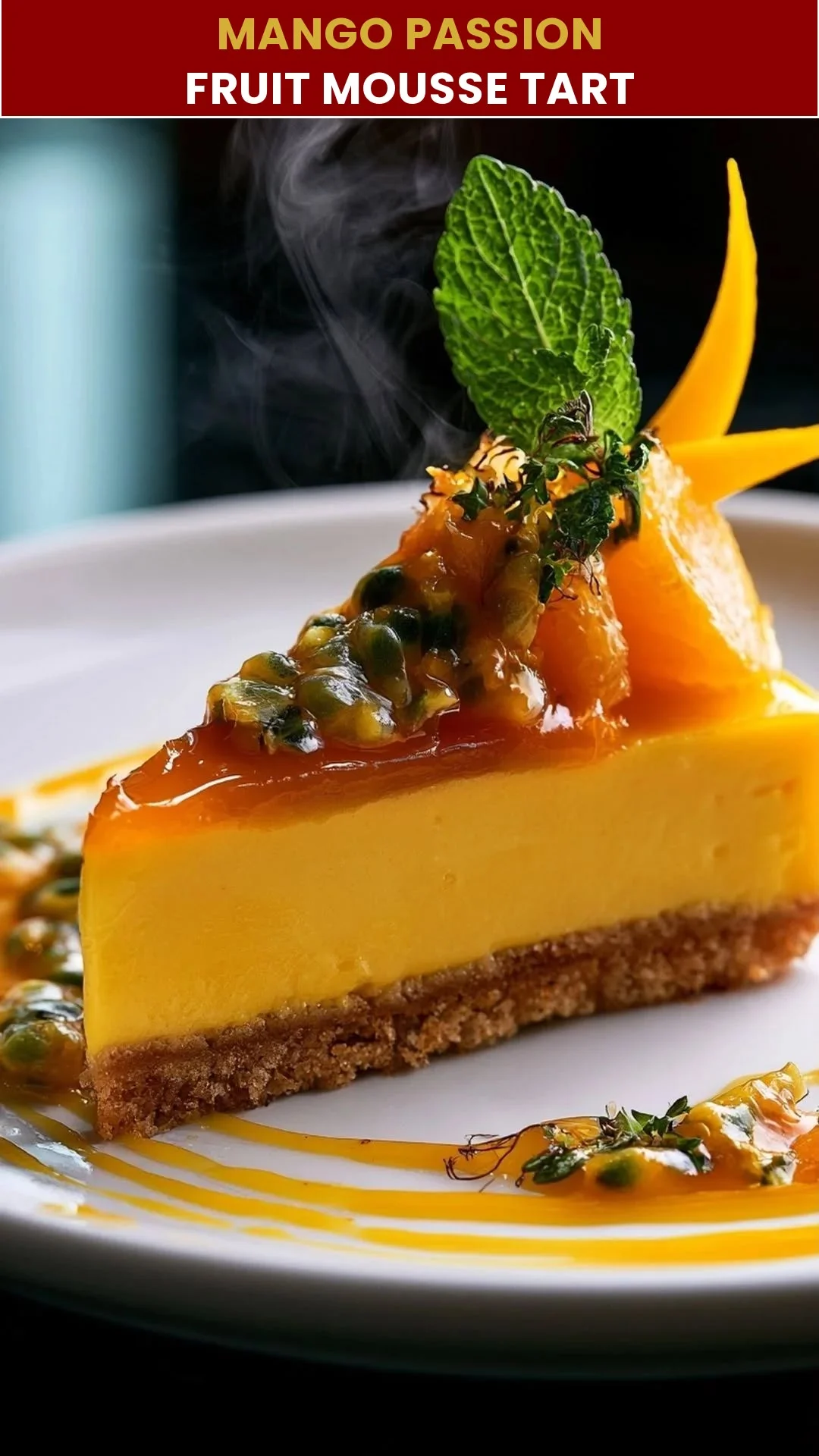
THE BEST N°1 Mango Passion Fruit Mousse Tart – Easy Tropical Dessert Recipe
If you’ve been searching for a show-stopping dessert that tastes as incredible as it looks, this Mango Passion Fruit Mousse Tart is exactly what you need. It combines a buttery, crisp tart shell with a silky, cloud-like mousse that bursts with tropical flavor in every single bite.
This recipe is perfect for entertaining, special occasions, or whenever you want to treat yourself to something genuinely extraordinary. You’ll learn everything from the history of this flavor pairing to foolproof step-by-step instructions, batch prep tips, and storage guidance.
Whether you’re a seasoned home baker or just starting your dessert journey, this post covers every detail you need to nail this tart on your first try. Let’s dive in.
Table of Contents
Personal Note
The first time I made a tropical mousse tart, I was completely hooked. There’s something almost magical about combining the sweet, golden richness of mango with the sharp, floral tang of passion fruit inside a perfectly crisp pastry shell.
I spent weeks testing different ratios of cream, fruit puree, and gelatin to get that mousse texture just right. Too much gelatin and it turns rubbery. Too little and it won’t hold its shape when you slice it.
What I ended up with is a recipe that feels indulgent and luxurious but is surprisingly approachable. This is now one of my most-requested desserts for gatherings, and I genuinely can’t wait for you to try it.
Origins of the Dish
The mousse tart as a concept has deep roots in classical French pâtisserie. French pastry chefs perfected the art of combining crisp, buttery pastry shells – known as pâte sablée or pâte sucrée – with airy, gelatin-set mousses as early as the 18th century. These techniques spread across Europe and eventually the world as professional pastry culture grew.
Mango itself has been cultivated in South Asia for over 4,000 years and was introduced to the Caribbean, Latin America, and Southeast Asia through trade and colonial routes. It became one of the most beloved fruits globally, celebrated for its sweetness, richness, and versatility in both savory and sweet applications. When mango arrived in European pastry kitchens, it quickly became a prized ingredient for exotic desserts and tropical tarts.
Passion fruit has its origins in South America, particularly Brazil, Paraguay, and Argentina. Indigenous communities consumed it for centuries before Portuguese explorers brought it to Europe in the 16th century. Its unique combination of tartness and intense floral aroma made it an instant hit in dessert applications worldwide. The fruit spread to Africa, Australia, and Southeast Asia, where it became a staple in tropical sweets and beverages.
The pairing of mango and passion fruit is a natural culinary marriage that has become a signature of modern tropical pastry. Contemporary pastry chefs from Sydney to Paris to São Paulo have embraced this duo in mousses, curds, panna cottas, and tarts. The Mango Passion Fruit Mousse Tart you’re making today is a beautiful blend of classical French technique and tropical ingredient brilliance, connecting centuries of culinary tradition in one stunning dessert.
Why You’ll Love This Recipe
This tart has everything you want from a truly special dessert. It’s visually stunning, deeply flavorful, and surprisingly manageable to put together when you follow the steps.
- Incredible flavor contrast – the sweetness of mango and the sharp tang of passion fruit balance each other perfectly in every bite.
- Silky, cloud-like texture – the mousse filling is light, airy, and luxurious without being heavy or overly rich.
- Crisp, buttery tart shell – the pâte sucrée base adds a satisfying crunch that contrasts beautifully with the soft mousse.
- Make-ahead friendly – the entire tart can be assembled the day before serving, making it ideal for entertaining and stress-free hosting.
- Visually breathtaking – the golden mango color and glossy passion fruit glaze make this dessert an absolute showstopper on any table.
- No specialist equipment needed – you don’t need a stand mixer or professional tools. A hand mixer, a tart pan, and basic kitchen equipment is all it takes.
- Customizable to your taste – you can dial the sweetness up or down, swap in different tropical fruits, or adjust the tartness to suit your preferences.
- Crowd-pleasing and impressive – this tart consistently earns rave reviews from guests of every age and palate, from kids to seasoned dessert lovers.
- Freezer friendly – the tart shell freezes brilliantly, so you can prep weeks ahead and simply fill it when needed.
- Scales easily – make one large tart or several mini individual tarts using the same recipe and technique.
Health Benefits and Ingredient Highlights
Beyond its extraordinary flavor, this tart uses real fruit in generous quantities, giving you genuine nutritional perks alongside the indulgence. Here’s a closer look at what makes each key ingredient special.
Mango
Mango is one of the most nutritionally rich tropical fruits available. It’s packed with vitamin C, vitamin A, folate, and potassium, making it a genuinely nourishing ingredient when you use it in its natural form.
The natural sugars in ripe mango provide quick energy, and its fiber content supports healthy digestion. Fresh mango puree also contains antioxidants like beta-carotene, which give the fruit its signature golden-orange color and support immune health.
When you use real mango rather than artificial flavoring or canned mango syrup, you get all of these benefits alongside a far more vibrant, complex flavor. Always opt for fresh or frozen-thawed mango puree for the best results in this recipe.
Passion Fruit
Passion fruit is surprisingly nutritious for such a small fruit. It’s rich in vitamin C, vitamin A, iron, and dietary fiber, all packed into those tiny, intensely flavorful pulp-filled seeds.
The tartness in passion fruit comes from its natural citric acid content, which also acts as a natural preservative and brightener in dessert recipes. This tartness is what gives the mousse its depth and complexity, stopping it from tasting flat or one-dimensional.
Passion fruit also contains flavonoids, which are plant compounds with antioxidant properties. Using fresh or frozen passion fruit pulp rather than processed juice concentrates ensures you retain more of these natural compounds in your finished dessert.
Heavy Cream
Heavy cream is what gives the mousse its signature light, whipped texture. When properly whipped to soft peaks, it traps air and creates that ethereal, cloud-like consistency that makes mousse so irresistible.
Heavy cream is a source of fat-soluble vitamins including vitamin A, D, E, and K. While it’s calorie-dense, the small serving size in a mousse tart slice means you’re getting its indulgent qualities without excessive quantities.
For the best results, use full-fat heavy whipping cream with a fat content of at least 35%. Lower-fat alternatives won’t whip properly and will result in a mousse that’s dense rather than airy. The fat content is what allows the cream to hold its structure after mixing with the fruit puree.
Gelatin
Gelatin is what sets the mousse and allows you to slice the tart cleanly without it collapsing. It’s a protein derived from collagen, and while it doesn’t add flavor, it performs a critical structural role in the recipe.
Collagen-based gelatin is often cited for potential benefits to skin, joint, and gut health, though the quantities used in a single tart serving are modest. Its primary job here is technical, ensuring your mousse holds its beautiful domed shape right up until serving.
If you’re making a vegetarian or vegan version, agar-agar is a reliable plant-based substitute. Just note that agar sets firmer than gelatin, so you’ll want to use slightly less – typically about 60-70% of the amount called for in gelatin-based recipes.
Butter and All-Purpose Flour (Tart Shell)
The pâte sucrée tart shell is built on cold butter and flour, with egg and sugar to bind and add richness. Cold butter is essential for creating that signature short, crumbly texture that makes pastry shells so satisfying to bite into.
Butter contributes fat-soluble vitamins and a deep, rich flavor that complements the tropical fruit filling beautifully. The golden color you see in a well-baked tart shell comes from the Maillard reaction between the butter, egg, and flour during baking.
If you prefer a gluten-free option, almond flour-based tart shells work wonderfully with this mousse filling. They add a slightly nutty flavor that pairs exceptionally well with the mango and passion fruit combination.
Ingredients
This recipe makes one 9-inch tart, serving approximately 8-10 people. Here’s everything you need to put this tart together from start to finish.
For the Tart Shell
- 1 1/2 cups (190g) all-purpose flour (substitute: almond flour for gluten-free, use 1 3/4 cups)
- 1/2 cup (115g) cold unsalted butter, cut into small cubes (substitute: vegan butter for dairy-free)
- 1/4 cup (50g) powdered sugar (substitute: coconut sugar, finely blended)
- 1 large egg yolk
- 2-3 tablespoons ice-cold water
- 1/4 teaspoon fine sea salt
- 1/2 teaspoon pure vanilla extract
For the Mango Passion Fruit Mousse
- 1 cup (240ml) fresh or frozen mango puree (from approximately 2 large ripe mangoes)
- 1/2 cup (120ml) passion fruit pulp, seeds strained (from approximately 6-8 passion fruits, substitute: 100% passion fruit juice concentrate)
- 1 1/2 cups (360ml) heavy whipping cream, cold (at least 35% fat, substitute: full-fat coconut cream for dairy-free)
- 1/3 cup (65g) granulated sugar (substitute: maple syrup or honey, reduce by 1 tablespoon)
- 2 1/2 teaspoons (8g) unflavored powdered gelatin (substitute: 1 1/2 teaspoons agar-agar powder for vegan)
- 3 tablespoons cold water (for blooming the gelatin)
- 1 tablespoon fresh lime juice
- Pinch of fine sea salt
For the Passion Fruit Glaze (Optional but Recommended)
- 1/4 cup (60ml) passion fruit pulp, strained
- 2 tablespoons water
- 2 tablespoons sugar
- 1/2 teaspoon powdered gelatin (or 1/4 teaspoon agar-agar)
For Decoration (Optional)
- Fresh mango slices or cubes
- Halved passion fruits
- Fresh mint leaves
- Toasted coconut flakes
- Edible gold leaf (for a truly elegant finish)
Step-by-Step Instructions
Follow these steps carefully and you’ll have a flawless Mango Passion Fruit Mousse Tart every single time. Read through all the steps before you begin so nothing catches you off guard.
Making the Tart Shell
- Combine the dry ingredients. In a large mixing bowl, whisk together the flour, powdered sugar, and sea salt until evenly combined. This ensures the sugar distributes through the pastry evenly, so you don’t get any sweet or bland spots in the finished shell.
- Cut in the cold butter. Add the cold, cubed butter to the flour mixture. Using your fingertips or a pastry cutter, work the butter into the flour until the mixture resembles coarse, pea-sized breadcrumbs. Work quickly here – the goal is to keep the butter cold so it doesn’t melt before baking, which is what creates the flaky, short texture.
- Add the egg yolk and vanilla. Add the egg yolk, vanilla extract, and 2 tablespoons of ice-cold water to the flour-butter mixture. Use a fork or your hands to bring the dough together, adding the extra tablespoon of water only if the dough is still too dry to hold together. Stop mixing as soon as the dough just comes together – overworking develops gluten and makes the pastry tough.
- Chill the dough. Flatten the dough into a disc shape, wrap it tightly in plastic wrap, and refrigerate for at least 30 minutes. This rest period relaxes the gluten and firms up the butter, both of which make the dough much easier to roll out and less likely to shrink during baking.
- Roll and line the tart pan. Preheat your oven to 375°F (190°C). On a lightly floured surface, roll the chilled dough into a circle approximately 11 inches in diameter and about 1/8 inch thick. Carefully drape the dough over your rolling pin and transfer it to a 9-inch tart pan with a removable bottom, pressing it gently into the corners and up the sides.
- Trim and dock the pastry. Use a sharp knife or the rolling pin to trim off any excess pastry overhanging the edges of the pan. Use a fork to prick the base of the tart all over at 1-inch intervals. This “docking” prevents the base from puffing up during blind baking.
- Blind bake the tart shell. Line the tart shell with parchment paper and fill with pie weights or dried beans. Bake for 15 minutes, then remove the paper and weights and bake for a further 8-10 minutes until the shell is lightly golden and completely dry to the touch. Let it cool completely on a wire rack before adding the mousse filling.
Making the Mango Passion Fruit Mousse
- Bloom the gelatin. Sprinkle the powdered gelatin over the 3 tablespoons of cold water in a small bowl. Let it sit undisturbed for 5 minutes – it will swell and become a thick, spongy mass. This step is called “blooming” and it’s essential for ensuring the gelatin dissolves evenly and doesn’t create lumps in your mousse.
- Prepare the fruit base. Combine the mango puree, strained passion fruit pulp, sugar, lime juice, and a pinch of salt in a small saucepan. Heat over medium-low heat, stirring constantly, until the sugar dissolves completely and the mixture is just warm – about 140°F (60°C). You don’t need to boil it, just warm enough to dissolve the sugar and melt the gelatin.
- Dissolve the gelatin into the fruit mixture. Add the bloomed gelatin to the warm fruit mixture and whisk until it’s completely dissolved with no lumps visible. Remove the saucepan from the heat and pour the fruit mixture into a clean bowl. Place the bowl over an ice bath or refrigerate for 15-20 minutes, stirring occasionally, until the mixture has cooled to room temperature and just started to thicken slightly at the edges.
- Whip the cream. While the fruit mixture cools, pour the cold heavy whipping cream into a chilled bowl. Whip with a hand mixer or stand mixer on medium-high speed until soft peaks form. At soft peaks, the cream should hold its shape but the tip should curl over gently when you lift the beaters. Don’t over-whip to stiff peaks – the mousse texture will be better with a slightly softer cream.
- Fold together the mousse. Add one-third of the whipped cream to the fruit mixture and stir gently with a spatula to lighten it. This first addition loosens the fruit base so it’s easier to fold in the remaining cream without deflating it. Add the remaining whipped cream in two additions, folding gently with a large spatula using a figure-eight motion until no streaks of cream remain.
- Fill the tart shell. Pour the finished mousse into the cooled tart shell, spreading it evenly with an offset spatula. Smooth the top gently – you can leave it flat for a clean, modern look, or create a slight dome for a more dramatic presentation. Refrigerate the tart for at least 3 hours, or preferably overnight, until the mousse is fully set and sliceable.
Making the Passion Fruit Glaze
- Bloom and dissolve the glaze gelatin. Sprinkle the gelatin over 2 tablespoons of cold water and let it bloom for 5 minutes. Combine the strained passion fruit pulp, remaining water, and sugar in a small saucepan over low heat. Stir until the sugar dissolves, then add the bloomed gelatin and whisk until fully melted. Remove from heat and let cool until the glaze is at room temperature but still pourable – about 10-15 minutes.
- Apply the glaze. Pour the cooled glaze slowly and evenly over the surface of the set mousse. Tilt the tart gently to distribute it into an even layer covering the entire top. Return the tart to the refrigerator for 30-60 minutes until the glaze has set completely before decorating and serving.
Make It Ahead and Batch Prep Guide
One of the best things about this Mango Passion Fruit Mousse Tart is how well it lends itself to advance preparation. You can break the recipe into stages across two or three days without any compromise in quality.
The tart shell is the most time-consuming part of the recipe, but it’s also the most prep-friendly. You can make the dough up to three days ahead and keep it refrigerated, or roll out and bake the shell up to five days ahead and store it wrapped at room temperature. If you want to get even further ahead, baked tart shells freeze perfectly for up to two months – simply thaw at room temperature for two hours before filling.
The mango passion fruit mousse filling should be made no more than 24 hours before serving for the best texture. However, the fruit puree and passion fruit pulp can be measured and mixed together up to two days in advance and kept refrigerated. This saves you significant active prep time on the day you plan to serve the tart.
If you’re making multiple tarts for a large event, the batch prep strategy is straightforward. Bake all your tart shells on Day 1 and store them. Make the mousse filling and fill all the shells on Day 2, then refrigerate overnight. Apply the glaze and decorations on Day 3, a few hours before serving. This three-day approach makes it entirely manageable to produce professional-quality results for a crowd. Passion Fruit Panna Cotta Recipe
Common Mistakes to Avoid
Even experienced bakers can run into trouble with mousse tarts. Here are the most common pitfalls and exactly how to sidestep them.
- Using warm cream for the mousse. Warm cream won’t whip properly and will result in a dense, flat mousse rather than a light, airy one. Always make sure your cream is very cold before whipping – even chilling your bowl and beaters in the freezer for 10 minutes helps dramatically in warm kitchens.
- Adding gelatin to a hot fruit mixture. If you add the bloomed gelatin to boiling or very hot fruit puree, it can break down and lose its setting power. Warm the mixture to no more than 140°F (60°C) and confirm it has cooled before adding gelatin, or you’ll end up with a mousse that never properly sets.
- Pouring the mousse into a warm tart shell. A warm shell will cause condensation and can even start to melt the bottom of your mousse before it sets. Always ensure the tart shell has cooled completely to room temperature – ideally for at least 30 minutes – before adding the mousse filling.
- Skipping the blind bake. If you don’t blind bake the tart shell before filling it, you’ll end up with a soggy, undercooked pastry base. The moisture from the mousse filling will soak into unbaked pastry, creating an unpleasant, doughy texture that ruins the entire tart.
- Overmixing the mousse when folding. Aggressive stirring when combining the cream with the fruit base deflates all the air bubbles you worked to create during whipping. Fold gently with a wide spatula, using slow, deliberate figure-eight strokes, and stop the moment no white streaks remain.
- Not allowing enough setting time. Three hours is the absolute minimum for the mousse to set, and even that can be risky in a warm kitchen. If you try to slice the tart too early, the mousse will be too soft and will collapse and ooze rather than holding clean, beautiful slices. Overnight refrigeration is always the best option for a flawless result.
Notes, Tips and Variations
Substitutions
If fresh passion fruit isn’t available in your area, frozen passion fruit pulp is a perfect substitute and is often available in Latin American or Asian grocery stores. You can also use 100% pure passion fruit juice concentrate, but reduce the quantity slightly as it tends to be more intensely acidic than fresh pulp.
For the mango puree, frozen mango chunks blended until smooth work beautifully, especially outside of peak mango season. Alphonso mango puree, available canned from Indian grocery stores, is another excellent option with a particularly rich, sweet flavor profile.
Heavy cream can be replaced with full-fat coconut cream for a dairy-free version. Refrigerate two cans of coconut cream overnight, scoop out only the solid white fat from the top, and whip that in place of the heavy cream. The result has a subtle coconut flavor that pairs wonderfully with the tropical fruit mousse.
Dietary Variations
For a gluten-free version, swap the all-purpose flour in the tart shell for a 1:1 gluten-free baking flour blend, or use an almond flour-based crust made with 1 3/4 cups almond flour, 3 tablespoons melted butter, 2 tablespoons maple syrup, and a pinch of salt, pressed into the pan and baked at 350°F (175°C) for 12 minutes.
For a vegan version, use vegan butter in the pastry, replace the egg yolk with 1 tablespoon of aquafaba (chickpea brine), use coconut cream instead of heavy cream, and use agar-agar instead of gelatin in both the mousse and the glaze. The result is a fully plant-based tart that is still impressively delicious.
For a lower-sugar version, reduce the granulated sugar in the mousse to 2 tablespoons and rely more heavily on the natural sweetness of ripe, peak-season mango. You can also use a natural sweetener like monk fruit sweetener in a 1:1 ratio for a reduced-glycemic option without compromising the texture.
Cooking Tips
Use the ripest, most fragrant mangoes you can find. A perfectly ripe mango will have a deep golden-orange flesh and a heady, sweet fragrance at the stem end. Under-ripe mangoes will produce a pale, slightly bitter puree that doesn’t have the depth of flavor this recipe needs.
When blind baking the tart shell, use ceramic pie weights or dried lentils rather than dried beans if possible. Ceramic weights conduct heat more evenly, which produces a more consistently baked shell with no undercooked spots in the center.
If your mousse has small lumps of partially set gelatin in it before you fold in the cream, strain the fruit mixture through a fine mesh sieve to remove them. A silky-smooth mousse always produces the most impressive finished tart.
Topping Ideas and Flavor Boosters
The finished tart is stunning on its own, but the right toppings can elevate it to something truly spectacular. Here are some of the best options to consider.
- Fresh mango slices – fan thin slices of fresh mango in a rose pattern on top of the set glaze for a beautiful, professional finish.
- Halved passion fruits – place two or three halved passion fruits with their pulp visible right in the center of the tart for a dramatic, rustic look.
- Toasted coconut flakes – scatter lightly toasted unsweetened coconut flakes around the edge of the tart for a crunchy, tropical garnish that adds lovely textural contrast.
- Whipped cream rosettes – pipe dollops of lightly sweetened whipped cream around the perimeter of the tart using a star tip for a classic, elegant presentation.
- Edible flowers – hibiscus flowers, pansies, or marigolds add color and a delicate, floral note that complements the tropical flavors beautifully.
- Lime zest – finely grated lime zest sprinkled over the surface adds tiny bursts of citrus aroma and a pop of bright green color.
- Fresh mint leaves – small sprigs of fresh mint add a refreshing herbal note and a vivid green color contrast against the golden-yellow mousse.
- Caramelized mango pieces – briefly sauté cubed mango in a little butter and brown sugar until caramelized, then cool and arrange on top for a deeper, more complex mango flavor.
- Edible gold leaf – a few flakes of edible gold leaf pressed lightly onto the glaze surface transforms this tart into an absolutely luxurious dessert centerpiece.
- Crushed macadamia nuts or pistachios – finely chopped toasted macadamias or pistachios scattered over the tart add crunch, richness, and a beautiful color contrast.
- Passionfruit curd drizzle – a thin drizzle of homemade passion fruit curd over the top adds extra tartness and a glossy, restaurant-quality finish.
Who This Recipe Is For
This tart has broad appeal and suits a wide range of bakers and occasions. Here’s exactly who will love it most.
- Home bakers looking to impress – this tart looks like it came from a high-end patisserie, but it’s completely achievable in a home kitchen with standard equipment.
- Dessert meal preppers – the multi-stage prep structure makes it ideal for anyone who plans their baking in advance and wants a stunning result with minimal last-minute effort. Tropical Fruit Tart Meal Prep Guide
- Hosts and entertainers – this is the kind of dessert that gets gasps when you bring it to the table, making it perfect for dinner parties, celebrations, and special occasions.
- Tropical flavor lovers – if you love the combination of sweet, tart, and fruity flavors, this tart delivers all of that in the most satisfying possible form.
- Gluten-free and dairy-free bakers – with the substitutions outlined above, this recipe is fully adaptable for gluten-free, dairy-free, and even vegan diets without any loss of flavor or quality.
- Parents and families – the vibrant golden color, tropical sweetness, and fun, familiar fruit flavors make this a dessert that kids absolutely love.
- Beginner bakers building confidence – while this tart looks complex, each individual step is straightforward and learnable. It’s a great recipe for building pastry and mousse-making skills simultaneously.
- Seasonal and holiday bakers – this tart is a refreshing alternative to heavier, cream-based holiday desserts and is especially wonderful served in spring and summer.
Storage and Meal Prep Tips
Refrigerator
Once assembled and set, the finished tart will keep in the refrigerator for up to 3 days. Store it loosely covered with plastic wrap or in a large airtight container to protect the decorations and prevent the mousse from absorbing any fridge odors.
For the best texture and flavor, serve the tart within 24-48 hours of assembly. The pastry shell will soften slightly over time as it absorbs moisture from the mousse, which is normal, but the tart is undeniably at its crisp, textural best on the day of or day after assembly.
If you’ve added fresh fruit toppings, those should be applied no more than a few hours before serving to prevent the fruit from weeping and making the glaze layer watery. Add all fresh decorations just before bringing the tart to the table for the most pristine presentation.
Freezer
The baked, unfilled tart shell freezes exceptionally well for up to 2 months. Wrap it tightly in a double layer of plastic wrap and place it inside a resealable freezer bag or airtight container for best results. Thaw at room temperature for 2 hours before filling.
The assembled and set mousse tart can also be frozen, though the texture of the mousse will change slightly after thawing – it may become a little denser and lose some of its airy quality. If you do freeze the finished tart, wrap it well and freeze for up to 4 weeks. Thaw overnight in the refrigerator rather than at room temperature for the best result.
The mango-passion fruit puree mixture, before gelatin is added, can be frozen in a sealed container for up to 3 months. This is a great shortcut if you want to make the most of fresh mango season – blend and freeze the puree at peak ripeness and use it throughout the year for this recipe.
Reheating
This tart is served cold and does not require any reheating. If you’ve stored individual slices in the refrigerator, simply take them out 10 minutes before serving to let them come to a cool room temperature, which slightly softens the texture and allows the flavors to bloom more fully.
If you’ve frozen the assembled tart and thawed it in the refrigerator overnight, serve directly from the fridge. Do not attempt to warm the tart after freezing, as heat will melt the gelatin structure and cause the mousse to collapse completely.
Nutrition Facts
The following nutrition information is estimated per serving based on 10 equal slices from one 9-inch tart. Values are approximate and will vary depending on specific ingredients and brands used.
| Nutrient | Per Serving (1 slice) |
|---|---|
| Calories | 320 kcal |
| Total Fat | 21g |
| Saturated Fat | 13g |
| Total Carbohydrates | 30g |
| Dietary Fiber | 1.5g |
| Total Sugars | 18g |
| Protein | 4g |
| Sodium | 85mg |
| Vitamin C | 18% DV |
| Vitamin A | 14% DV |
These values reflect the full recipe including tart shell, mousse, and glaze but do not include optional decorations. Using coconut cream instead of heavy cream will increase the saturated fat content slightly while reducing cholesterol. Almond flour in place of all-purpose flour will increase fat and reduce carbohydrates per serving. Mango Coconut Cream Tart Recipe
FAQs
Can I make this tart without gelatin?
Yes, you can substitute agar-agar powder for gelatin in a 1:0.6 ratio – meaning for every teaspoon of gelatin, use about 0.6 teaspoons of agar-agar. Keep in mind that agar sets firmer than gelatin and doesn’t melt at body temperature, so the texture of your mousse will be slightly more firm and gel-like rather than the classic creamy, melt-in-your-mouth quality of a gelatin mousse. It’s still delicious and completely sliceable.
My mousse didn’t set properly. What went wrong?
The most common cause of a mousse that doesn’t set is gelatin that wasn’t properly bloomed or fully dissolved before being added to the fruit mixture. If the gelatin had any undissolved lumps when you folded in the cream, those areas won’t set correctly. Another common cause is adding the gelatin mixture to the cream base when it was too warm – warm gelatin liquid can melt the whipped cream structure before it has a chance to set. Make sure both the gelatin and the fruit mixture are cooled to room temperature before folding in the cream.
Can I use store-bought pastry for the tart shell?
Absolutely. A good-quality store-bought sweet shortcrust pastry sheet works well if you’re short on time. Roll it to fit your tart pan, blind bake it exactly as described in the instructions, and let it cool completely before filling. The homemade version does have a noticeably more buttery, complex flavor and a crisper texture, but a quality store-bought pastry is a perfectly acceptable shortcut for a weekday dessert or a time-pressured occasion.
How far in advance can I make this tart?
The best window for making this tart ahead is 1-2 days before serving. The tart shell can be made up to 5 days ahead and kept at room temperature, or baked and frozen for up to 2 months. The filled and glazed tart keeps well in the refrigerator for 3 days, though the pastry shell is at its crispest and most delicious within the first 24-48 hours after filling. Add any fresh fruit decorations no more than 2-3 hours before serving to keep them looking their best.
Can I make individual mini tarts instead of one large tart?
Yes, and individual mini tarts are actually a wonderful option for dinner parties and events because they don’t require slicing and everyone gets their own perfect, intact portion. Use this exact recipe to fill six to eight 4-inch mini tart pans. Reduce the blind baking time by about 4-5 minutes since the smaller shells bake more quickly. The mousse filling quantity remains the same and fills mini tarts beautifully. Set and chill them exactly as directed for the full-size tart.
Conclusion
This Mango Passion Fruit Mousse Tart is one of those recipes that genuinely delivers on every promise. It’s visually breathtaking, packed with vibrant tropical flavor, and built on approachable techniques that any home baker can master with a little patience and the right guidance.
Whether you’re making it for a dinner party, a birthday celebration, or simply because you deserve something extraordinary on a regular Tuesday, this tart will reward your effort with rave reviews every single time. The combination of that crisp, buttery shell with the silky mango-passion fruit mousse is genuinely unforgettable.
Give it a try, follow the steps, and don’t rush the setting time. When you pull that perfectly sliced golden tart out of the refrigerator and see those clean, beautiful layers, you’ll understand exactly why this recipe is worth every minute of preparation. Share your results in the comments below and let us know how it went.