THE BEST N°1 Charred Zucchini Burrata Tomato Stack: The Ultimate Mediterranean Summer Recipe
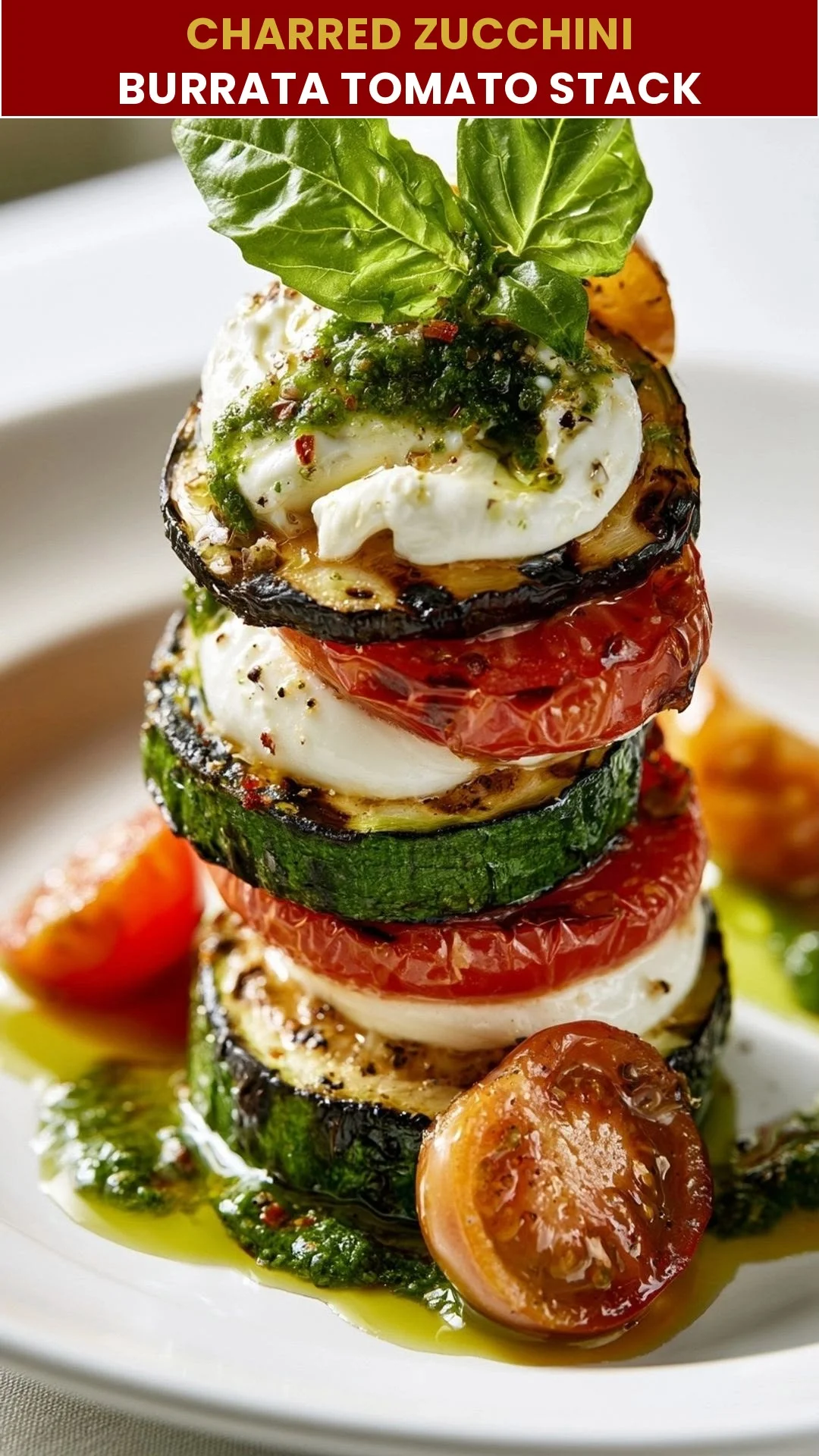
If you’ve been searching for a dish that feels indulgent but eats clean, the charred zucchini burrata tomato stack is exactly what your table has been missing. It layers smoky, tender zucchini with creamy burrata and ripe summer tomatoes into something that looks like it came straight from a coastal Italian trattoria.
This recipe is rooted in the Mediterranean way of eating, where simple, high-quality ingredients do the heavy lifting. You don’t need a long ingredient list or complicated techniques to create something truly impressive.
In this post, you’ll find everything you need: the history behind this dish, a breakdown of its health benefits, step-by-step instructions, meal prep strategies, storage tips, and a full FAQ section. Whether you’re prepping for the week or plating for a dinner party, this guide has you covered from start to finish.
Table of Contents
Personal Note
The first time I made a version of this dish, I was standing in a tiny kitchen in southern Italy with a bag of zucchini from the local market and a ball of fresh burrata that cost less than a coffee. I didn’t have a plan. I just had good ingredients and a hot grill pan.
That’s the essence of Mediterranean cooking that I keep coming back to. It’s not about following a rigid recipe to the letter. It’s about trusting your ingredients, applying heat with intention, and letting the flavors speak for themselves.
When I started building out meal prep content for MedMealPrep.com, this charred zucchini burrata tomato stack was one of the first recipes I knew had to be here. It bridges the gap between everyday simplicity and special-occasion elegance, and it fits seamlessly into a Mediterranean meal prep routine.
Origins of the Dish
The combination of zucchini, tomatoes, and fresh cheese has roots that stretch across the entire Mediterranean basin. In southern Italy, grilled zucchini served alongside fresh mozzarella or burrata has been a summer staple for generations. Farmers would grill surplus zucchini from their gardens over open wood fires, drizzle them with local olive oil, and pair them with whatever fresh cheese was available that day.
Burrata itself originated in the Puglia region of Italy in the early 20th century. A cheesemaker named Lorenzo Bianchino is often credited with its creation around 1920, reportedly as a way to use leftover mozzarella scraps by stuffing them into a fresh mozzarella casing with cream. The result was a richer, more luxurious product that quickly became a regional treasure before spreading across Italy and eventually the world.
Tomatoes arrived in the Mediterranean from the Americas in the 16th century and were initially met with suspicion. By the 18th and 19th centuries, however, they had become absolutely central to Mediterranean cuisine, particularly in southern Italy, Spain, and Greece. The pairing of ripe tomatoes with cheese and grilled vegetables is not a modern invention. It’s a centuries-old instinct that every Mediterranean home cook understands on a cellular level.
The “stack” presentation is a more contemporary approach, drawing influence from the caprese salad tradition while adding vertical drama and textural contrast. As plant-forward Mediterranean eating gained global popularity in the late 20th and early 21st centuries, chefs and home cooks alike began elevating these humble ingredient combinations into visually striking plated dishes. The charred zucchini burrata tomato stack is a natural evolution of that tradition, honoring the ingredients while making them feel fresh and exciting for a modern table.
Why You’ll Love This Recipe
This dish earns a permanent spot in your Mediterranean recipe rotation for a lot of reasons. Here’s exactly why it works so well for home cooks at every level.
- Minimal ingredients, maximum impact: You only need a handful of fresh ingredients, but the flavor payoff is enormous thanks to charring and quality produce.
- Ready in under 30 minutes: Even with prep time, you can have this on the table quickly, making it ideal for weeknight meals.
- Meal prep friendly: The zucchini can be charred ahead of time and stored, so assembly takes just minutes when you’re ready to eat.
- Visually stunning: The stacked presentation looks restaurant-quality with almost no extra effort, making it perfect for entertaining.
- Naturally gluten-free: No grains or gluten-containing ingredients, so it fits a wide range of dietary needs right out of the box.
- Rich in Mediterranean nutrients: Zucchini, tomatoes, olive oil, and fresh herbs all deliver vitamins, antioxidants, and healthy fats aligned with Mediterranean diet principles.
- Easily customizable: Swap the burrata for vegan cheese, add grilled peppers, or build on a bed of arugula to change things up without losing the spirit of the dish.
- Works as a starter or main: Serve it as an elegant appetizer or pair it with crusty bread and a salad for a complete meal.
- Seasonal and affordable: Zucchini and tomatoes are abundant and inexpensive during summer months, making this a budget-friendly choice when produce quality is at its peak.
- No oven required: A grill pan or outdoor grill is all you need, keeping your kitchen cool during hot summer months.
Health Benefits and Ingredient Highlights
Every ingredient in this recipe pulls its weight, not just in flavor but in nutritional value. Here’s a closer look at what you’re actually putting into your body when you make this dish.
Zucchini
Zucchini is one of the most nutrient-dense, low-calorie vegetables in the Mediterranean pantry. A single cup of raw zucchini contains only about 20 calories while delivering meaningful amounts of vitamin C, vitamin B6, potassium, and folate. It’s also high in water content, which supports hydration and helps you feel full without excess calories.
The charring process does something fascinating to zucchini from a culinary standpoint. It drives out moisture, concentrates the natural sugars, and creates Maillard reaction compounds that add deep, smoky complexity. From a nutrition perspective, light charring preserves most of the vegetable’s water-soluble vitamins while enhancing its flavor dramatically.
Zucchini is also a good source of antioxidants including lutein and zeaxanthin, two carotenoids associated with eye health. Regular consumption of these compounds is a hallmark of traditional Mediterranean diets, which are consistently linked to lower rates of chronic disease.
Burrata
Burrata is fresh mozzarella wrapped around a creamy center of stracciatella and cream. It’s higher in fat than standard mozzarella, but the fat it contains is primarily saturated dairy fat paired with a rich source of protein and calcium. In the context of a Mediterranean diet, full-fat dairy consumed in moderate portions is considered a wholesome, satisfying component of a balanced plate.
The protein content in burrata, roughly 7 to 9 grams per 100-gram serving, helps support satiety and muscle maintenance. When you pair that protein with the fiber from zucchini and tomatoes, you get a dish that keeps you fuller for longer than its lightness might suggest.
Burrata also contains conjugated linoleic acid (CLA), a naturally occurring fatty acid found in dairy products that has been studied for its potential role in body composition and immune function. While the amounts in a single serving aren’t therapeutic, they contribute to the overall nutritional profile of a Mediterranean-style meal.
Heirloom Tomatoes
Ripe tomatoes are one of the richest dietary sources of lycopene, a powerful antioxidant that gives them their red color. Lycopene has been extensively studied for its association with reduced risk of cardiovascular disease, certain cancers, and inflammation, all of which are areas where Mediterranean diet adherents consistently show favorable outcomes.
Heirloom varieties, in particular, tend to have higher concentrations of flavor compounds and antioxidants than commercially bred tomatoes selected for shelf life and uniformity. Using heirloom tomatoes when they’re in season is one of the easiest ways to amplify both the nutritional value and the eating quality of this dish.
Tomatoes are also a good source of vitamin C, potassium, and vitamin K1. Combined with the olive oil in this recipe, you get a smart nutritional pairing since lycopene is a fat-soluble antioxidant, meaning your body absorbs it more efficiently when consumed alongside a healthy fat source like extra virgin olive oil.
Extra Virgin Olive Oil
Extra virgin olive oil is the cornerstone fat of the Mediterranean diet and for very good reason. It’s rich in oleocanthal, a natural anti-inflammatory compound with properties similar to ibuprofen, and oleic acid, a monounsaturated fat that supports heart health, brain function, and cellular integrity.
When you use olive oil to coat your zucchini before charring, you’re not just preventing sticking. You’re also enhancing the absorption of fat-soluble nutrients from the zucchini itself, while adding a layer of flavor complexity that butter or neutral oils simply can’t replicate.
Choose a cold-pressed, high-quality extra virgin olive oil for this recipe. The oil will be used both for cooking and as a finishing drizzle, so its flavor matters. Look for bottles with a harvest date on the label, which indicates freshness, and opt for varieties from Italy, Greece, or Spain for the most authentic Mediterranean character.
Fresh Basil
Fresh basil is more than a garnish here. It’s a functional herb with real nutritional merit. Basil contains eugenol, a compound with anti-inflammatory and antibacterial properties, as well as vitamin K, manganese, and volatile aromatic oils that have been shown to support digestive health.
In Mediterranean cuisine, fresh herbs are used generously because they add flavor without sodium and nutrition without calories. A handful of fresh basil leaves costs almost nothing but delivers a bright, peppery, slightly sweet aroma that ties all the components of this stack together beautifully.
Flaky Sea Salt and Black Pepper
These might seem like afterthoughts, but they’re doing real work in this dish. Flaky sea salt, used as a finishing element, adds textural contrast and draws out moisture from the tomatoes and burrata, intensifying their natural flavors without requiring any additional seasoning.
Freshly ground black pepper contains piperine, a bioactive compound that enhances the absorption of several nutrients including curcumin if you choose to add turmeric as a variation. Even in a simple dish like this, freshly grinding your pepper right before serving makes a noticeable difference in flavor compared to pre-ground options.
Ingredients
This recipe serves 2 as a main course or 4 as a starter. Scale up easily for meal prep or entertaining.
- 2 medium zucchini, sliced lengthwise into 1/4-inch planks (about 3 cups sliced)
- 2 large heirloom tomatoes, sliced 1/4-inch thick (or 4-5 medium vine-ripe tomatoes)
- 2 balls of fresh burrata, about 4 oz each (substitute: fresh buffalo mozzarella or ricotta for a lighter option)
- 3 tablespoons extra virgin olive oil, divided (plus more for drizzling)
- 1 tablespoon fresh lemon juice (substitute: white wine vinegar for a sharper note)
- 1 small garlic clove, finely minced or grated (optional, for the zucchini marinade)
- 1/2 teaspoon dried oregano (preferably Greek or Sicilian variety)
- 1/4 teaspoon crushed red pepper flakes (optional, for heat)
- Flaky sea salt, to taste (Maldon or fleur de sel recommended)
- Freshly ground black pepper, to taste
- 1 small bunch fresh basil leaves, torn (about 1/4 cup loosely packed)
- 1 tablespoon pine nuts or toasted walnuts, lightly toasted (optional but recommended for texture)
- Zest of 1 lemon (optional, for brightness)
- Balsamic glaze, for finishing drizzle (optional)
Step-by-Step Instructions
Follow these steps for a perfectly assembled charred zucchini burrata tomato stack every time. Take your time with the charring step. It’s the most important part of the whole recipe.
- Prepare your zucchini: Slice the zucchini lengthwise into planks about 1/4 inch thick. Thinner slices will char faster and become too soft, while thicker slices may not cook through properly.
- Season the zucchini: In a large bowl, toss the zucchini planks with 2 tablespoons of olive oil, the minced garlic if using, dried oregano, a pinch of salt, and black pepper. Let them sit for 5 to 10 minutes so the seasoning can penetrate slightly before hitting the heat.
- Preheat your grill pan or grill: Heat a cast iron grill pan over high heat for at least 3 to 4 minutes before adding anything. You want it genuinely hot so you get strong grill marks and a proper char rather than steamed, soggy zucchini.
- Char the zucchini: Lay the zucchini planks in a single layer on the grill pan. Do not move them for at least 2 to 3 minutes. You should see visible char marks forming and the edges beginning to soften before you flip.
- Flip and finish: Flip each plank once and cook for another 1 to 2 minutes on the second side. The zucchini should be tender with deep golden-brown to slightly blackened grill marks. Transfer to a plate and let cool slightly.
- Prepare the tomatoes: Slice your heirloom tomatoes into rounds about 1/4 inch thick. Season them lightly with flaky salt right away. This draws out some of their natural juices, which will become part of the dressing for the final stack.
- Make the quick dressing: In a small bowl, whisk together the remaining 1 tablespoon of olive oil, fresh lemon juice, a pinch of salt, and crushed red pepper flakes if using. This simple emulsion will tie all the layers together.
- Begin assembling the stack: Start with one or two zucchini planks as your base layer on each plate. Lay a tomato slice on top, pressing gently to help it adhere. Repeat the layering process, alternating zucchini and tomato slices, until you have 3 to 4 layers depending on your preference.
- Add the burrata: Place one whole burrata ball on top of each stack. Using a spoon or clean hands, gently tear it open so the creamy stracciatella center spills slightly over the layers below. This is the visual and flavor centerpiece of the whole dish.
- Finish and serve: Drizzle the lemon-olive oil dressing over the entire stack. Scatter torn fresh basil leaves, toasted pine nuts if using, and lemon zest on top. Add a final generous drizzle of your best extra virgin olive oil and a few flakes of sea salt before serving immediately.
Make It Ahead and Batch Prep Guide
One of the best things about this recipe for a Mediterranean meal prep routine is that the most labor-intensive step, charring the zucchini, can be done completely in advance. You can char a large batch of zucchini planks over the weekend and store them in the refrigerator, then pull them out throughout the week for this dish or other applications like grain bowls, wraps, or pasta.
When batch prepping, char at least 4 to 6 medium zucchini at once. Store the cooked planks in an airtight container layered between sheets of parchment paper to prevent sticking. They’ll keep well in the refrigerator for up to 4 days without losing too much of their texture or charred flavor. When you’re ready to assemble the charred zucchini burrata tomato stack, let the zucchini come to room temperature for about 10 minutes before plating. Cold zucchini straight from the fridge will mute the flavors and make the burrata seem overly rich by contrast.
The tomatoes and burrata, however, should always be fresh and never prepped more than a few hours in advance. Sliced tomatoes begin to break down and lose their structural integrity quickly. For the best result, slice your tomatoes and tear open your burrata right before assembling. If you’re meal prepping for multiple days, buy your burrata and tomatoes in smaller quantities closer to when you plan to use them rather than purchasing everything at once.
If you’re scaling this up for a gathering or dinner party, you can prep all your components separately up to an hour before guests arrive and then assemble the stacks at the last minute. Have the zucchini at room temperature, the tomatoes sliced and lightly salted, the dressing whisked, and the herbs ready to go. Assembly takes under 5 minutes per plate, which means you can focus entirely on your guests rather than the kitchen. Mediterranean meal prep for dinner parties
Common Mistakes to Avoid
Even a simple recipe has its pitfalls. Avoid these common errors to make sure your stack looks and tastes exactly the way it should.
- Using an underheated pan: If your grill pan isn’t screaming hot before you add the zucchini, you’ll steam the vegetable instead of charring it. The result is pale, floppy zucchini with no color or smoky depth. Preheat your pan for a minimum of 3 to 4 full minutes on high heat.
- Overcrowding the pan: Placing too many zucchini planks at once drops the pan temperature and creates steam. Work in batches and give each plank enough space so it makes direct contact with the grill surface.
- Moving the zucchini too soon: Resist the urge to shift the planks around once they hit the pan. Let them sit undisturbed so proper grill marks and char can develop. If they’re sticking, they’re not ready to flip yet.
- Using burrata straight from the fridge: Cold burrata is firm and doesn’t have the same luscious, flowing quality that makes it so spectacular. Take it out of the refrigerator at least 20 to 30 minutes before you plan to serve and let it come to room temperature.
- Skipping the salting step on tomatoes: Salting your sliced tomatoes ahead of time isn’t just seasoning. It’s also drawing out flavorful juices that act as a natural dressing for the dish. Don’t skip this step or rush it.
- Using low-quality olive oil: This dish has very few components, which means every single ingredient is visible and tasteable. Using a cheap, neutral olive oil blended with refined fats will flatten the flavor profile significantly. Use the best extra virgin olive oil you have access to for both cooking and finishing.
Notes, Tips and Variations
Substitutions
If burrata is unavailable or out of budget, fresh buffalo mozzarella is the closest substitute in terms of flavor and texture. It won’t have the same creamy center, but its milky freshness pairs just as well with the charred zucchini and ripe tomatoes. For a lighter option, well-drained fresh ricotta dolloped generously on top also works beautifully and adds a slightly tangier note.
Heirloom tomatoes give you the best flavor, but if they’re out of season or unavailable, look for high-quality vine-ripe tomatoes at a local farmers market. Avoid refrigerated supermarket tomatoes if at all possible. Cold-stored tomatoes lose their flavor compounds irreversibly and will make the dish taste flat regardless of how well you prepare everything else.
Can’t find zucchini? Yellow summer squash is a perfect swap with an almost identical flavor profile and similar charring behavior. You can also use eggplant slices for a heartier, smokier base layer that leans more into the southern Mediterranean flavor tradition.
Dietary Variations
To make this recipe fully vegan, replace the burrata with a high-quality cashew-based fresh cheese or a store-bought vegan mozzarella that melts or softens with warmth. The rest of the dish is naturally plant-based. You’ll still get the visual drama and layered flavors even without the dairy component.
For a lower-fat variation that still fits Mediterranean principles, reduce the burrata to one ball shared between two portions and increase the volume of tomatoes and herbs to compensate for the richness. Adding a generous layer of peppery arugula between the layers is another great way to add bulk, nutrition, and flavor without adding significant calories.
If you’re following a Mediterranean diet for cardiovascular health and are watching sodium, use the flaky salt sparingly and rely more on fresh herbs, lemon zest, and high-quality olive oil to season the dish. The natural salinity of the burrata and the brightness of the lemon do a lot of the seasoning work on their own.
Cooking Tips
If you’re cooking outdoors, a wood-fired grill adds an incredible layer of smokiness to the zucchini that you simply cannot replicate on a stovetop grill pan. If you have access to an outdoor grill, use it. The char marks will be more pronounced and the overall flavor will be more complex and deeply savory.
For the cleanest, most precise slices of both zucchini and tomatoes, use a sharp knife or a mandoline set to the 1/4-inch setting. Uniform thickness ensures everything chars and softens evenly, and uniform slices also make for a much more visually impressive stack when you plate it.
When you’re assembling, don’t worry too much about perfect symmetry. This dish actually looks more authentic and appealing when it has a slightly rustic, imperfect quality. That’s the Mediterranean spirit: beautiful without trying too hard.
Topping Ideas and Flavor Boosters
Once you’ve mastered the base recipe, these additions let you customize the charred zucchini burrata tomato stack to match your mood, season, or occasion.
- Balsamic glaze: A drizzle of aged balsamic or a thick balsamic reduction adds sweet, acidic depth that plays beautifully against the creaminess of the burrata.
- Pesto: A spoonful of classic Genovese basil pesto or a Sicilian pistachio pesto adds richness, herbal intensity, and a gorgeous green color contrast.
- Toasted pine nuts: These add crunch, nuttiness, and a classic Italian-Mediterranean character. Toast them briefly in a dry pan until golden for maximum flavor.
- Marinated Castelvetrano olives: Buttery, mild, and bright green, these Sicilian olives add a salty, briny counterpoint that elevates the whole stack.
- Calabrian chili oil: If you like heat, a few drops of Calabrian chili oil over the finished stack adds a fruity, spicy kick that works exceptionally well with creamy burrata.
- Anchovy-infused olive oil: For umami depth without overpowering fishiness, warm a few anchovy fillets in olive oil until they dissolve, then strain and drizzle over the stack.
- Dukkah: This Egyptian-inspired spice and nut blend, featuring hazelnuts, coriander, and cumin, adds exotic Mediterranean flair and excellent texture.
- Microgreens or pea shoots: A small handful placed on top of the burrata adds a fresh, slightly grassy contrast and makes the presentation look truly restaurant-caliber.
- Za’atar: This Middle Eastern herb blend of dried thyme, sumac, and sesame seeds adds an earthy, slightly tangy complexity that deepens the Mediterranean character of the dish.
- Thinly sliced prosciutto di Parma: A few translucent slices draped over the burrata add a salty, silky element and turn this from a vegetarian dish to a more substantial meal for meat eaters.
- Roasted garlic: A few cloves of slow-roasted garlic spread over the zucchini layers before you add the tomatoes add a sweet, mellow garlic presence that’s completely different from raw garlic’s sharpness.
Who This Recipe Is For
This dish genuinely works for a wide range of people and situations. Here’s who will love it most.
- Mediterranean diet followers looking for a visually impressive dish that hits every principle of the eating pattern: olive oil, vegetables, fresh dairy, herbs, and healthy fats.
- Meal preppers who want to do the work once and eat well multiple times during the week without compromising on quality or freshness.
- Vegetarians and flexitarians who want satisfying, protein-rich meals that don’t feel like deprivation. The burrata provides richness and protein that makes this genuinely filling.
- Home entertainers who need a stunning starter or sharing plate that takes minimal effort but delivers maximum wow factor at a dinner party or gathering.
- Busy weeknight cooks who need something fast, fresh, and nourishing that doesn’t require standing over the stove for an hour.
- Summer produce enthusiasts who want to make the absolute most of peak-season zucchini and tomatoes when they’re at their cheapest and most flavorful.
- Gluten-free eaters who struggle to find naturally gluten-free dishes that feel indulgent and celebratory rather than like a compromise.
- Beginners in the kitchen who want to build confidence with a recipe that has a small number of steps, requires no advanced technique, and delivers impressive results every time.
Storage and Meal Prep Tips
Refrigerator
The assembled charred zucchini burrata tomato stack is best eaten immediately after plating. Once the burrata is torn open, it begins to weep and lose its structure, and the salted tomatoes continue to release liquid that can make the stack soggy within an hour. For this reason, do not assemble and store the full stack in the refrigerator for later.
What you can refrigerate successfully are the individual components. Store charred zucchini planks in an airtight container for up to 4 days. Store uncut burrata in its original brine or water packaging and use within 1 to 2 days of purchase for the best flavor and texture. Whole, uncut heirloom tomatoes should be stored at room temperature, never in the fridge, until you’re ready to slice them.
Freezer
Burrata does not freeze and should never be frozen. Fresh tomatoes also do not freeze well for use in a fresh stack preparation because they become pulpy and watery upon thawing. The zucchini planks technically can be frozen after charring, but the texture suffers considerably. They become much softer upon thawing and lose their pleasing chew.
If freezer storage is important to your meal prep strategy, consider batch charring a large quantity of zucchini and freezing it specifically for use in cooked applications like pasta sauces, soups, or grain bowls rather than for this fresh stack recipe. For this particular dish, fresh prep is always the right approach. how to batch prep Mediterranean vegetables for the week
Reheating
If you’ve stored charred zucchini planks in the refrigerator and want to use them for this recipe, the best way to bring them back to life is to let them come to room temperature naturally for 15 to 20 minutes before assembling. This is quicker and gentler than reheating and prevents the zucchini from becoming mushy.
If you prefer warm zucchini in your stack, you can briefly reheat the planks in a dry grill pan over medium heat for about 60 seconds per side. This refreshes the char slightly and warms them without drying them out. Never microwave the zucchini if you care about texture. The microwave steams the vegetable from within and completely destroys the char you worked hard to build.
Nutrition Facts
The following values are approximate per serving based on 2 servings from the quantities listed above, using standard burrata, heirloom tomatoes, olive oil, and all optional garnishes excluded. Values will vary based on the specific brands and portion sizes used.
| Nutrient | Per Serving |
|---|---|
| Calories | 380 kcal |
| Total Fat | 31g |
| Saturated Fat | 12g |
| Monounsaturated Fat | 15g |
| Total Carbohydrates | 12g |
| Dietary Fiber | 3g |
| Total Sugars | 7g |
| Protein | 14g |
| Sodium | 420mg |
| Calcium | 280mg |
| Vitamin C | 35mg |
FAQs
Can I make this recipe without a grill pan?
Yes, absolutely. If you don’t have a grill pan, a regular cast iron skillet will still give you excellent caramelization and browning on the zucchini. You won’t get the crosshatch grill marks, but the flavor will be nearly identical. You can also use a broiler: lay the seasoned zucchini planks on a foil-lined baking sheet and broil on high for 4 to 5 minutes per side, watching carefully to avoid burning.
What is the difference between burrata and fresh mozzarella?
Burrata is made from fresh mozzarella that is shaped into a pouch and filled with stracciatella, which is shredded mozzarella mixed with fresh cream. When you cut or tear open a ball of burrata, that creamy, luscious center flows out, which is what makes it so visually dramatic and texturally irresistible in a dish like this. Fresh mozzarella is firm throughout with a milky, mild flavor but without that flowing cream center.
How do I keep the stack from falling apart when I plate it?
The key to a stack that holds its shape is using uniform, same-sized slices for both the zucchini and the tomatoes. Thinner slices will stack more securely than thick, uneven cuts. Building no more than 3 to 4 layers keeps the structure manageable. If you’re serving this at a dinner party and need it to hold for a few minutes before guests eat, avoid tearing the burrata until the very last second, as the released cream will immediately begin softening the layers below.
Can I use cherry tomatoes instead of large slicing tomatoes?
Cherry tomatoes won’t work for a traditional stacked presentation since they’re too small to layer. However, you can easily adapt the recipe by halving them and scattering them around the base of the charred zucchini and burrata rather than stacking them. The flavor will be just as good, the presentation will be more of a deconstructed arrangement, and in some ways it’s even more relaxed and Mediterranean in spirit.
Is this recipe good for weight management on the Mediterranean diet?
This dish fits very well into a Mediterranean diet focused on healthy weight management. The zucchini and tomatoes are low in calories and high in water content and fiber, which supports satiety. The burrata and olive oil provide healthy fats and protein that help regulate hunger hormones. As a main course, this meal clocks in at around 380 calories per serving, which is quite satisfying given the volume of food on the plate. Mediterranean diet meal prep for weight loss beginners
Conclusion
The charred zucchini burrata tomato stack is proof that Mediterranean cooking at its best is never about complexity. It’s about choosing good ingredients, applying a little skill and heat, and letting the natural flavors do what they were always meant to do. This recipe asks very little of you in terms of time or technique but gives back an enormous amount in flavor, nutrition, and visual appeal.
Whether you’re making it for a quick weeknight dinner, building it into your weekend meal prep routine, or plating it for guests at your next summer gathering, this stack will consistently impress. The combination of smoky, tender zucchini, creamy burrata, and ripe, juicy tomatoes finished with good olive oil and fresh herbs is one of those flavor combinations that feels timeless because, in the Mediterranean, it genuinely is.
Give it a try this week while summer produce is at its peak. Once you taste how good a few simple ingredients can be when they’re treated with care and cooked with intention, you’ll understand why Mediterranean cooks have been making versions of this dish for generations. Share your creation in the comments below, and let us know which topping variations you tried. We’d love to hear from you.