THE BEST N°1 Ultimate Power Breakfast Plate: High-Protein, Low-Carb & Mediterranean
Introduction
If you’ve ever stared into the fridge at 7 a.m. wondering how to eat something that actually fuels your day, this Ultimate Power Breakfast Plate is the answer you’ve been looking for. It’s packed with whole, real ingredients, built on Mediterranean principles, and comes together in under 20 minutes without requiring you to be a chef.
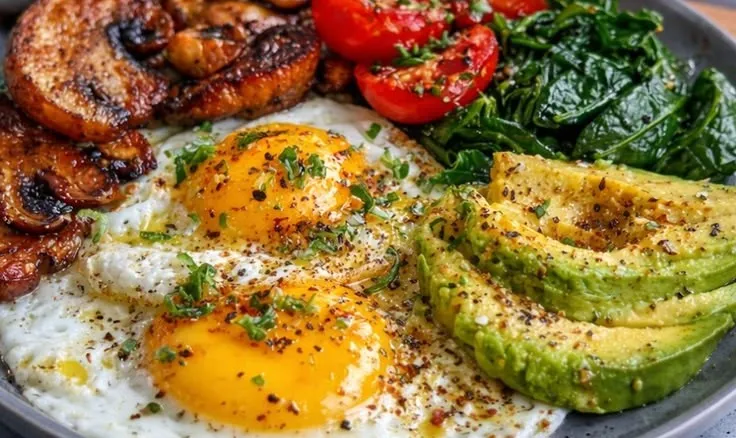
This recipe is high in protein, naturally low in carbohydrates, rich in healthy fats, and 100% rooted in the kind of nourishing whole-food eating that Mediterranean cultures have practiced for centuries. It’s the kind of breakfast that keeps you full until lunch, supports energy without a crash, and looks impressive enough to photograph, which is exactly why it’s one of the most-loved recipes on MedMealPrep.com.
In this post, you’ll get the full story behind this recipe, every ingredient explained, beginner-friendly instructions, batch prep guidance, common pitfalls to avoid, and everything you need to make this a permanent fixture in your weekly rotation.
Table of Contents
A Personal Note
I first encountered a version of this plate at a small family-run café in Crete, where breakfast was never something rushed or thrown together, it was a ritual. There were always eggs cooked in good olive oil, a handful of sautéed greens, something earthy like mushrooms, and bright ripe tomatoes cut fresh that morning. It wasn’t fancy. But it was deeply satisfying in a way that a bowl of cereal or a protein bar never quite manages to be. Bringing that same philosophy into a meal-prep context felt like the most natural thing in the world, because good food shouldn’t be reserved for vacation.
Origins of the Power Breakfast Plate
The concept of a nourishing, savory morning plate is older than the modern wellness industry by about three thousand years. Across the Mediterranean basin, from Greece and Turkey to Lebanon, Egypt, and southern Spain, breakfast has historically been built around eggs, vegetables, legumes, and quality fats rather than sugary pastries or processed cereals. In ancient Greece, eggs were considered a source of vitality and were often paired with olives, fresh herbs, and whatever produce was in season.
In Levantine cuisine, a mezze-style breakfast has long included soft-boiled eggs, sautéed greens dressed in lemon and olive oil, tomatoes, and herbs, all served together on a single platter meant to be shared. In Turkish tradition, a “kahvaltı” (literally “before coffee”) spread brings together eggs, vegetables, cheese, and olives as a complete, satisfying morning table.
What we now call a “power breakfast plate” is simply a modern, single-serving, meal-prep-adapted evolution of this ancient eating pattern. Instead of sharing from communal dishes, you’re building your own bowl with the same time-honored ingredients. The emphasis on whole foods, healthy fats, and protein over processed carbohydrates connects this recipe directly to the Mediterranean dietary framework that research continues to validate as one of the most beneficial eating patterns for long-term health.
Why You’ll Love This Recipe
This is one of those recipes that earns a permanent spot in your weekly rotation after the first try. Here’s exactly why:
- Ready in under 20 minutes. Even on the busiest mornings, you can have this on the table fast.
- Genuinely high in protein. Two large eggs plus sautéed mushrooms deliver over 16 grams of protein before you add any extras.
- Naturally low in carbohydrates. With no bread, grains, or starchy sides, this plate stays low-carb without feeling restrictive.
- Mediterranean and whole-food focused. Every ingredient is recognizable, unprocessed, and purposeful.
- Incredibly customizable. Swap in whatever vegetables you have, adjust the fat, add cheese, skip the avocado, it works every way.
- Budget-friendly. Eggs, mushrooms, spinach, and cherry tomatoes are among the most affordable ingredients at any grocery store.
- Beginner-friendly. No complicated techniques. If you can crack an egg and sauté a vegetable, you can make this.
Health Benefits & Ingredient Breakdown
Every component of this plate was chosen with purpose. Here’s what each one is doing for your body.
Eggs
Eggs are one of the most complete protein sources in nature, providing all nine essential amino acids. Two large eggs deliver roughly 12-14 grams of protein along with choline, a nutrient critical for brain function and liver health that most people don’t get enough of. The yolk contains fat-soluble vitamins A, D, E, and K, making whole eggs far more nutritious than egg whites alone.
Don’t fear the yolk. The Mediterranean diet has always embraced whole eggs, and the research on dietary cholesterol from eggs has consistently shown minimal impact on cardiovascular risk for most healthy people.
Mushrooms
Sautéed mushrooms are a powerhouse that most people dramatically underestimate. They’re one of the rare plant-based sources of vitamin D (especially when sun-exposed), and they contain beta-glucans, compounds with well-documented immune-supporting and cholesterol-modulating effects.
Mushrooms also have a uniquely satisfying meaty texture when cooked properly, which makes this plate feel more substantial without adding significant calories. They pair beautifully with olive oil, which helps your body absorb their fat-soluble nutrients.
Avocado
Avocado brings monounsaturated fats, the same heart-healthy fat found abundantly in olive oil, along with a generous dose of potassium, fiber, and folate. The fat in avocado also helps your body absorb the fat-soluble vitamins present in the spinach and eggs.
Beyond nutrition, avocado adds a richness and creaminess to this plate that makes it feel indulgent even though it’s completely clean eating.
Spinach
Sautéed spinach is one of the most nutrient-dense foods you can put on a plate. It’s rich in iron, magnesium, folate, and vitamin K. Cooking it slightly increases the bioavailability of certain nutrients like iron and beta-carotene, especially when paired with a fat like olive oil or a touch of lemon juice.
Spinach is also high in nitrates, which research suggests can support healthy blood pressure and exercise endurance over time. For a breakfast plate, it adds volume, color, and satiety without any meaningful caloric load.
Cherry Tomatoes
Tomatoes are one of the defining ingredients of Mediterranean cuisine for good reason. They’re rich in lycopene, a powerful antioxidant that becomes more bioavailable when cooked or when consumed with fat. Cherry tomatoes in particular have a natural sweetness and acidity that balances the richness of the eggs and avocado beautifully.
They also contribute vitamin C, which helps your body absorb the non-heme iron from the spinach, a nutritional synergy that makes this plate even more effective than the sum of its parts.
Olive Oil
Extra virgin olive oil is the foundational fat of Mediterranean cooking, and for good reason. It’s rich in oleic acid and polyphenols, compounds with anti-inflammatory, antioxidant, and cardiovascular protective effects that are well-established in the scientific literature.
Using good quality extra virgin olive oil here isn’t just a flavor choice, it’s a nutritional one. A drizzle on the finished plate adds flavor, helps nutrient absorption, and connects this recipe to its Mediterranean roots.
Fresh Herbs & Seasoning
Chives, parsley, or fresh basil add brightness and a layer of flavor complexity that makes this plate feel restaurant-quality. Herbs are also legitimately nutritious, parsley is loaded with vitamin K and antioxidants; chives contribute quercetin and organosulfur compounds.
Red chili flakes, if you use them, add capsaicin, which has been associated with metabolism support and reduced appetite in several studies. A crack of fresh black pepper does more than season, piperine in black pepper enhances the absorption of curcumin and other beneficial plant compounds.
Ingredients | Power Breakfast Plate
(Serves 1, scale up for batch prep)
For the eggs:
- 2 large eggs (free-range or pasture-raised preferred for better omega-3 profile)
- 1 teaspoon extra virgin olive oil
- Sea salt and freshly cracked black pepper, to taste
- Pinch of red chili flakes (optional but highly recommended)
For the mushrooms:
- 1 cup cremini or baby bella mushrooms, cleaned and sliced (portobello works well too)
- 1 teaspoon extra virgin olive oil
- 1 small garlic clove, minced (or ¼ tsp garlic powder in a pinch)
- Sea salt and black pepper, to taste
- Fresh thyme or rosemary, optional
For the sautéed spinach:
- 2 large handfuls (about 2 cups) fresh baby spinach (wilts down significantly)
- 1 teaspoon extra virgin olive oil
- 1 small garlic clove, minced
- Squeeze of fresh lemon juice
- Sea salt to taste
For the cherry tomatoes:
- ½ cup cherry tomatoes, halved (or whole if small)
- ½ teaspoon olive oil
- Pinch of sea salt and dried oregano
For the avocado:
- ½ ripe avocado, sliced or fan-cut
- Squeeze of lemon or lime juice (prevents browning and adds brightness)
- Flaky sea salt and pepper to taste
To garnish:
- Fresh chives or flat-leaf parsley, finely chopped
- Extra red chili flakes
- Final drizzle of extra virgin olive oil
- Optional: everything bagel seasoning, za’atar, or sumac
Step-by-Step Instructions | Power Breakfast Plate
- Prep all your ingredients first. Slice the mushrooms, halve the cherry tomatoes, mince the garlic, and cut your avocado. Having everything ready before you turn on the heat makes this recipe feel effortless.
- Sauté the mushrooms first. Heat a medium skillet over medium-high heat and add 1 teaspoon of olive oil. Add the sliced mushrooms in a single layer and let them sit undisturbed for 2–3 minutes until they start to brown on the bottom.
- Season and finish the mushrooms. Add the minced garlic, a pinch of salt and pepper, and any fresh herbs you’re using. Toss and cook for another 1–2 minutes until golden and cooked through. Remove to one side of your serving plate.
- Cook the cherry tomatoes in the same pan. Add the halved cherry tomatoes to the still-hot pan with a tiny splash of olive oil. Season with salt and dried oregano and cook for 2–3 minutes, just until they start to blister and release their juices. Remove to the plate.
- Wilt the spinach. Add 1 teaspoon of olive oil to the pan, add the garlic, and then pile in the fresh spinach. Toss with tongs over medium heat for 1–2 minutes until just wilted. Finish with a squeeze of lemon juice and a pinch of salt. Add to the plate.
- Cook the eggs to your preference. In the same pan (or a small non-stick pan), add 1 teaspoon of olive oil over medium-low heat. Crack in the eggs and cook gently, sunny-side up for runny yolks, or flip briefly for over-easy. Season immediately with salt, pepper, and chili flakes.
- Fan the avocado and plate everything. Slice the avocado half into thin fans, press gently to fan the slices, and place on the plate. Squeeze lemon or lime over the avocado immediately to prevent oxidation.
- Slide the eggs onto the plate and arrange everything so each component has its own section. The visual presentation matters, eating with your eyes first is a very Mediterranean concept.
- Finish and garnish. Top the eggs with fresh chives or parsley, a final drizzle of your best extra virgin olive oil, and any additional seasoning you love. Serve immediately.
Make It Ahead / Batch Prep Guide | Power Breakfast Plate
This recipe is ideal for a 4-5 day meal prep batch with just a little planning. The key is knowing which components travel well and which are best prepared fresh.
What to batch prep:
- Mushrooms: Sauté a full pound of mushrooms at once and store in a glass container. They reheat perfectly in a dry pan or microwave within 90 seconds and actually develop more flavor after a day or two in the fridge.
- Sautéed spinach: Cook 4-5 servings of spinach on Sunday and divide into portions. Spinach holds well refrigerated for up to 4 days when stored without excess moisture, press it gently before storing.
- Cherry tomatoes: Blister a full pint of cherry tomatoes and store them in their juices. By day two, those juices deepen into something almost jammy and even more flavorful than fresh.
What to prep day-of or store carefully:
- Eggs: Always cook eggs fresh. Fried or sunny-side up eggs do not reheat well, the whites become rubbery and the yolk loses its silkiness. This takes only 3 minutes, so it’s always worth doing fresh.
- Avocado: Avocado oxidizes quickly. If you’re packing lunches in advance, leave the pit in the unused half, wrap it tightly in plastic wrap, store in the fridge, and add lemon juice. Slice and plate the morning of.
Batch size recommendation: Prep mushrooms, spinach, and tomatoes for 4 servings at once. In the morning, reheat your prepped components in a pan while you cook fresh eggs. Total active time drops to under 8 minutes per day.
Common Mistakes to Avoid | Power Breakfast Plate
- Crowding the mushrooms. This is the single most common mistake. When you overcrowd the pan, the mushrooms steam instead of brown, and you lose that caramelized, meaty depth. Cook in batches if needed, and don’t stir them constantly, let them brown.
- Cooking the eggs over high heat. Eggs cooked over high heat develop rubbery whites and chalky edges. Low to medium-low heat with olive oil produces silky whites and perfectly set or runny yolks, the kind you see in the photos.
- Salting the spinach too early. Adding salt to spinach before it wilts draws out water before it has a chance to cook down properly, creating a watery, soggy result. Season at the very end of cooking.
- Using unripe avocado. An avocado that isn’t ripe has none of the creaminess that makes this plate satisfying. It’s bitter, hard, and texturally unpleasant. If your avocados aren’t ripe, place them in a paper bag with a banana overnight, they’ll be ready by morning.
- Skipping the lemon juice. Lemon juice isn’t optional on this plate. It brightens the avocado, finishes the spinach, and cuts through the richness of the eggs and olive oil. A plate without it will taste flat by comparison.
- Not preheating the pan. Starting with a cold pan means nothing will sear or color properly. Always heat the pan before adding oil, and heat the oil before adding ingredients.
Notes, Tips & Variations | Power Breakfast Plate
Ingredient Substitutions
- No cherry tomatoes? Use sliced roma tomatoes, sun-dried tomatoes (packed in olive oil), or even a spoonful of high-quality tomato paste mixed with a little olive oil for a concentrated burst of flavor.
- No spinach? Swap for arugula (add raw at the end for peppery freshness), kale (cook 2–3 minutes longer), Swiss chard, or any leafy green you have.
- No cremini mushrooms? Shiitake mushrooms give a deeper, more umami-forward flavor. Oyster mushrooms sauté beautifully and have a delicate, silky texture. Portobello works best if sliced rather than used whole.
- No avocado? A tablespoon of good hummus or labneh (strained yogurt) provides similar creaminess and fat content. A few olives also work well in the Mediterranean spirit.
Dietary Variations
- Strictly low-carb / keto: This recipe is already well-suited, but skip the tomatoes or use sparingly, as they contribute the majority of the natural sugars on this plate.
- Higher protein: Add a third egg, incorporate a slice or two of grilled smoked salmon (lox), or add ¼ cup of white beans sautéed with garlic and lemon for a plant-forward protein boost.
- Vegetarian: The base recipe is already vegetarian. For extra richness and protein, crumble a tablespoon of feta cheese over the top.
- Dairy-free: Naturally dairy-free as written, no adjustments needed.
- Vegan: Replace the eggs with silken tofu scrambled with turmeric, black salt (kala namak for an eggy flavor), nutritional yeast, and olive oil. The rest of the plate is fully plant-based.
- Gluten-free: Entirely gluten-free as written.
Cooking & Texture Tips
- For crispier mushroom edges: Add a tiny pinch of sumac or smoked paprika in the last 30 seconds of cooking. It deepens the color and adds a layer of complexity without overpowering.
- For extra silky eggs: A technique borrowed from French café cooking, add ½ teaspoon of water to the pan just after cracking the eggs, then cover with a lid for 60 seconds. The steam gently sets the tops of the whites while keeping the yolk perfectly runny.
- For the best avocado presentation: Use a wide-bladed knife to cut thin, even slices, then use the flat of the blade to fan them. Press them slightly and they’ll hold their fan shape beautifully on the plate.
Topping Ideas & Flavor Boosters | Power Breakfast Plate
The base recipe is complete as written, but these optional additions take it to the next level:
- Za’atar: A Middle Eastern herb blend (thyme, sumac, sesame seeds) that adds an earthy, tangy, nutty layer. Sprinkle on the eggs or avocado.
- Sumac: A deeply fruity, tart ground spice used widely in Levantine cooking. Wonderful over the avocado and eggs.
- Everything bagel seasoning: Adds crunch, saltiness, and sesame flavor. Particularly good pressed gently onto the avocado slices.
- Feta cheese (crumbled): A salty, tangy counterpoint to the richness of the yolk and avocado. Use sparingly — a tablespoon goes a long way.
- Labneh (strained yogurt): A dollop of labneh beside the eggs brings a creamy, probiotic-rich element that bridges all the flavors beautifully.
- Kalamata olives: Two or three olives add briny depth and round out the Mediterranean profile completely.
- Capers: For those who love a punch of acidity, a few capers scattered over the eggs add complexity that works remarkably well.
- Toasted pine nuts: A small handful adds crunch, richness, and a subtly sweet nuttiness that pairs beautifully with the sautéed spinach.
- Microgreens: A small pile of radish or broccoli microgreens adds visual beauty and a peppery, fresh finish.
- Hot sauce: A few drops of harissa, sriracha, or a high-quality chili oil transform the flavor profile entirely for heat lovers.
- Smoked salmon: Two slices laid over or beside the eggs add omega-3s, protein, and a beautifully luxurious feel that makes this plate feel like brunch at a nice restaurant.
Who This Recipe Is For | Power Breakfast Plate
This recipe genuinely works for a wide range of people, and that versatility is a big part of why it’s earned such a loyal following on the site.
Busy professionals who need a filling, real-food breakfast without spending 45 minutes in the kitchen will appreciate that the whole plate can be on the table in under 20 minutes, and with batch prepping, under 10 minutes on a weekday morning.
Fitness-focused eaters and athletes will love the protein-to-calorie ratio, the absence of refined carbohydrates, and the combination of slow-digesting fats and protein that provides sustained energy rather than a glucose spike followed by a crash.
People managing their weight will find this plate satisfying enough to eliminate mid-morning snacking, thanks to the combination of protein, fiber, and healthy fat that extends satiety for hours.
Families with young children can easily adjust this plate, the components are simple, familiar, and easy to serve separately if kids prefer their food not to touch.
Beginners in the kitchen will succeed with this recipe because it requires no advanced techniques, no specialized equipment, and no ingredients that are hard to find. If you can turn on a stove, you can make this.
Mediterranean diet followers will recognize this plate as a natural extension of the eating principles they already follow, whole foods, quality fats, vegetables at every meal, and minimal processing.
Storage & Meal Prep Tips | Power Breakfast Plate
Refrigerator storage:
- Cooked mushrooms: Store in an airtight glass container for up to 5 days.
- Sautéed spinach: Store in an airtight container for up to 4 days. Drain any excess moisture before storing.
- Blistered cherry tomatoes (with their juices): Store in a sealed jar or container for up to 4 days. The flavor actually improves by day 2.
- Sliced avocado: Best used immediately, but can be stored for 1 day with a tight cling wrap pressed directly against the surface and a squeeze of lemon juice. The pit-in-the-half trick works for uncut halves.
- Cooked eggs: Do not store fried eggs. They lose all texture when refrigerated.
Reheating guidance:
Reheat the mushrooms, spinach, and tomatoes in a small skillet over medium heat for 2–3 minutes. You can also microwave them in 60-second increments. Either way, they come back beautifully.
Best containers:
Glass meal prep containers with dividers are ideal for keeping components separated and preventing texture changes from moisture mixing. For on-the-go mornings, store mushrooms, spinach, and tomatoes together and add freshly cooked eggs and sliced avocado at serving time.
Freezer option:
The mushrooms and spinach can be frozen in individual portions. Defrost overnight in the fridge and reheat as above. Do not freeze cherry tomatoes or avocado.
Weekly batch strategy:
On Sunday, sauté a full pound of mushrooms, cook down a large bag of spinach, and blister a full pint of cherry tomatoes. Divide into 4-5 portions. Each morning, reheat the prepped components while you cook 2 fresh eggs. Your hands-on time drops to under 8 minutes per day for a fully homemade, restaurant-quality breakfast.
Nutrition Facts | Power Breakfast Plate
(Estimated per single serving as written, including 2 eggs, mushrooms, spinach, cherry tomatoes, ½ avocado, and olive oil. Values are approximate and will vary by exact quantities and brands.)
| Nutrient | Per Serving |
|---|---|
| Calories | ~380–420 kcal |
| Protein | 17–19g |
| Total Fat | 30–33g |
| Saturated Fat | 5–6g |
| Monounsaturated Fat | 18–20g |
| Total Carbohydrates | 10–13g |
| Dietary Fiber | 6–8g |
| Net Carbs | ~4–6g |
| Total Sugar | 3–4g |
| Sodium | 280–340mg (depends on seasoning) |
| Cholesterol | 370–390mg |
| Vitamin D | ~15% DV |
| Iron | ~20% DV |
| Potassium | ~750mg |
This plate is naturally low in net carbohydrates, high in monounsaturated and polyunsaturated fats, and a solid protein source for a breakfast that doesn’t include meat. The fiber content from avocado and spinach supports digestive health and extends satiety.
FAQs | Power Breakfast Plate
Q: Can I use egg whites instead of whole eggs to reduce fat and calories?
You can, but it’s worth reconsidering. Whole eggs contain nearly all of the plate’s vitamins, A, D, E, K, B12, and choline, in the yolk. Using only whites strips away most of the nutritional value while saving just 45 calories per egg. If you’re watching calories, consider using one whole egg plus one white as a middle ground that preserves the nutrition while moderating fat and calories slightly.
Q: Is this recipe suitable for the Mediterranean diet?
Yes, this plate is a textbook Mediterranean diet breakfast. It prioritizes vegetables, uses extra virgin olive oil as the primary fat, includes a moderate amount of whole eggs, and incorporates a variety of colorful produce. It aligns perfectly with the core principles of Mediterranean eating: whole foods, healthy fats, minimal processing, and an abundance of vegetables.
Q: Can I meal prep this entire plate in advance, including the eggs?
For the best experience, prep everything except the eggs. Eggs cook in 3-4 minutes and their texture degrades significantly when stored and reheated, whites become rubbery and runny yolks set up hard. The rest of the components hold beautifully for 4-5 days, so the daily fresh-cook is only the eggs, which takes minutes.
Q: What if I don’t have a non-stick pan for the eggs?
You don’t need a non-stick pan, you need adequate fat and the right heat. A stainless steel or cast iron pan works perfectly with enough olive oil and a medium-low heat setting. Preheat the pan, add the oil, let the oil shimmer slightly, then crack in the eggs. They’ll release cleanly if you don’t rush them. Patience is the non-stick surface.
Q: How do I know if my avocado is ripe enough?
Press gently at the narrow top near the stem. If it gives slightly, like pressing the tip of your nose, it’s perfect. If it’s rock hard, it needs 1–2 more days at room temperature. If it gives a lot and feels mushy anywhere, it may be overripe inside. The peel color on Hass avocados shifts from bright green to dark purple-black as they ripen, which is a reliable visual cue. For a faster ripening method, place unripe avocados in a paper bag with a banana or apple at room temperature overnight.
Conclusion | Power Breakfast Plate
The Ultimate Power Breakfast Plate isn’t just a recipe, it’s a morning philosophy. It’s the idea that the first meal of your day should be deliberate, nourishing, and genuinely satisfying rather than rushed, processed, or forgettable. It takes the best of what Mediterranean food culture has always known, whole ingredients, good fat, fresh vegetables, honest seasoning, and makes it accessible on any weekday morning.
What makes this plate special is the layering: the earthy depth of sautéed mushrooms, the silky richness of runny eggs, the bright acidity of blistered tomatoes, the clean freshness of wilted spinach, and the buttery, filling luxury of avocado. Every component earns its place. Nothing is filler.
If you try this recipe, we’d genuinely love to hear about it in the comments. Did you add your own twist, a sprinkle of za’atar, a handful of feta, a drizzle of chili oil? Tell us what you changed and how it turned out. The best recipes grow richer through the people who cook them.
Happy meal prepping.