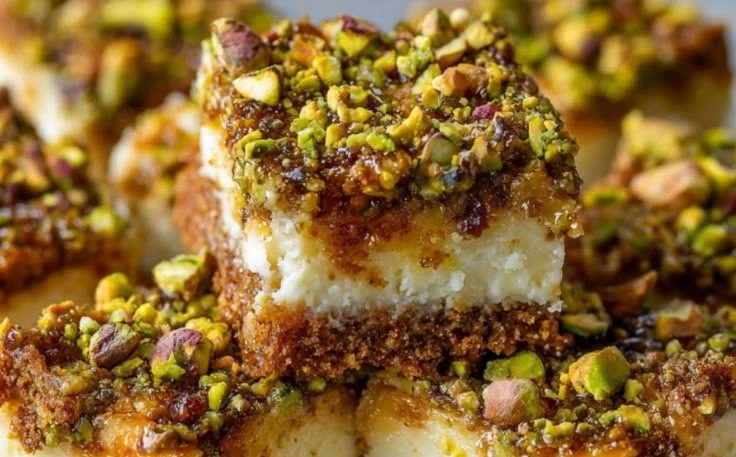
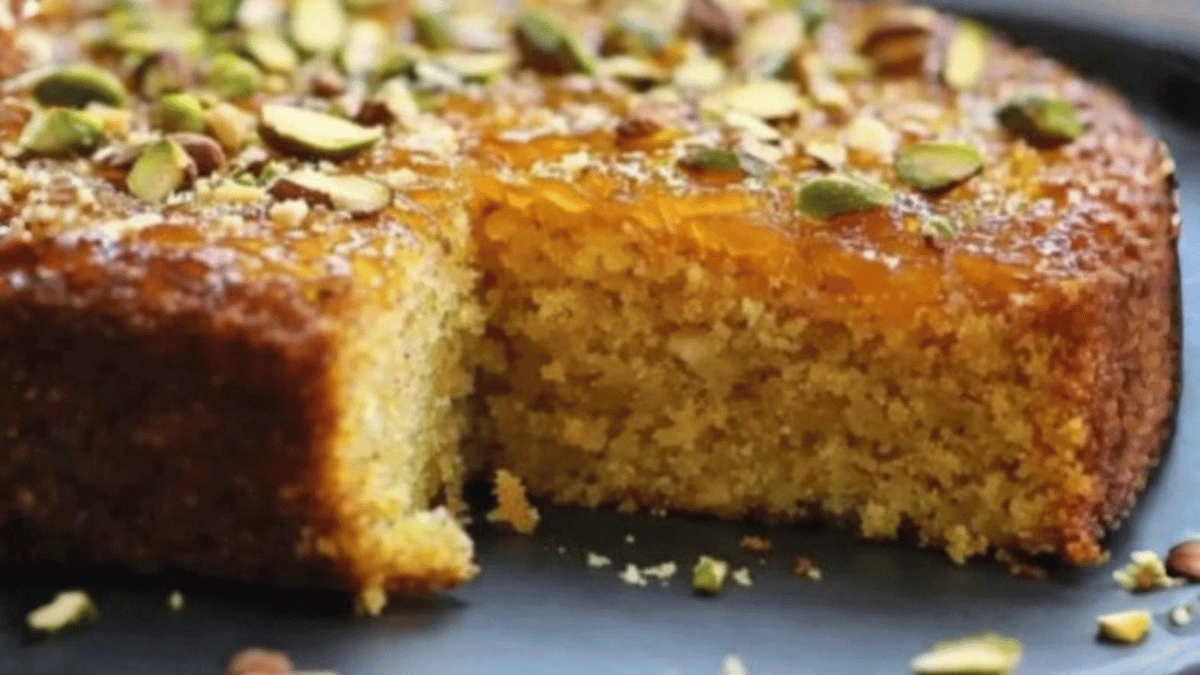
THE BEST N°1 Flourless Orange Pistachio & Almond Cake (Naturally Gluten-Free)
Introduction | Orange Pistachio & Almond Cake
If you’ve ever wanted a cake that’s genuinely stunning, effortlessly healthy, and rooted in centuries of Mediterranean baking tradition, this Flourless Orange Pistachio & Almond Cake is exactly what you’ve been looking for. Made without a single gram of refined flour, it relies on the natural richness of ground almonds, the brightness of whole-boiled orange, and the earthy crunch of pistachios to deliver a moist, fragrant, deeply satisfying slice that happens to be naturally gluten-free and far more nourishing than anything you’ll find at a bakery counter.
This cake is high in protein and healthy fats, low in refined sugar, and built on ingredients that the Mediterranean diet has celebrated for thousands of years, think whole citrus, nut flours, eggs, and just enough honey or unrefined sweetener to bring it all together. Whether you’re baking for a crowd, prepping ahead for the week, or looking for a dessert that doubles as a genuinely nutritious snack, this recipe covers every base. In the sections ahead, you’ll find the full ingredient list, step-by-step instructions, batch prep strategies, health benefits, storage tips, creative variations, and answers to the most common questions bakers have about this type of cake.
Table of Contents
A Short Personal Note | Orange Pistachio & Almond Cake
The first time I tasted a cake anything like this, I was at a small café in Valencia, Spain, a dense, perfumed wedge of something the owner called “tarta de naranja,” served with a tiny cup of dark espresso and a sprig of rosemary on the side. It tasted like sunshine and almonds and something I couldn’t quite name. I later learned that whole-boiled citrus cakes are a staple of Sephardic Jewish baking and have been woven into Mediterranean cooking for centuries.
I spent months working that single café memory into this recipe, and I genuinely think it’s the best version I’ve ever made. I hope it becomes a regular in your kitchen too.
Origins of the Dish | Orange Pistachio & Almond Cake
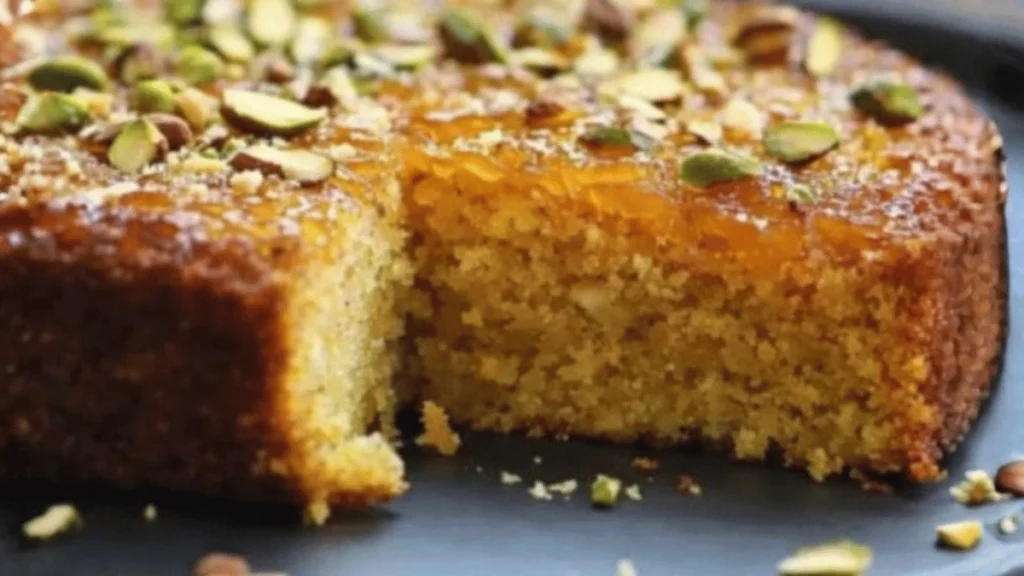
Flourless almond cakes have deep roots across the Mediterranean basin, particularly in the baking traditions of Spain, Portugal, Morocco, and the Middle East. In Moorish-influenced Iberian cuisine, almonds were ground into flour as far back as the 8th century, used as a primary baking base long before wheat flour became dominant in sweet pastry. The abundance of almond orchards across Andalusia, Sicily, and the Levant made nut-based cakes a practical, everyday reality, not a specialty or an accommodation.
The addition of whole-boiled citrus, particularly Seville oranges and blood oranges, is a technique strongly associated with Sephardic Jewish cooking. Jewish communities across Spain, Portugal, and North Africa developed flourless cakes not only because of the flavor advantages of nut-based batters, but also because Passover dietary laws prohibit leavened flour. These cakes became synonymous with celebration, hospitality, and ingenuity: how to make something extraordinary with the most honest ingredients available. Citrus trees were everywhere along the Mediterranean coast, and boiling the whole orange softened the pith, unlocking a complex bittersweet flavor that no amount of zest or juice can replicate.
The addition of pistachios is more specifically tied to Middle Eastern and Turkish baking traditions, where pistachios, harvested in abundance across Syria, Iran, and the Aegean, have featured in sweets and pastries for over two millennia. Today, this cake sits at a beautiful crossroads: it’s simultaneously ancient and modern, celebratory and everyday, rustic and refined. It’s the kind of recipe that has always belonged to Mediterranean kitchens and fits just as naturally into a 21st-century meal-prep lifestyle built around whole, nourishing foods.
Why You’ll Love This Recipe | Orange Pistachio & Almond Cake
This isn’t just a gluten-free alternative to a “real” cake. This is a better cake, one that happens to be made without flour. Here’s why it earns a permanent place in your baking rotation:
- Genuinely easy to make – Boil, blend, mix, bake. No creaming butter, no sifting flour, no complicated technique required.
- Meal-prep perfect – The cake actually improves over 24–48 hours as the orange flavor deepens and the crumb becomes even more moist. It slices beautifully cold from the fridge.
- High in protein and healthy fats – Ground almonds, pistachios, and eggs deliver a nutritional profile closer to a protein bar than a traditional birthday cake.
- Naturally gluten-free – No substitutions, no blends, no gums. Just whole food ingredients that happen to contain zero gluten.
- Refined sugar-free adaptable– Swap the sugar for raw honey, maple syrup, or coconut sugar without changing the bake time.
- Endlessly customizable – Change the citrus (lemon, blood orange, mandarin), the nuts (walnuts, hazelnuts), or the spices and get an entirely different cake every time.
- Impressive enough for guests, simple enough for Tuesday – This cake looks and tastes like something from a specialty bakery but takes less than 90 minutes start to finish, mostly hands-off.
Health Benefits & Ingredient Benefits | Orange Pistachio & Almond Cake
Whole Boiled Orange: Vitamin C, Bioflavonoids, and Fiber
Boiling the entire orange, skin, pith, and all, and blending it into the batter is what makes this cake extraordinary, both in flavor and nutrition. The pith and skin of an orange contain significantly more fiber, flavonoids, and vitamin C than the juice alone. Hesperidin, a bioflavonoid found in citrus peel, has been shown in research to support cardiovascular health, reduce inflammation, and improve blood vessel function. You’re not just adding flavor when you use the whole orange, you’re adding a meaningful nutritional payload.
Ground Almonds (Almond Flour): Protein, Fiber, and Healthy Fats
Almonds are among the most nutrient-dense nuts available. Ground almonds provide approximately 6 grams of protein and 3.5 grams of fiber per 28g serving, along with vitamin E, a fat-soluble antioxidant that supports skin health and immune function. The fat in almonds is predominantly monounsaturated (oleic acid), the same heart-healthy fat found in olive oil. Because almond flour is much denser in calories and nutrients than wheat flour, you need less of it to feel satisfied, and the resulting cake has a genuinely satiating effect that typical flour-based cakes lack.
Raw Pistachios: Antioxidants and Complete Amino Acids
Pistachios are one of the few plant foods considered a complete protein source, they contain all nine essential amino acids, though not in equal proportions. They’re also exceptionally rich in lutein and zeaxanthin, two antioxidants that specifically support eye health. Compared to most other nuts, pistachios are relatively lower in calories per gram while still providing meaningful fiber (about 3g per 28g serving) and a range of B vitamins including B6, which plays a role in protein metabolism and mood regulation. In this cake, they add both nutrition and a beautiful green color contrast.
Eggs: Structure, Protein, and Moisture
In a flourless cake, eggs do everything that flour and gluten normally do: they create structure, trap air, bind ingredients, and provide moisture. Each egg contributes around 6 grams of complete protein and meaningful amounts of choline, a nutrient essential for brain health and liver function that most people don’t get enough of. Free-range eggs with darker yolks also tend to have higher concentrations of omega-3 fatty acids and fat-soluble vitamins. Using room-temperature eggs is important here, as they incorporate more air when beaten and produce a lighter crumb.
Honey or Coconut Sugar: Lower-Glycemic Sweetness
This recipe works beautifully with raw honey, coconut sugar, or maple syrup rather than refined white sugar. Raw honey contains trace enzymes, propolis, and antioxidants not found in refined sugar. Coconut sugar has a lower glycemic index (approximately 35 vs. 65 for white sugar) due to the presence of inulin, a prebiotic fiber that slows glucose absorption. Neither of these is a “health food” in large quantities, but they provide a more complex, less spiky sweetness that pairs beautifully with the bitter orange and rich almonds.
Extra-Virgin Olive Oil: Heart-Healthy and Moisture-Rich
A small amount of extra-virgin olive oil in the batter keeps the crumb moist for days without the heaviness of butter. The oleic acid in olive oil is stable at moderate baking temperatures and retains much of its anti-inflammatory benefit even after baking. It also adds a subtle savory depth that complements the orange and pistachio in a way that butter simply can’t replicate, a hallmark of Mediterranean baking sensibility.
Ingredients | Orange Pistachio & Almond Cake
For the Cake
- 2 medium navel or Valencia oranges (approx. 400g total) – unwaxed and organic if possible, since you’re using the whole skin; scrub well if not organic
- 200g (2 cups) ground almonds / almond flour – blanched almond flour gives a finer crumb; raw almond meal gives a slightly denser, rustier texture – both are excellent
- 100g (¾ cup) raw pistachios, roughly chopped – reserve a handful for topping; unsalted only
- 4 large eggs, room temperature – critical for structure and rise; cold eggs can cause the batter to split
- 150g (¾ cup) coconut sugar or raw cane sugar – or substitute 120ml (½ cup) raw honey or pure maple syrup; if using liquid sweetener, reduce by 20% to compensate for added moisture
- 2 tablespoons extra-virgin olive oil – adds moisture and a subtle savory depth; mild-flavored works best here
- 1 teaspoon pure vanilla extract
- 1 teaspoon baking powder – check the label if strictly gluten-free; some brands contain wheat starch
- ½ teaspoon ground cardamom – deeply aromatic; substitute with cinnamon for a warmer, less floral profile
- ¼ teaspoon fine sea salt – balances the sweetness and brightens the citrus
- Zest of 1 lemon – optional but adds an extra citrus brightness that lifts the whole cake
For the Optional Orange Glaze
- Juice of 1 orange (approx. 60ml)
- 2 tablespoons honey or maple syrup
- Pinch of cardamom
For Serving / Topping
- Handful of reserved whole or roughly chopped pistachios
- Orange zest curls or thin orange slices
- A dusting of powdered sugar or coconut sugar – optional, for presentation
- Greek yogurt or whipped labne – for serving alongside
Step-by-Step Instructions | Orange Pistachio & Almond Cake
Step 1: Boil the Oranges (1 hour, mostly passive)
- Place both whole, unpeeled oranges in a medium saucepan and cover completely with cold water. Bring to a boil over high heat, then reduce to a steady simmer, cover, and cook for 45-60 minutes until the oranges are very soft and a skewer passes through the skin with no resistance.
- Remove the oranges from the water and allow them to cool completely – at least 30 minutes. Do not rush this step; adding hot orange to the eggs will scramble them. You can do this step the night before and refrigerate the cooked oranges until needed.
Step 2: Prepare the Orange Purée
- Once cool, cut each orange in half and carefully remove any seeds – they’re bitter and will affect the flavor if left in. Do not remove the peel or pith.
- Place the entire orange – skin, pith, and flesh – into a food processor or high-speed blender and blend until you have a completely smooth, thick purée. This should take about 60 seconds. Set aside.
Step 3: Preheat and Prepare the Tin
- Preheat your oven to 170°C (340°F) fan / 180°C (355°F) conventional. Line a 22–23cm (9-inch) springform or round cake tin with parchment paper on the bottom and grease the sides lightly with olive oil or butter.
- Lightly dust the sides of the tin with a small amount of almond flour to prevent sticking – this works better than regular flour for gluten-free cakes and adds a pleasant slightly crunchy edge.
Step 4: Beat the Eggs and Sugar
- In a large mixing bowl, combine the eggs and coconut sugar (or honey/maple syrup). Using a hand mixer or stand mixer fitted with the whisk attachment, beat on medium-high for 3–4 minutes until the mixture is pale, thick, and has roughly doubled in volume. This step creates the lift that replaces baking soda and flour in a traditional cake.
- Add the vanilla extract and olive oil, then beat for another 30 seconds to combine.
Step 5: Combine the Batter
- Add the orange purée to the egg mixture and fold gently with a large rubber spatula – do not beat, as you want to preserve as much air as possible. The batter will be wet and loose at this point; that’s completely normal.
- In a separate bowl, combine the ground almonds, baking powder, cardamom, and salt. Add the dry ingredients to the wet mixture and fold until just combined – again, use gentle folding strokes rather than vigorous stirring. Fold in two-thirds of the chopped pistachios and the lemon zest if using.
Step 6: Bake the Cake
- Pour the batter into the prepared tin and smooth the top with the back of a spoon or a small offset spatula. Scatter the remaining chopped pistachios evenly over the surface for a beautiful, crunchy topping.
- Bake in the centre of the preheated oven for 50–55 minutes, until the cake is golden-brown on top, has pulled slightly away from the edges of the tin, and a skewer or toothpick inserted into the centre comes out clean (a few moist crumbs are fine; wet batter is not). If the top is browning too quickly, tent loosely with foil after 35 minutes.
Step 7: Cool and Glaze
- Remove the cake from the oven and allow it to cool in the tin for 15 minutes before carefully releasing the springform or turning out onto a wire rack. This resting period is important, the cake is fragile and very moist when hot and will firm up significantly as it cools.
- If making the orange glaze, combine the orange juice, honey, and cardamom in a small saucepan over medium heat and simmer for 3-4 minutes until slightly thickened. Brush generously over the still-warm cake and allow it to soak in fully before serving. The glaze adds glossiness, extra citrus punch, and helps the cake stay moist for longer.
Step 8: Slice and Serve
- Allow the cake to cool completely before slicing, ideally at least 1 hour at room temperature, or refrigerate for 30 minutes for clean, neat slices. Use a sharp serrated knife for the cleanest cuts.
- Serve as-is, or alongside a generous spoonful of Greek yogurt, a drizzle of honey, and a few extra pistachio crumbles for a complete dessert that feels effortlessly elegant.
Make It Ahead / Batch Prep Guide | Orange Pistachio & Almond Cake
This is one of the rare cakes that is actively better when made ahead. The orange flavor deepens, the crumb becomes more moist, and the whole thing slices more cleanly after 24 hours. It’s ideal for meal prep, entertaining, and batch baking.
Boil the Oranges in Advance
The most time-consuming element, the orange boiling, can be done up to 3 days ahead. Once boiled and cooled, store the whole oranges in an airtight container in the fridge. Blend into purée when you’re ready to bake. This reduces the active baking session from 75 minutes to about 30 minutes total.
Bake Multiple Cakes at Once
This recipe scales easily. The batter fits perfectly into one 23cm tin, two smaller 18cm tins (which bake in about 38–42 minutes), or a 12-cavity muffin tin for individual portions (bake at 170°C for 22–25 minutes). Individual portions are especially useful for meal prep, as they can be grabbed from the fridge without slicing.
How Flavor and Texture Evolve
- Day 1 (same day): Cake is moist and slightly crumbly at the edges; orange flavor is bright and fresh
- Day 2: The crumb has settled and become denser and more fudge-like; orange flavor is richer and more integrated, this is peak cake
- Day 3-4: Still excellent; the pistachios on top may soften slightly, which you can refresh with a few fresh nuts pressed into the surface
- Day 5+: Refrigerated cake is still good but loses some brightness; best revived with a fresh drizzle of honey and a squeeze of orange
When to Add Toppings
Add any fresh toppings, yogurt, fresh orange slices, powdered sugar dust, just before serving, not during storage. The pistachio topping baked into the cake surface holds well for 4 days. The orange glaze can be applied right after baking and will keep the cake moist; don’t add fresh glaze to refrigerated cake as it can make the top sticky and wet.
Common Mistakes to Avoid | Orange Pistachio & Almond Cake
- Not boiling the oranges long enough. Under-cooked oranges have tough, bitter pith that blends unevenly and makes the batter grainy. The oranges need a full 45-60 minutes at a steady simmer, don’t rush it. They should be completely soft and collapsible when pressed.
- Adding hot orange purée to the eggs. Even slightly warm purée will scramble or curdle the eggs, ruining the batter. Always let the boiled oranges cool completely before blending and adding. Refrigerating overnight is the safest approach.
- Not beating the eggs and sugar long enough. In a flourless cake, whipped eggs provide the structure and lift that gluten normally creates. Under-beaten eggs produce a flat, dense, borderline greasy result. Beat until genuinely pale and doubled in volume, at least 3 minutes on medium-high speed.
- Opening the oven door too early. This cake is fragile in the first 35 minutes of baking. Opening the oven before the structure has set will cause it to sink in the middle. Resist the urge to check until at least 40 minutes have passed.
- Cutting the cake while it’s still warm. A warm flourless cake will crumble and fall apart, the texture is genuinely different from a wheat-based cake and needs cooling time to set. Patience here is essential; wait at least 1 hour, or refrigerate for 30 minutes.
- Using salted pistachios. Salted pistachios will make the cake unpleasantly salty and interfere with the balance of sweetness. Always use raw, unsalted pistachios and control the salt yourself with the ¼ teaspoon of sea salt in the recipe.
Notes, Tips & Variations | Orange Pistachio & Almond Cake
Ingredient Substitutions
- No pistachios? Walnuts bring an earthier, more bitter note. Hazelnuts (especially toasted and skinned) add a wonderful warmth. Macadamia nuts produce an extraordinarily buttery, luxurious result. Any raw, unsalted nut works.
- No navel oranges? Blood oranges produce a stunning deep ruby-colored cake with a slightly more tart flavor. Clementines or mandarins make a sweeter, more delicate version. Two large lemons (boiled the same way) make a beautifully bright lemon version that pairs exceptionally well with lavender or thyme.
- No coconut sugar? Regular caster sugar works perfectly. Raw honey or maple syrup can replace it 1:1 by weight but will produce a slightly denser, more moist cake. Reduce honey or maple by about 20% and reduce olive oil by half a tablespoon to compensate for the extra liquid.
- No baking powder? You can omit it, the whipped eggs provide enough lift for a denser, fudgier result. If you want more rise, use ½ teaspoon of bicarbonate of soda instead.
Dietary Variations
- Lower sugar: Reduce the sweetener by 30% and add an extra tablespoon of orange zest for more perceived sweetness. The cake will be slightly less moist but still delicious.
- Higher protein: Add 30g of unflavoured or vanilla plant-based protein powder to the dry ingredients and increase olive oil by 1 tablespoon to compensate for the dryness. The texture will be slightly denser but still very good.
- Dairy-free: The base recipe is already dairy-free. Serve alongside coconut yogurt instead of Greek yogurt for a complete dairy-free experience.
- Egg-free / Vegan: Replace each egg with a flax egg (1 tablespoon ground flaxseed + 3 tablespoons water, rested for 5 minutes). The cake will be denser and won’t rise as much, but the flavour remains excellent. You may need to add an extra 5–10 minutes of baking time.
- Extra-moist version: Add 2 tablespoons of orange blossom water to the batter alongside the vanilla. This is deeply fragrant and very distinctly Middle Eastern, it’s extraordinary.
Cooking & Texture Tips
- For an even more vibrant green pistachio topping, blanch the pistachios for 1 minute in boiling water, drain, and rub off the skins before chopping. The raw green colour underneath is stunning against the golden cake.
- The batter is supposed to look wet and thin. Resist the urge to add more almond flour, a wetter batter produces the characteristic dense, moist crumb that makes this cake exceptional. Trust the recipe.
- For a taller cake, use a 20cm (8-inch) tin instead of a 23cm tin. The cake will take an additional 8–10 minutes and will have a slightly more dramatic rise.
- Springform tin is ideal for easy release, but a regular cake tin lined completely with parchment (including the sides) works perfectly well.
Topping Ideas & Flavor Boosters | Orange Pistachio & Almond Cake
The cake is beautiful and complete as written, but these additions can make it even more special:
- Orange blossom glaze – mix 2 tablespoons honey, juice of half an orange, and ½ teaspoon orange blossom water; brush over warm cake for an intensely floral, glossy finish
- Pomegranate seeds – scattered over the top just before serving, they add juicy tartness, brilliant color, and antioxidant power
- Toasted coconut flakes – pressed into the surface before baking for a tropical twist that works beautifully with the cardamom
- Candied orange slices – arrange on top before or after baking for an elegant, bakery-worthy presentation
- Whipped labne or labneh – thick, strained yogurt cheese beaten with a little honey; adds a cool, tangy contrast to the warm spice of the cake
- Rose petal dust – a pinch of culinary dried rose petals adds both fragrance and a romantic visual quality
- Tahini drizzle – 2 tablespoons tahini mixed with honey and a squeeze of lemon; earthy, nutty, and deeply Mediterranean
- Dark chocolate shards – 70%+ dark chocolate broken into irregular pieces and pressed gently into the top before baking; the slight bitterness is perfect with the orange
- Saffron honey – steep a pinch of saffron in 2 tablespoons of warm honey for 10 minutes and drizzle over each slice; extraordinarily fragrant and visually beautiful
- Flaked sea salt – a pinch of Maldon or fleur de sel over the finished cake heightens every flavor and gives the pistachios an addictive quality
Who This Recipe Is For | Orange Pistachio & Almond Cake
This cake genuinely suits more people than you might expect from a flourless, gluten-free bake:
- People with coeliac disease or gluten sensitivity – this recipe contains zero gluten by design, not as an afterthought. No special flour blends, no gums, no compromise on flavor.
- Fitness-focused individuals who want a dessert that contributes meaningful protein and healthy fats rather than empty calories. A slice alongside Greek yogurt makes a legitimately good post-workout snack.
- Busy home bakers who want a show-stopping result with minimal technical skill. If you can boil water and operate a hand mixer, you can bake this cake.
- Families with mixed dietary needs – this cake is naturally gluten-free, refined sugar-free adaptable, and dairy-free as written, making it one of the rare recipes that works for nearly everyone at the table simultaneously.
- Mediterranean diet followers who want a dessert built from the same whole-food philosophy as their main meals: olive oil, citrus, nuts, eggs, minimal processing.
- Meal preppers and batch bakers who appreciate that this cake gets better with time, slices cleanly from the fridge, and holds up beautifully for 5 days – making it an excellent make-once-eat-all-week treat.
- Anyone entertaining guests – this cake looks impressive, tastes sophisticated, and pairs well with coffee, tea, dessert wine, or a glass of fresh orange juice. It’s a crowd-pleaser that doesn’t require a single last-minute effort.
Storage & Meal Prep Tips | Orange Pistachio & Almond Cake
At Room Temperature
The cake can be stored at room temperature, covered loosely with a dome or wrapped in parchment, for up to 2 days in a cool kitchen. In warm climates or summer months, move it to the fridge after day 1 to prevent any sourness developing from the citrus.
Refrigerator Storage
- How long: Up to 5 days in an airtight container
- Best container: A cake tin with a lid or an airtight glass container large enough to avoid pressing on the surface
- How to serve from cold: Remove slices 20–30 minutes before eating to bring them to room temperature, or microwave individual slices for 20–25 seconds for a warm, bakery-fresh experience
- Does it improve? Yes, the fridge concentrates and melds the orange and nut flavors. Day 2 and Day 3 slices are genuinely better than day 1.
Freezer Storage
- How long: Up to 3 months, wrapped tightly
- Best method: Slice the cooled cake into individual portions, wrap each slice in parchment, then place in a zip-lock freezer bag or airtight container. This way you can defrost only what you need.
- Thawing: Transfer slices from freezer to fridge overnight, or defrost at room temperature for 2–3 hours. A 25-second microwave blast revives the texture beautifully.
- Does it freeze well? Exceptionally well, the dense, moist crumb holds up better in the freezer than almost any wheat-based cake. You may not be able to tell it was frozen at all.
Meal Prep Strategy
For maximum efficiency, boil the oranges on the same day you do the rest of your weekly meal prep, Sunday works well. Bake the cake, allow it to cool fully, then slice and portion into individual meal-prep containers. Add a small container of Greek yogurt and a drizzle of honey per serving for a complete, grab-and-go breakfast or dessert that’s ready all week.
Nutrition Facts | Orange Pistachio & Almond Cake
Estimated values per slice (based on 12 slices, using coconut sugar, without glaze or toppings). Values will vary based on sweetener choice and exact portion size.
| Nutrient | Per Slice |
|---|---|
| Calories | ~285 kcal |
| Protein | ~9g |
| Carbohydrates | ~22g |
| Total Fat | ~19g |
| Saturated Fat | ~2.5g |
| Fiber | ~3.5g |
| Sugar | ~16g |
| Sodium | ~85mg |
| Vitamin E | ~25% DV |
| Vitamin C | ~15% DV |
Note: These are estimates calculated using standard nutritional databases for whole-food ingredients. Switching to honey as the sweetener adds approximately 15-20 additional calories per slice and slightly increases the sugar content. Using 10 slices instead of 12 increases each value by approximately 20%. For precise tracking, enter your exact brands and quantities into a nutrition calculator such as Cronometer or Cronometer.
Frequently Asked Questions | Orange Pistachio & Almond Cake
Why do I have to boil the whole orange instead of just using the juice and zest?
Boiling the entire orange, skin, pith, and all, fundamentally transforms the flavor. Raw pith is intensely bitter, but prolonged boiling breaks down the bitter compounds (primarily naringenin) and softens the cell walls, releasing a complex, marmalade-like sweetness that no amount of zest or juice can replicate. The boiled orange purée also contributes significant moisture and body to the batter, replacing the role that flour and butter play in traditional cakes. It’s not a shortcut or a compromise, it’s the technique that makes this cake extraordinary.
My cake sank in the middle. What went wrong?
A sunken middle in a flourless cake almost always has one of three causes: the oven was opened too early (before 40 minutes), the eggs weren’t beaten long enough to create sufficient structure, or the cake was underbaked and removed from the oven before the centre set. The good news is that a slightly sunken cake still tastes just as good. Fill the dip with a spoonful of yogurt or a pile of pistachios and pomegranate seeds and call it intentional. For future bakes, focus on beating the eggs to a genuinely pale, thick ribbon stage and resist opening the oven door.
Can I make this as muffins or mini cakes instead of one large cake?
Absolutely, and individual portions are ideal for meal prep. Use a standard 12-cavity muffin tin lined with paper cases and reduce the baking time to 22–26 minutes at the same temperature. Check at 22 minutes, a skewer should come out with just a few moist crumbs. Mini silicone cake moulds (about 8cm diameter) also work beautifully and produce elegant individual cakes that look bakery-worthy with minimal effort.
Is this cake suitable for someone with a nut allergy?
No — the recipe relies entirely on ground almonds and pistachios for its structure, texture, and nutritional profile. Replacing the nuts would fundamentally change the cake to the point of it being a completely different recipe. For anyone with a tree nut allergy, this is not a safe option even with substitutions. A seed-based flour (sunflower seed flour or pumpkin seed flour) can replicate the texture in some cases, but the flavor will be quite different and the result is not guaranteed. Always check with the allergic individual before baking for them.
Can I use orange from a carton or pre-squeezed orange juice instead of boiling whole oranges?
Unfortunately, no, not as a direct substitute. The boiled whole orange purée is fundamentally different from juice: it contains the fiber and pectin of the pith, the aromatic oils of the skin, and a much more concentrated flavor. Using juice instead would add liquid without the body and binding properties the purée provides, and the cake would be flat, wet, and lacking the characteristic orange depth. There is no shortcut here, the boiling step is essential to the recipe. The good news is that it’s completely hands-off and can be done days in advance.
Conclusion | Orange Pistachio & Almond Cake
There are very few recipes that manage to be simultaneously ancient and modern, effortless and impressive, nourishing and genuinely indulgent, but this Flourless Orange Pistachio & Almond Cake is all of those things at once. It’s the kind of bake that earns a permanent place in your rotation because it delivers every time: a moist, fragrant, deeply satisfying cake built entirely from whole, honest ingredients with roots stretching back centuries across the Mediterranean world.
The technique is simpler than it sounds. The result is better than you’d expect. And the fact that it gets noticeably better on day two means meal prep and this cake were made for each other. Whether you’re slicing it for a weekday breakfast alongside yogurt, serving it to guests with a pot of mint tea, or wrapping individual portions for grab-and-go snacking all week, this cake works. Beautifully.
Give it a try this weekend. And when you do, come back and tell us how it went. Did you try a different citrus? Add rose water or tahini? Serve it with something unexpected? We genuinely love hearing the variations our community creates, drop your version in the comments below and share your photos. You might just inspire someone else’s best-ever bake.