Best way to make your taste with The N°1 Mediterranean Salad Recipe
Introduction
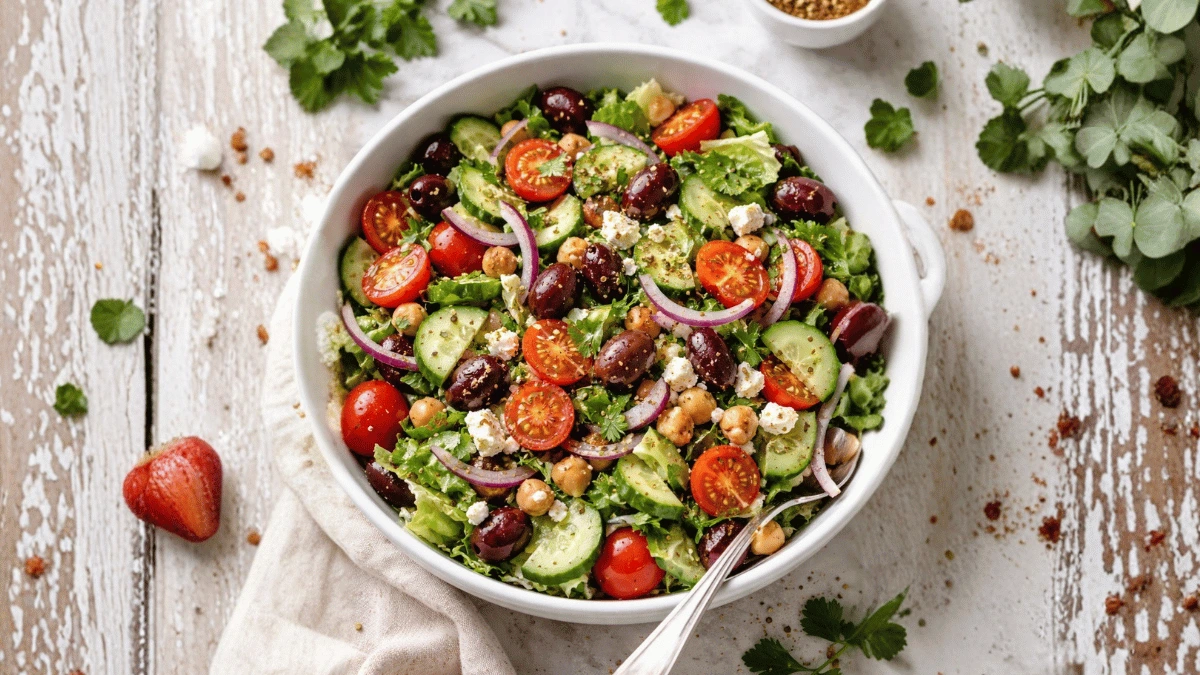
A Mediterranean Salad is a vibrant, nutrient-packed dish that’s perfect for a quick lunch, side, or meal-prep staple. It’s naturally balanced, featuring fiber-rich vegetables, healthy fats from olive oil, and protein if you add beans or feta. This Mediterranean Salad recipe is fast, versatile, and perfect for anyone looking for a fresh, flavorful, and wholesome meal. In this guide, we’ll cover the full recipe, its origins, health benefits, and practical tips for prepping it all week.
Table of Contents
Short Personal Note
During my travels along the Mediterranean coast, I was inspired by the simplicity and freshness of local salads. Fresh produce, olive oil, herbs, and a touch of cheese created meals that were satisfying and wholesome. This salad brings that same effortless flavor and nutrition to your kitchen.
Origins of the Dish
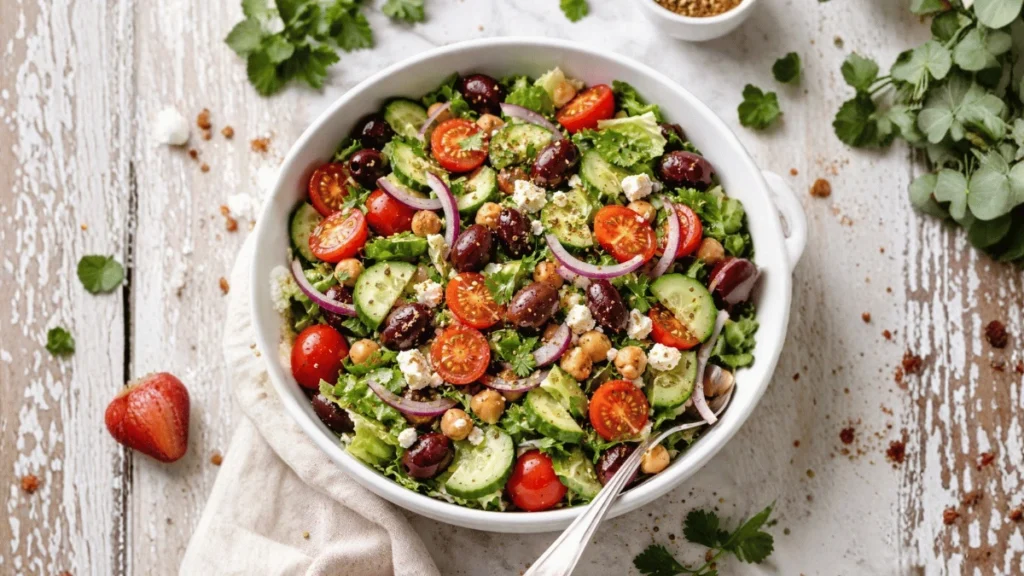
Mediterranean salads have roots across southern Europe and the Levant, where fresh vegetables, olives, and cheese were combined for centuries. Traditional Greek, Lebanese, and Italian households often served these as part of a balanced meal. Over time, these salads evolved into modern meal-prep staples, emphasizing convenience while retaining the vibrant, whole-food ingredients at the heart of the Mediterranean diet.
Why You’ll Love This Recipe – Mediterranean Salad
This Mediterranean Salad is easy to love because it delivers:
- Quick assembly in under 10 minutes
- Meal-prep friendly for lunches or dinners
- High fiber and nutrient-dense
- Naturally flavorful with herbs and lemon
- Customizable with your favorite vegetables or proteins
- Budget-friendly with pantry staples
- Beginner-friendly, no special skills required
Health Benefits / Ingredient Benefits
- Cucumbers and tomatoes provide hydration, fiber, and antioxidants
- Olives and olive oil contribute healthy monounsaturated fats for heart health
- Red onions add flavor and beneficial plant compounds
- Feta cheese delivers protein and calcium for satiety
- Chickpeas or beans (optional) boost plant-based protein and fiber
- Lemon juice and herbs add flavor without excess calories
This combination supports digestion, sustained energy, and overall nutrient balance.
Ingredients
- 2 cups mixed greens – romaine, arugula, or spinach
- 1 cup cherry tomatoes, halved
- ½ cucumber, sliced
- ¼ red onion, thinly sliced
- ½ cup kalamata olives, pitted
- ¼ cup feta cheese, crumbled
- ½ cup cooked chickpeas – optional for extra protein
- 2 tbsp extra-virgin olive oil
- 1 tbsp fresh lemon juice
- ½ tsp dried oregano
- Salt and pepper to taste
Tips: Swap feta for goat cheese or omit for dairy-free. Use any fresh herbs on hand for added flavor.
Step-by-Step Instructions
- Wash and dry all fresh vegetables thoroughly.
- Chop tomatoes, cucumber, and red onion as indicated.
- In a large bowl, combine greens, tomatoes, cucumber, red onion, olives, and chickpeas.
- Sprinkle crumbled feta over the top.
- Drizzle with olive oil and lemon juice, then sprinkle with oregano, salt, and pepper.
- Toss gently to combine and serve immediately, or store for meal prep.
Make It Ahead / Batch Prep Guide
- Pre-chop vegetables and store in airtight containers.
- Keep dressing separate until ready to eat to maintain crispness.
- Ideal for preparing 3–4 servings at once for weekday lunches.
- Chickpeas and olives hold up well in advance, but lettuce is best added fresh if possible.
Common Mistakes to Avoid
- Tossing salad with dressing too early, making greens soggy
- Using wilted or low-quality greens
- Overcrowding the bowl, preventing even mixing
- Forgetting to season with salt and pepper, which enhances flavors
- Skipping optional proteins, which can reduce satiety
Notes, Tips & Variations
Ingredient substitutions: Swap kalamata olives for green olives or capers. Use arugula, spinach, or kale as the base.
Dietary variations:
- Low-carb: Skip chickpeas
- High-protein: Add grilled chicken or tuna
- Gluten-free: Naturally gluten-free
- Dairy-free: Omit feta or use plant-based cheese
Texture tips: Keep crispy vegetables in separate containers if prepping ahead. Add nuts or seeds for crunch.
Topping Ideas / Flavor Boosters
- Toasted pine nuts or almonds
- Sun-dried tomatoes
- Roasted red peppers
- Fresh herbs: parsley, mint, or basil
- A dash of balsamic glaze for extra sweetness
Who This Recipe Is For
This salad is perfect for:
- Busy professionals seeking quick lunches
- Families wanting a colorful, nutritious side
- Weight-conscious eaters needing a low-calorie meal
- Fitness enthusiasts needing balanced macro nutrients
- Beginners looking for a no-cook, versatile recipe
Storage & Meal Prep Tips
- Store in airtight containers in the fridge for up to 3 days
- Keep dressing separate to maintain crispness
- Use glass containers for easy layering and portion control
- Add delicate ingredients like herbs or cheese just before eating
Nutrition Facts
Approximate per serving:
- Calories: 250
- Protein: 8 g
- Carbohydrates: 15 g
- Fat: 18 g
- Fiber: 6 g
- Sugar: 5 g
FAQs – Mediterranean Salad Recipe
Can I make this salad vegan?
Yes, simply omit feta or replace it with plant-based cheese.
Can I prep this salad for the whole week?
Chop vegetables and store separately; add dressing and cheese when ready to eat.
Is this salad filling enough for lunch?
Add chickpeas, beans, or grilled protein to make it a complete meal.
What other dressings work well?
A simple balsamic vinaigrette or yogurt-based dressing complements it beautifully.
Can I use frozen vegetables?
Fresh is best, but thawed cherry tomatoes or roasted vegetables can work in a pinch.
Conclusion – Mediterranean Salad Recipe
This Mediterranean Salad is fresh, flavorful, and endlessly adaptable. With minimal prep, nutrient-dense ingredients, and meal-prep-friendly strategies, it’s a recipe you’ll return to again and again. Try it, make it your own, and share your favorite variations in the comments!